An Interview with the Dalí Quartet: Winners of the 2023 Susan McIntosh Lloyd Award
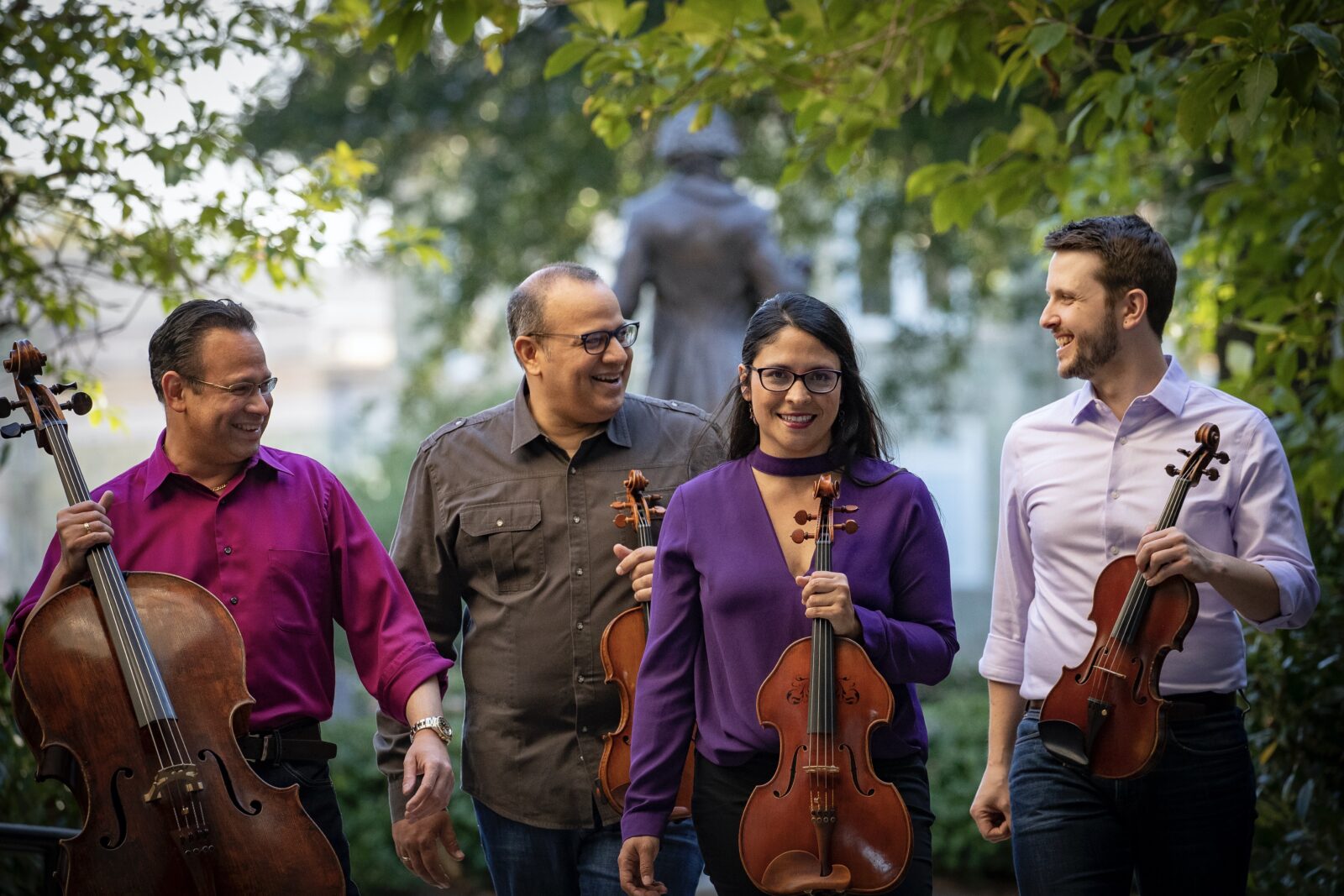
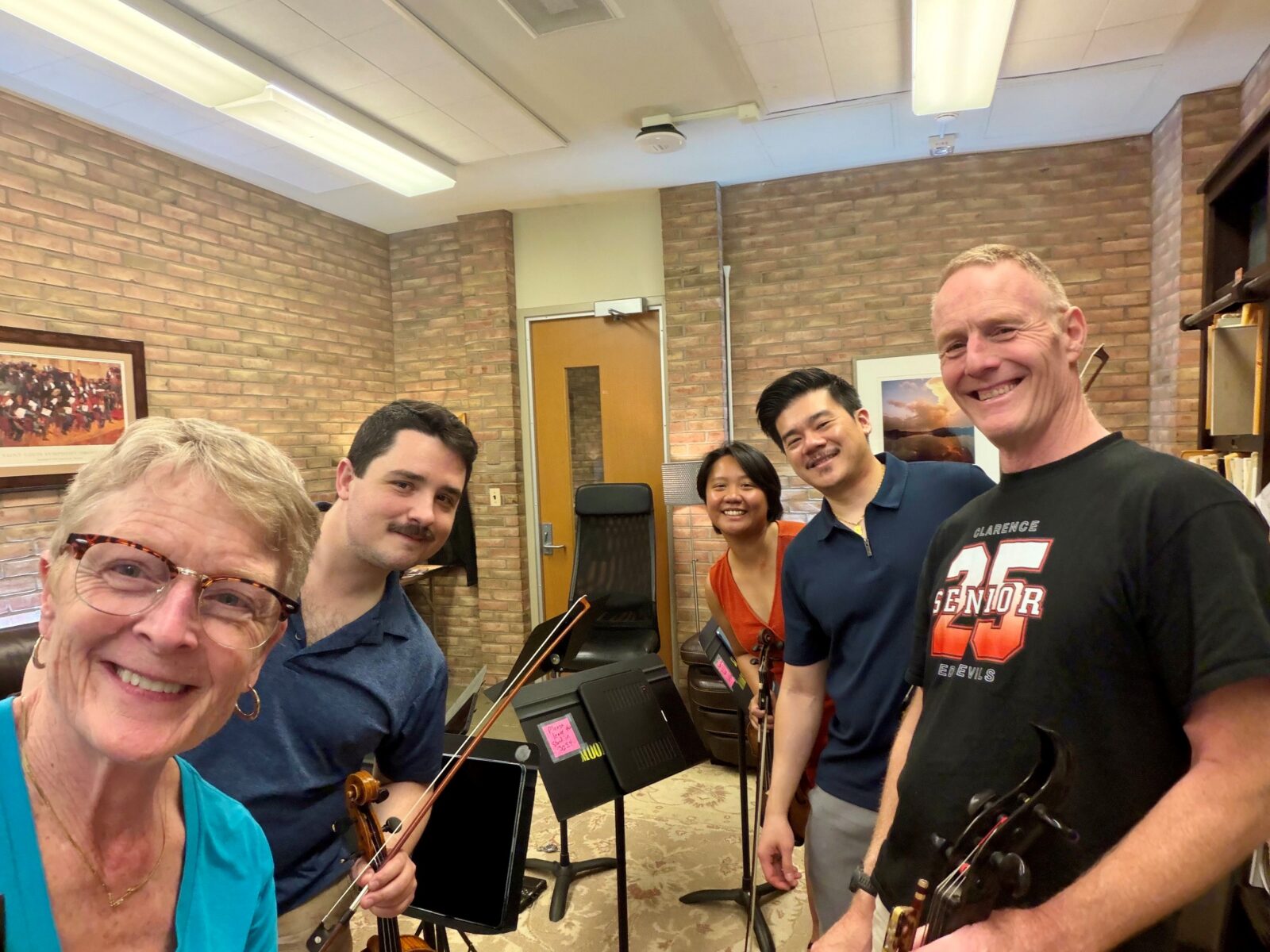
Left to right: Jesús Morales, Carlos Rubio, Adriana Linares and Ari Isaacman-Beck
At the ACMP Foundation and Inc Annual Meeting this past June, our Board of Directors voted on the next recipient of our annual Susan McIntosh Lloyd Award for Excellence and Diversity in Chamber Music. The award is given in honor of the late Susan McIntosh Lloyd (1935 – 2018), a passionate educator who served on ACMP’s Board of Directors for many years, edited our newsletter, and drew the many cartoons featured in those newsletters in the 1970s and 1980s. About Susan McIntosh Lloyd
I am happy to announce that this year’s award was given to the Dalí Quartet, based in Philadelphia, PA, USA. Now in its nineteenth year, the Dalí Quartet’s mission is to bring Latin American quartet repertoire to an equal standing alongside the Classical and Romantic canon. In addition to its performance activities, the group has a deep commitment to education. Many of its educational activities take place under the umbrella of ArcoNet, a nonprofit founded and directed by the quartet’s violist Adriana Linares in 2012.
Upon presenting them with this award, I interviewed all four members of the Dalí Quartet: violinists Carlos Rubio and Ari Isaacman-Beck, violist Adriana Linares and cellist Jesús Morales.
ACMP Interview with the Dalí Quartet
Stephanie Griffin (SG): How did the Dalí Quartet come into existence? Could you please tell our readers about the origins of the group, some early experiences and the quartet’s original mission?
Carlos Rubio (CR): The quartet came together in 2004 when Adriana and I dreamed of creating a quartet that reflected both our Latin American heritage and Western classical music training. The result was the Dalí Quartet, and over the past 20 years, we have been working to find a rightful home for Latin American musicians and influences in the annals of American chamber music.
There were many instances in the early part of our quartet career when presenters considered Latin American composers subpar to the traditional Western chamber music canon. Luckily, times are changing and audiences’ appetite for discovering hidden masterworks has broadened considerably.
SG: Could you please let me know something about the background of all four members of the quartet?
Adriana Linares (AL): Carlos and I, who are the founding members, are from Venezuela. Our cellist Jesús is from Puerto Rico. Our first violinist, Ari Isaacman-Beck is the most recent addition to our group. He is from Minnesota but speaks fluent Spanish and feels like a Latin American.
SG: Is Ari your first non-Latin American member?
AL: Second – Domenic Salerni, now in the Attacca Quartet, was first – but he’s Italian so there’s always some kind of connection. You’ve got to be connected to the culture because of the way we are, the way we appreciate life, the way we look at sharing and being a big family. We eat together, we travel together. Now our rehearsals are a lot in Spanish because Ari speaks very well and he likes to practice. We’ve gone to Mexico and he can give full masterclasses in Spanish. We’ve done online workshops with Colombia or Venezuela and it’s a great plus that he is able to speak and understand the culture and the language.
SG: Who are some of your favorite living Latin American composers in your repertoire and how did you meet them or learn about their music?
Jesús Morales (JM): Juan Ramirez, Miguel del Aguila, and Sonia I. Morales.
We met Juan Ramirez around 2017 when we learned and performed his Suite Latina for String Quartet. He is a prolific composer, fantastic violinist ( member of the Atlanta Symphony for 50 years), amazing chef, and a great friend.
I met Miguel del Aguila almost twenty years ago while performing one of his works in Albuquerque, New Mexico. I have enjoyed his works for string quartet. They are very clever, well written, and very enjoyable.
Sonia I. Morales is my dear sister! She has written two works for the Quartet; Divertimento Caribeño no.3, and Fiesta no.2 for String Quartet, strong orchestra and percussion.
SG: What are some of the greatest discoveries you have made in terms of unearthing historic repertoire by Latin American composers?
Ari Isaacman-Beck (AIB): For me, my favorite (ongoing!) discovery is the breadth of repertoire of wide-ranging musical languages and profound quality by Latin American composers. From Juan Crisóstomo de Arriaga, Reynaldo Hahn, Alberto Ginastera, and Heitor Villa-Lobos to Sonia Morales, Eleanor Alberga, Gilbert Galindo, Tania León, Angélica Negrón, as well as too many others- it has been a total joy to become better acquainted with these older (and contemporary!) composers’s works. Through their music, I’ve learned more about Beethoven, Mozart, and Haydn, and I’m continuing to learn about Bolero, Merengue, Mambo, Guajira, and a huge repertoire of folk influences that are particular to Latin America. It is my understanding that we as human beings experience dance and music in the same area of the brain, and the interaction between rhythm, harmony, and motive is profoundly fascinating and moving to me; the particularities of those three elements, in their endless possible permutations, gives rise to a greater experience of cultural backgrounds other than my own. So- exploring Ginastera’s 2nd String Quartet (1958) alongside Arriaga’s 3rd String Quartet (1823) is a deeply rich exploration of different worlds of human expression. To be able to broaden my experience in classical music through my work in our Dalí Quartet is a profound joy for which I am extremely grateful.
SG: What role does chamber music education play in your mission and activities, and what types of educational activities do you engage in?
AL: The heart and the inspiration to start all the programs that we do comes from the idea and importance of having chamber music in a musician’s life, whether it be early, mid- or late career. The quartet was initiated with the idea to, of course, have chamber music in our community. And the same year that we founded the quartet we started the concert series that we used to run and also the small camp that turned into an international festival. Whether we branch out to a conductor-less chamber orchestra or go smaller with individual lessons as part of our educational activities, everything was inspired by the quartet and the idea of chamber music.
It’s inserted in our mission as a quartet – the idea of being a collaborative musician, the idea of teamwork, the idea of having a unique voice within an ensemble, the idea of leadership. And we try to live our lives that way as well.
The types of educational activities that we do as a quartet – every single place where we go to give a formal concert, we always do some type of outreach activity, whether it is at an elementary school where we have done performances for 500 students and get them to dance, tap or sing rhythms to the music that we are playing, or at a middle school that needs a workshop, masterclass or enhancement or just even to be told “what is chamber music.” We have a program that is called “Chamber Music for All” where we give an overview of what chamber playing and quartet life is all about. Or we go to a High School where they actually have a program with string quartets or a youth orchestra who play for us. Or we go to a college and give a fancy Beethoven late quartet masterclass. In some form or another we are always engaging in educational activities. It is a part of our mission and it goes side by side with our artistry and our performance aspect because we believe that one feeds the other and that we must continue to pass along the idea of playing chamber music. We think it is the best thing that could happen to an individual – and we see it. I see it! I’ve been in a quartet since I was 14 years old and I’ve never stopped being in a quartet ever since.
SG: What kinds of things has the Dalí Quartet done to share the love of music with underserved youth in Philadelphia?
AL: All the members of Dalí Quartet (or other teachers from ArcoNet whenever Dalí is not available) are constantly collaborating with local nonprofits, including Play Philly, Project 440, or the Philadelphia Chamber Music Society.
Whether it is in the form of the program that we have called “Latin Fiesta” where we take youth on a musical tour of South America, or “A Bailar” – “Let’s dance” – exploring dance forms from minuets to tangos, we go, perform, introduce music and get kids excited about new and traditional styles that they may not have heard. We used to go every week to give lessons at the Kensington Library, and also had a monthly program there called “Meet the instruments.” Dalí has done a lot of work with the nonprofit Aclamo – serving hundreds of Latin American families – where we would teach, give summer camps, find instruments or send young ArcoNet faculty.
Throughout the pandemic we did weekly educational outreach online through Aclamo.
In some way or another we are always sharing our music with the communities who need it the most in the area.
SG: How do you see the future of classical chamber music playing across Latin America and what do you think can be done to support chamber music players in those countries?
AIB: As the newest member of the Dalí Quartet (and being a native of Minnesota!), I’ve been very interested to learn more about classical chamber music activities in Latin America. I’ve gotten to know a number of students whose training is exemplary, and most of all, I’ve been incredibly inspired by the urgency and burning desire for growth amongst these players. So- I’ve gotten to see the results of generous and insightful teaching, an earnest and playful drive to improve, and a completely honest enthusiasm that suggests to me that there are extraordinary resources being put towards these young people. I know shamefully little about the specificities of socio-economic, political circumstances across Latin American nations- of course there are vast differences across these many nations, cultures, and peoples- but I think an important way to support chamber musicians from across Latin America is to share resources. Of course, this means searching out and learning about different chamber ensembles that already exist; in addition, seeking out- both to listen to and also to perform- chamber music by Latin American composers; learning about the societal and cultural influences that influence the languages of these many composers; musical exchanges, both in sharing our own musical expertise with chamber musicians from Latin America, and also in learning from the expertise of Latin American musicians (classical and otherwise); and seeking out and supporting organizations that nurture and support chamber musicians and composers in Latin America.
SG: Could you please tell our readers about your work with SA’OAXACA? And does the Dalí Quartet have other educational activities in the works in other Latin American countries?
CR: The SA’OAXACA (Oaxaca String International Festival) is a world class musical training and performance summer festival hosted in the magical city of Oaxaca Mexico. The SA’OAXACA vision is to provide excellent chamber music opportunities to students in Mexico, creating a bridge between young professionals from prestigious music institutions and pre-professional students in Mexico. We served as resident teachers and performers for the festival and worked with musicians from across Mexico and Latin America.
SG: What was your thinking behind the Dalí Quartet International Festival and what kinds of activities does that entail?
AL: When it started it was purely just a local camp for local kids to just simply play quartets. That was the intention from the very beginning. When we grew we had to revisit the name. It was called the Dalí Quartet Camp and now it’s the Dalí Quartet International Festival because we have attracted students who come all the way from Hong Kong, Ecuador, Korea, Cuba, Puerto Rico, Colombia, Venezuela, Mexico…And it was not just that – at some point it was not just chamber music. There were periods of the day where we were addressing things like mindfulness, improvisation, or middle Eastern music, or Brazilian percussion. Without losing the integrity of chamber music being the bulk of the program, we started to feel there were other things we needed to be exposing the students to. Today we have a Youth Division, a Pre-College Division, a College Division and a Fellowship Division. We go as young as 15 years old for the Youth Division, to as old as preformed quartets in their 30s that come to study with us as a quartet. Or if they don’t have a quartet and they are postgraduate students, I personally put them together with another match and they form a quartet. The Youth and the Pre-College daily coaching with the quartet or a master teacher, daily practice with one of the Fellows, a different workshop every day like listening the recordings together with a score, how to rehearse and be good colleagues from having a pencil to being mindful of how to speak when someone is out of tune. Every day there is something pertinent to becoming a better chamber musician. Then there is lunch, which for the older people we cook and the younger people pack and bring their own. After lunch there is camerata and we come together and play with a “big quartet” feel. Our quartet leads and we are more like a big conductor-less string orchestra. The College and Fellowship have a different curriculum. They get a 2 or 3 hour practice, a coaching with one of us each day, they get to coach the younger students at 11am each day, and they learn how to give a masterclass which they each give at the end of the week, and the Dali quartet watches and gives them feedback. They also do a number of professional development workshops, such as career mapping, how to start a quartet, how to program, how to write a bio or CV. We touch on everything that we think is needed and is lacking. That’s what the Fellowship is all about. Students continue to come back and continue to say “wow – I am not getting this anywhere. Thank you for sharing so much of real life.”
SG: What is ArcoNet and what is the nature of the Dalí Quartet’s relationship with that nonprofit organization?
AL: ArcoNet stands for Arts Community Network. As a nonprofit it started in 2012, but the programs and inspiration came before. It’s basically an umbrella for all of the educational activities started by me or by the Dali Quartet. We have a network of teachers, including all four members of the quartet. Jesus, for example, is our main cello teacher. He trained my son who ended up at Curtis. And Carlos helps with the chamber orchestras. All of us participate in our festival,or play solos with the youth orchestra or give masterclasses. It’s all intertwined and co-existing.
It’s hard to point at exactly what ArcoNet is because it is something that is always moving and evolving. It’s not a sit-down “school.” It’s a nonprofit organization that embraces a number of music programs, which is why the word “network” is involved. It’s not just a place but it’s a network that continues to grow. In fact the newest program is what to do with all the alumni that are now in their 20s and 30s. What do we do with all this talent that was created here? We now have an alumni network that was founded by one of our alumni who serves on our board. We have a camerata with alumni who are now at Curtis, or Dallas Symphony or Sarasota Symphony or New England Conservatory or winning competitions.
It’s a big beautiful amazing community. I can’t describe it any other way. It’s like a huge family that just keeps growing. Someone asked me in an interview last week: what’s your biggest accomplishment? It’s hard to say. I love that our kids pursue careers in music, or…..they don’t. They’re doctors, but they come and want to give back in some way, or they want to donate. Or they’re teachers. That’s great! But what I love is that we all come back and eat together and spend time together. That’s the biggest accomplishment – that they feel like this is their family. That’s literally what everyone walks away from our programs thinking: What is this? We made music, but we also made friends and we felt good, ate together and made art and played quartets at the highest level. But more important than that: we’re just a community of amazing human beings!
SG: Just to clarify – does ArcoNet like Dalí have a specific focus on Latin American communities?
AL: Look – because we’re Latin Americans we attract a lot of Latin American students. For example, in Puerto Rico, everyone knows about our quartet and out program. So this last year I had five Puerto Rican families rent an AirBnb and with their kids from ages 12 to 17. Yes – they identify with us and they are inspired by us because we are South Americans making a career in the United States. They look up to us. There are a number of Latin American teachers in the ArcoNet faculty. They might be feeling more connected if they feel that, in addition to learning violin and Beethoven and Mozart, they will play a tango or Venezuelan waltz in one of the concerts. But it’s not something stipulated – it just comes down that way. However it is in our mission that we are a diverse community. Maybe some students feel like they belong more in a place because they feel welcome. I don’t think it has to do with the culture, but our personalities and our welcoming spirits. Because the same is true for a Bulgarian and a Russian student who came from Israel, and a Korean student who studied with us at Westchester who lives in Korea now, but came back especially to be a part of our festival. She feels like this is her family.
SG: Does the Dalí Quartet engage in any educational activities with adult amateur musicians or have any plans to do so in the near future?
AIB: Not yet! This is something that members of the quartet have done individually, but we have not been involved in educational activities yet with adult amateur musicians. With that said, in our individual experiences, we have all enjoyed the free exchange of ideas with adult musicians. One thing I find particularly engaging when working with adult amateur musicians is the capacity to share my background and expertise while also learning about the fascinating person in front of me. While this is true in all my teaching, what’s wonderful and different about an adult amateur is that the adult amateur can often draw and share from vast experience in areas other than my own.
SG: From your vast repertoire of string quartets by Latin American composers, are there any pieces that you would recommend for adult amateur players to try?
JM: These works are beautiful, rhythmic and very accessible. The sheet music is not in public domain, so it must be purchased, but it’s worth it!
Efraín Amaya:
1.Yara’s Dream
2. Angelica
These and other titles are available through Lafipublishers.com
I also recommend the Brazilian composer Heitor Villa-Lobos’ String Quartet no.1. The score and parts are available through Sheet Music Plus. And you can watch this video of our live performance of it at our 2022 Dalí Quartet International Festival.
More Articles
Meet Joy Hsieh: ACMP intern and event planner par excellence!
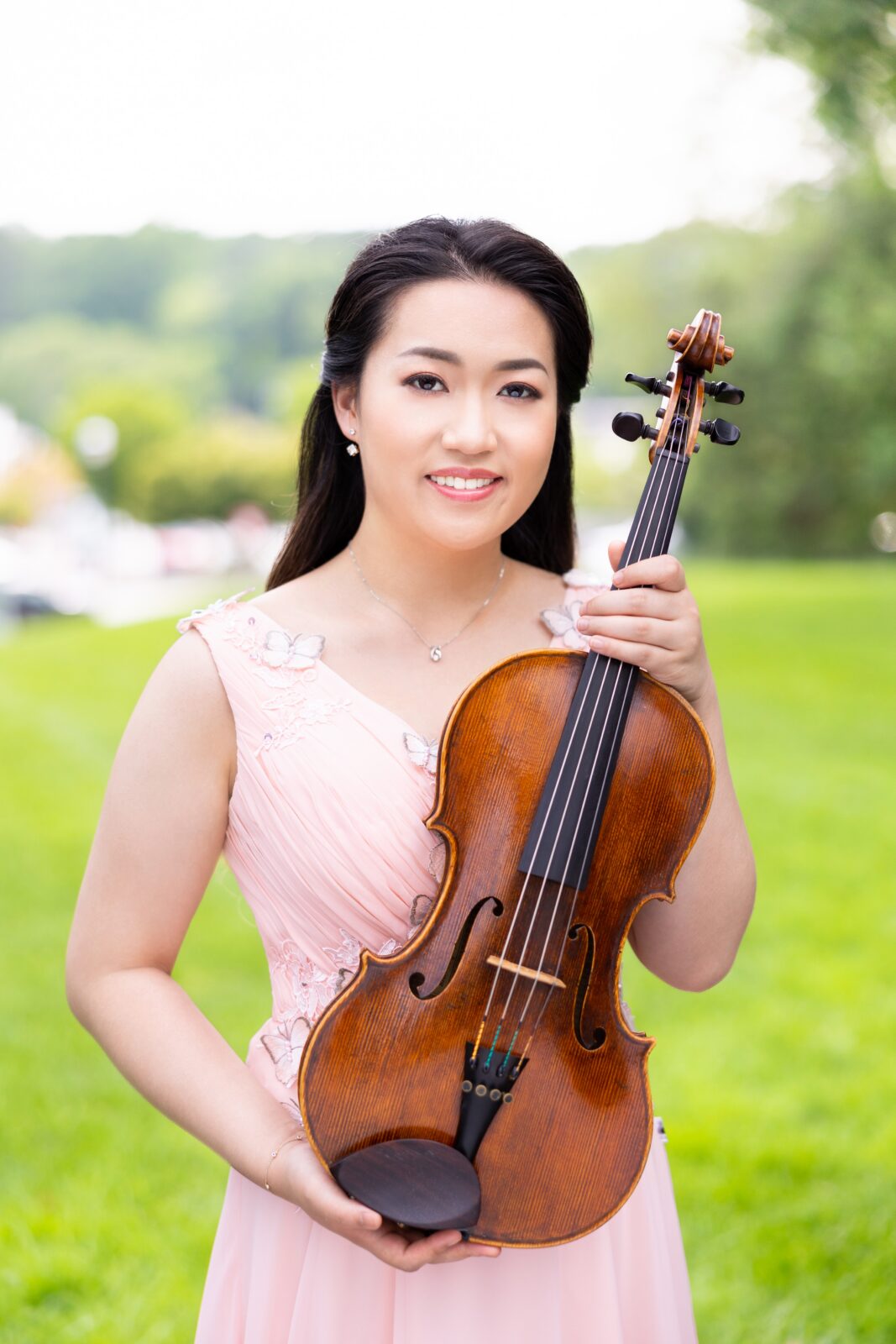
ACMP is happy to announce its newest team member, violist Joy Hsieh, who is working with us on event planning for the fall semester through the Eastman School of Music's Institute for Music Leadership Catherine Filene Shouse Arts Leadership Certificate of Achievement (ALP) program. Joy is a doctoral candidate in viola performance at Eastman, studying with Phillip Ying from the Ying Quartet. Get to know Joy - and come meet her in-person in Rochester on October 25 and Boston on December 6!Read More ↗
Filipino folk music, by way of Ecuador
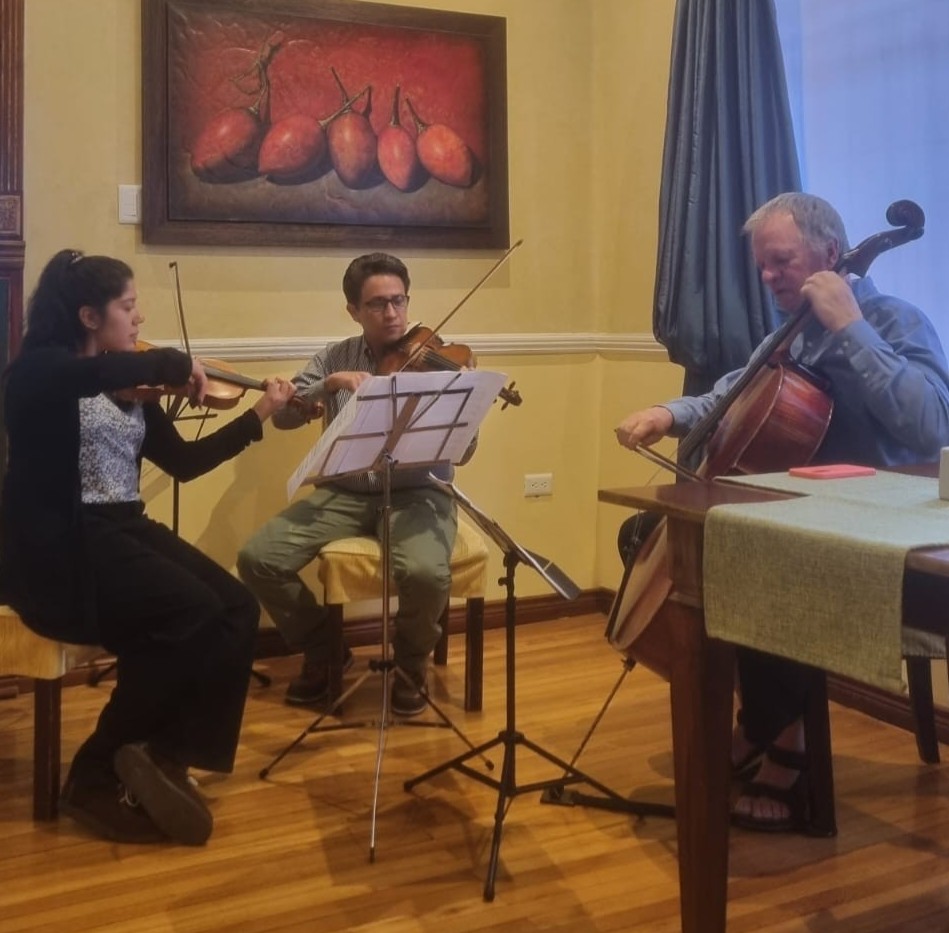
What do classical music and fine dining have in common? They are both about sensory delight; they come in many flavors and textures; and they are natural complements for an ACMP event. Tom Cappaert has organized a series of such programs, at a pizza joint in Riobamba, coffee houses in Spain and Ecuador, and most recently with a string trio performance on the theme of Let’s eat Filipino!Read More ↗
ACMP x ECMS Play-In Rochester, NY
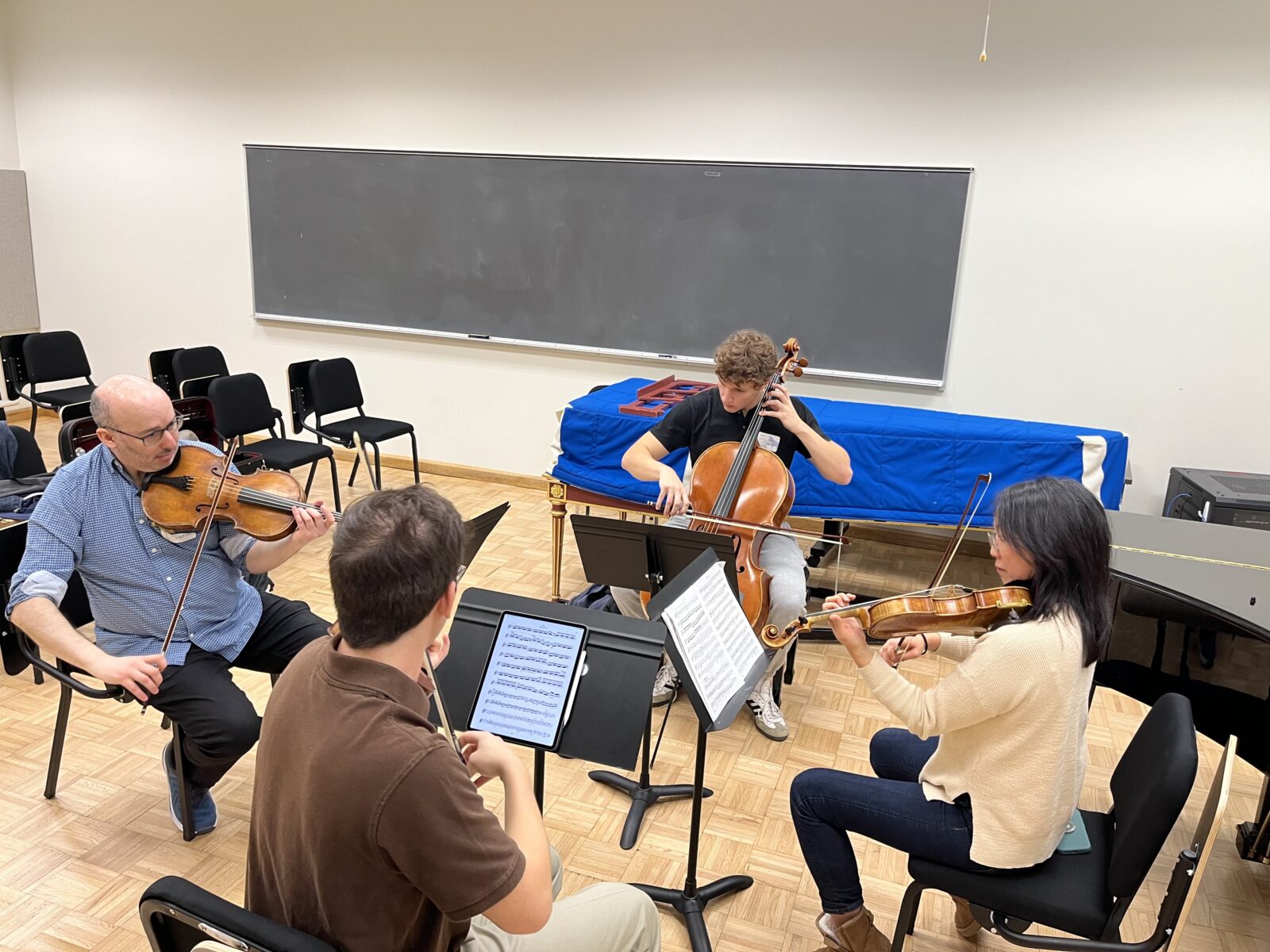
ACMP is partnering with the Eastman Community Music School (ECMS) on a fun and festive chamber music Play-In on Sunday, October 25 in Rochester, New York. All instruments and playing levels are welcome!Read More ↗
Member of the Month, October 2026: Loryn Gorsett
There is little that Loryn Gorsett hasn’t done as a violist and violinist in the Denver area. She has played in orchestras, both professional and amateur. She built a studio of students. She has played more weddings than she can count. She has been a strolling violinist in an Italian restaurant. But through it all, chamber music has been her true musical passion.Read More ↗
Chamber Music Lifestyles: Vancouver
Vancouver, Canada has a vibrant adult amateur chamber music scene, thanks to ACMP's local NAOC councilor Christina Wolf. If you've never traveled to Vancouver, add it to your list. Where else could you play chamber music with so many great players (and fun people) while looking at the mountains, and eating and drinking a wide variety of local delights?Read More ↗
Member of the Month, September 2026: Marshall Costantino
Marshall Costantino learned to play the violin from his Italian grandfather as a young child. After a 42-year hiatus from playing, he is enjoying a new life in chamber music with his neighbor and new friends he met through the ACMP directory.Read More ↗
Celebrate Beethoven: MSQ’s Vienna Workshop, January 2027
Travel to Vienna and immerse yourself in Beethoven's world and in his String Quartet Op. 127, under the expert guidance of the Manhattan String Quartet. Register by Monday, September 14 for this unique cultural expedition!Read More ↗
Music and Life at Apple Hill
Vermont-based bassist Art DeQuasie was one of the inaugural recipients of an ACMP Scholarship this summer. Read about his experience at the Apple Hill Center for Chamber Music in August 2026.Read More ↗
Explore New Worlds of Chamber Repertoire
Music educators have been working to find music by underrepresented composers that is accessible to students and amateur players of all levels. This includes music by composers of color, women composers, and LGBTQ groups, among others. Considering the changing demographics of our country, amateur chamber music players can reap the rewards of discovering new repertoire through this research.Read More ↗
Meet ACMP’s Development Consultant, Amie Roosevelt
Amie Roosevelt joined ACMP's staff as our first-ever Development Consultant in January 2026. She has enjoyed a long and varied career as a violinist, with a primary focus on historically informed performance. I hope you all will meet and even get to play with Amie. But until you do, you can get to know her and her fascinating story by reading this interview from August 12, 2026.Read More ↗
Make Chamber Music Part of Your Fall at 92NY
For many musicians, chamber music is as much about connection as it is about repertoire—the shared experience of listening, collaborating, and discovering new musical perspectives together. At the 92NY School of Music, two chamber music programs offer welcoming entry points into that experience this fall: Chamber Music Reading and Chamber Music Coaching & Performance. Whether you’re picking up your instrument again, looking to meet fellow players, or hoping to deepen your ensemble work, both programs are designed to bring musicians together in a supportive and engaging environment.Read More ↗
Member of the Month, August 2026: Alison Edwards
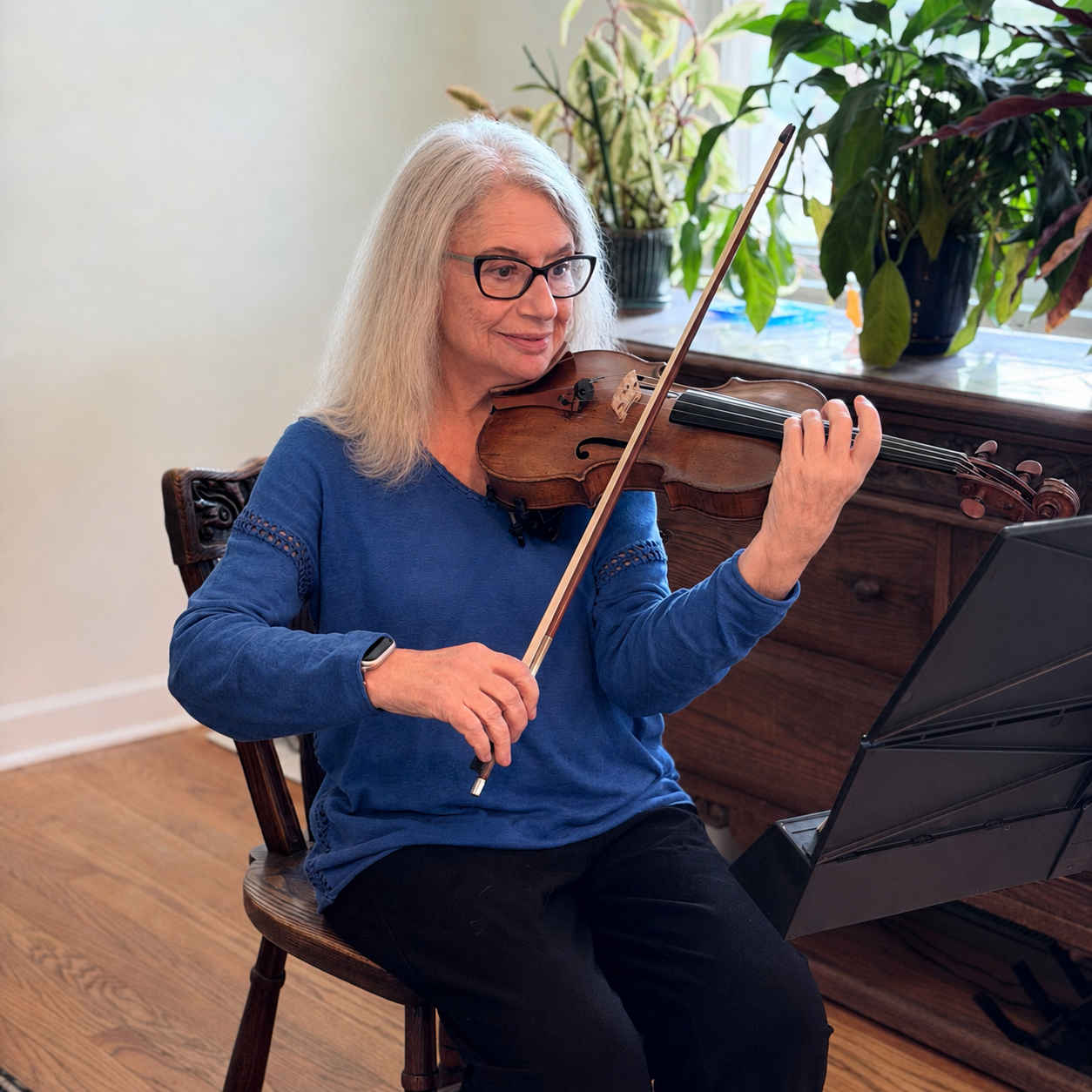
There aren’t too many people who come to a professional crossroads before they turn 13. But Alison Edwards faced such a moment. She had taken up the violin at age seven with none other than Dorothy DeLay as her teacher. But indeed, Alison had another calling. Inspired by social justice movements of the 1960s, she became a civil rights lawyer, eventually serving in the appellate division of the Cook County Public Defender’s office. After 25 years working and raising a family, she picked up her violin again and launched on a lifelong chamber music adventure.Read More ↗
After 56 Years, the Bond of Chamber Music Endures
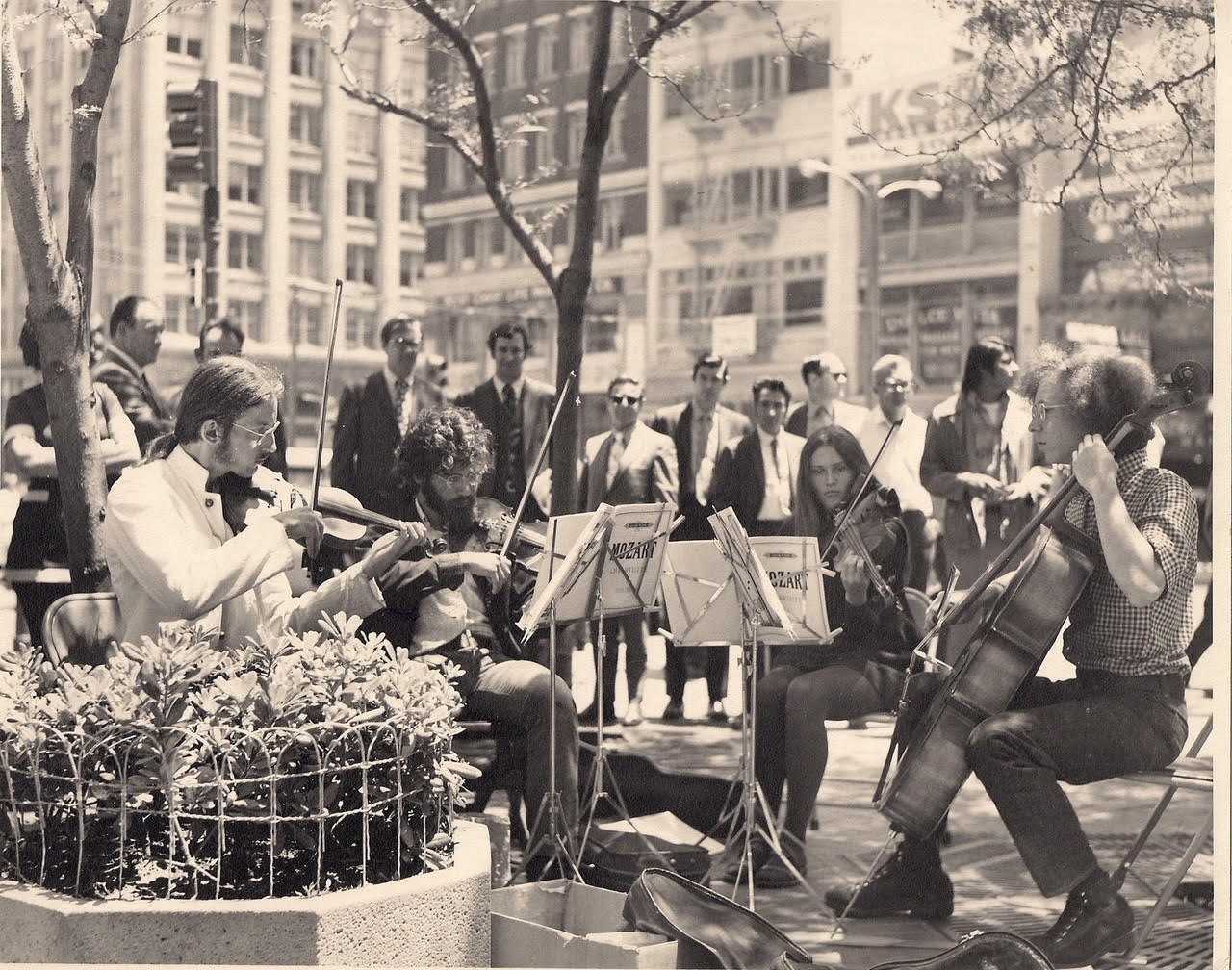
Cellist David Pearl and violinist/violist Gary Chanan played quartets together in the streets of San Francisco in the early 1970s. 56 years later they are playing together again in New York City...they reconnected through ACMP!Read More ↗
Coffee Shop Performances, Coffee-infused Repertoire
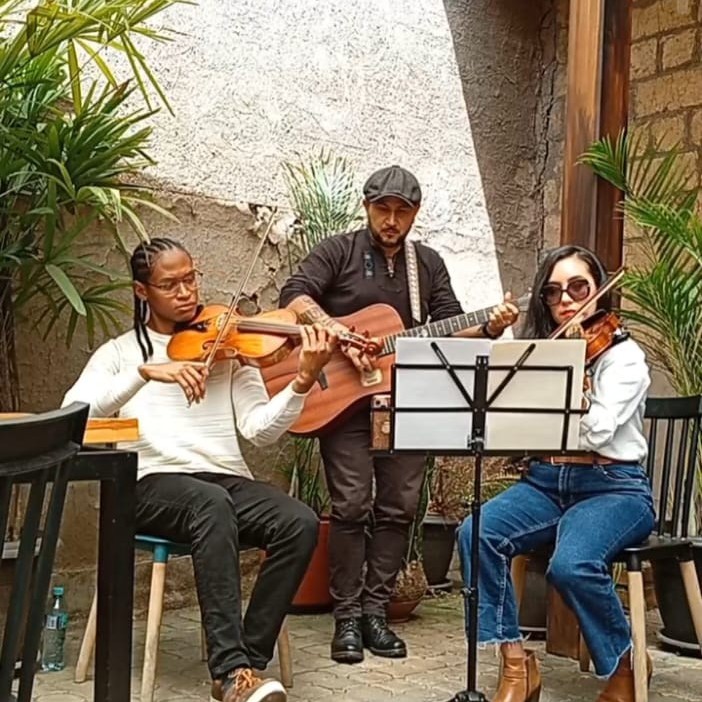
ACMP's intrepid cellist Tom Cappaert is at it again - this time with a story about ACMP members in Ecuador and Spain who organized chamber music in coffee shops, inspired by Tom's endeavors.Read More ↗
Member of the Month, July 2026: Sara Langbert
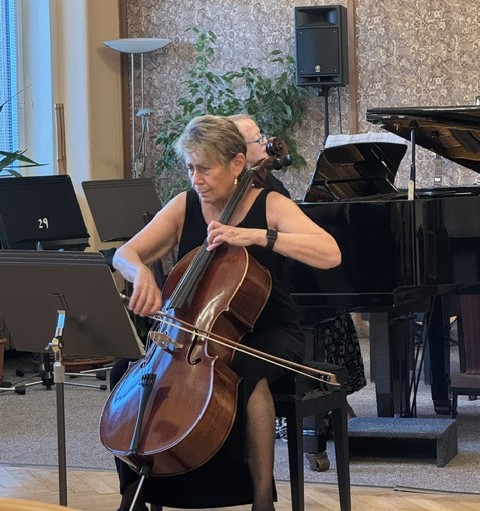
A self-proclaimed “total New Yorker”, cellist Sara Langbert graduated from Music and Art and continued her musical education at Queens College in her native New York borough. But like many ACMP members, she would put her cello aside as she managed the demands of raising a family and pursuing a career in computers and technology. Now she's playing again and is an enthusiastic member of ACMP.Read More ↗
Around the World with ACMP’s Grants (Home Coaching and Play-in)
Over the last few weeks we have been asking members, participants, and organizers to tell us how our rolling grants have been useful to them and their communities. So let’s take a trip around the world and see what folks have to say about our Home Coaching and Play in grants.Read More ↗
Around the World with ACMP’s Grants (Just Play and Impresario)
This summer, we’re hearing from ACMP members, participants, and organizers about how Just Play and Impresario grants have supported chamber music in New York, Italy, Canada, Colorado, and beyond.Read More ↗
ACMP Member of the Month, June 2026: Yoav Segev, the flying cellist returns
It’s probably easy to spot Yoav Segev at the airport. He’s the guy in the pilot’s uniform with the cello on his back. Yoav, you see, is the Flying Cellist, a globe-trotting pilot for El Al Israel Airlines who plays chamber music during his layovers in far-off destinations. Read Bob Goetz's interview with Yoav.Read More ↗
International Spotlight: Kristin Saltonstall in Panama
Kristin Saltonstall comes from a longstanding ACMP family and has been a member of ACMP for as long as she can remember. As a molecular ecologist, she works for the Smithsonian Tropical Research Institute in Panama, where she has forged a new musical life for herself and enjoys the natural beauty that Panama has to offer.Read More ↗
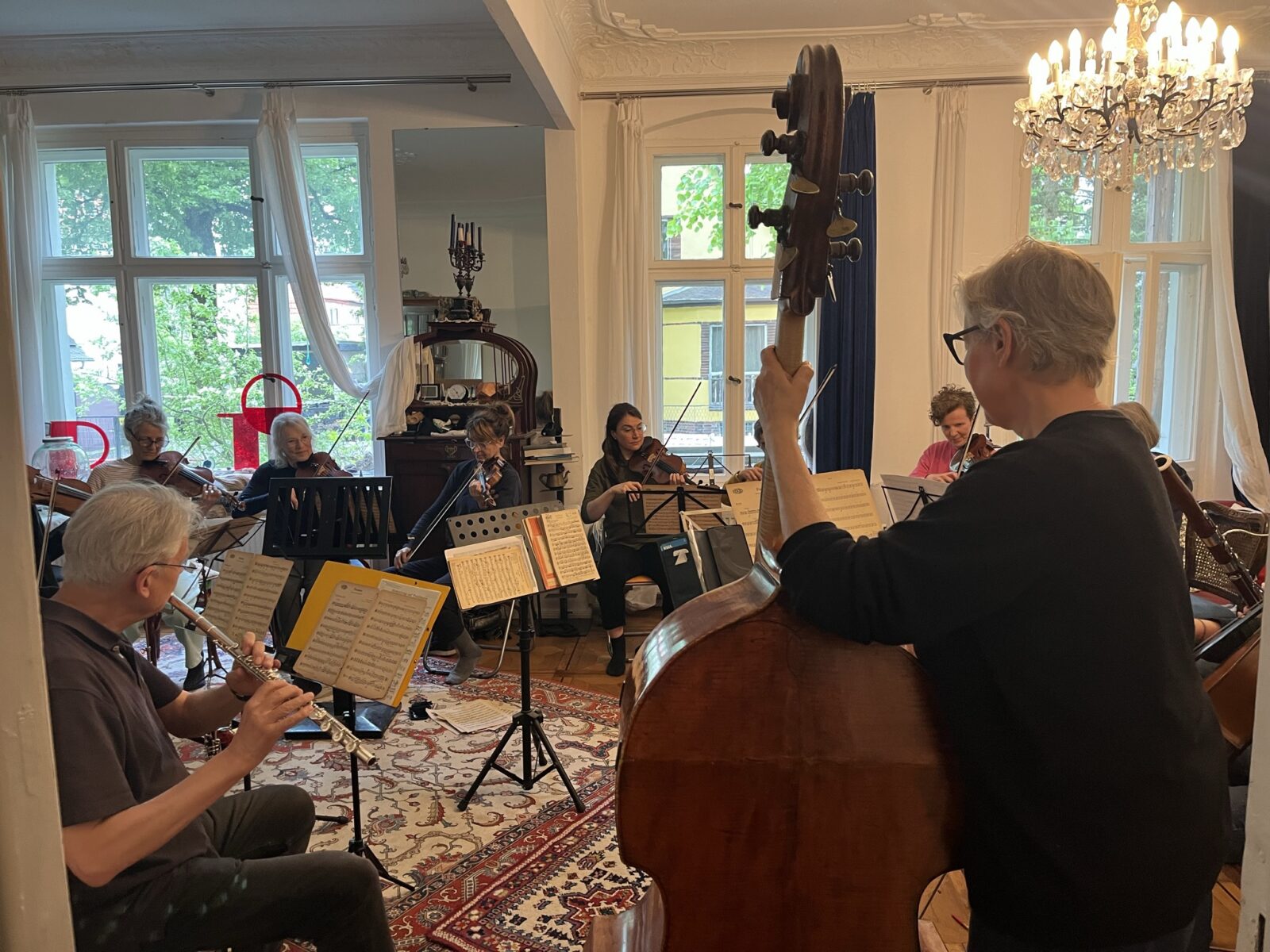
Springtime Extravaganza Light Music Orchestra on May 9, 2026, in Berlin-Karlshorst
Fifteen musicians followed Gudrun Schnellbacher's invitation to a very special kind of play-in – to play in the Springtime Extravaganza Light Music Orchestra. Read the article in English or in German.Read More ↗
Load More
All Articles By