A Bridge from West to East – The Chamber Music of Reena Esmail
I returned recently from my first trip to the country of my father’s birth, India. He was born in the lesser-known region of Coorg in the southwest part of the country. It is a land of coffee plantations and elephants, and a warrior caste, the Kodavas, who are known for their deep connection to nature…and weapons. My friends tell me they are unsurprised that I come from a line of warriors.
Coorg is in the Indian state of Karnataka. Though I know shamefully little about classical Indian music, the term Carnatic music was somewhere in my brain. Dr. Google confirmed that the state of Karnataka did in fact lend its name to one of two main branches of Indian classical music. Carnatic (southern India) and Hindustani (northern India) music began diverging onto their separate paths in the 12th century, but they share the two main elements of rāga (sometimes written as raag) modes or melodies, and the rhythmic cycles called tāḷa.
Karnataka has many temples, and it’s possible my husband and I saw most of them. Every guide seemed intent on teaching us about Hinduism, the gods and their many symbols, which are celebrated in the richly decorated stone temples that date to as early as the 8th century. I confess that I was afraid there would be a quiz after each temple visit and I would fail miserably. So many gods, so many accompanying tools and vehicles, so many stories. What came through, however, was the androgynous forms that each god would take, and the seeming equality of male and female, all governed by Brahman, a genderless metaphysical concept that was described as a “womb” to us by several of our guides.
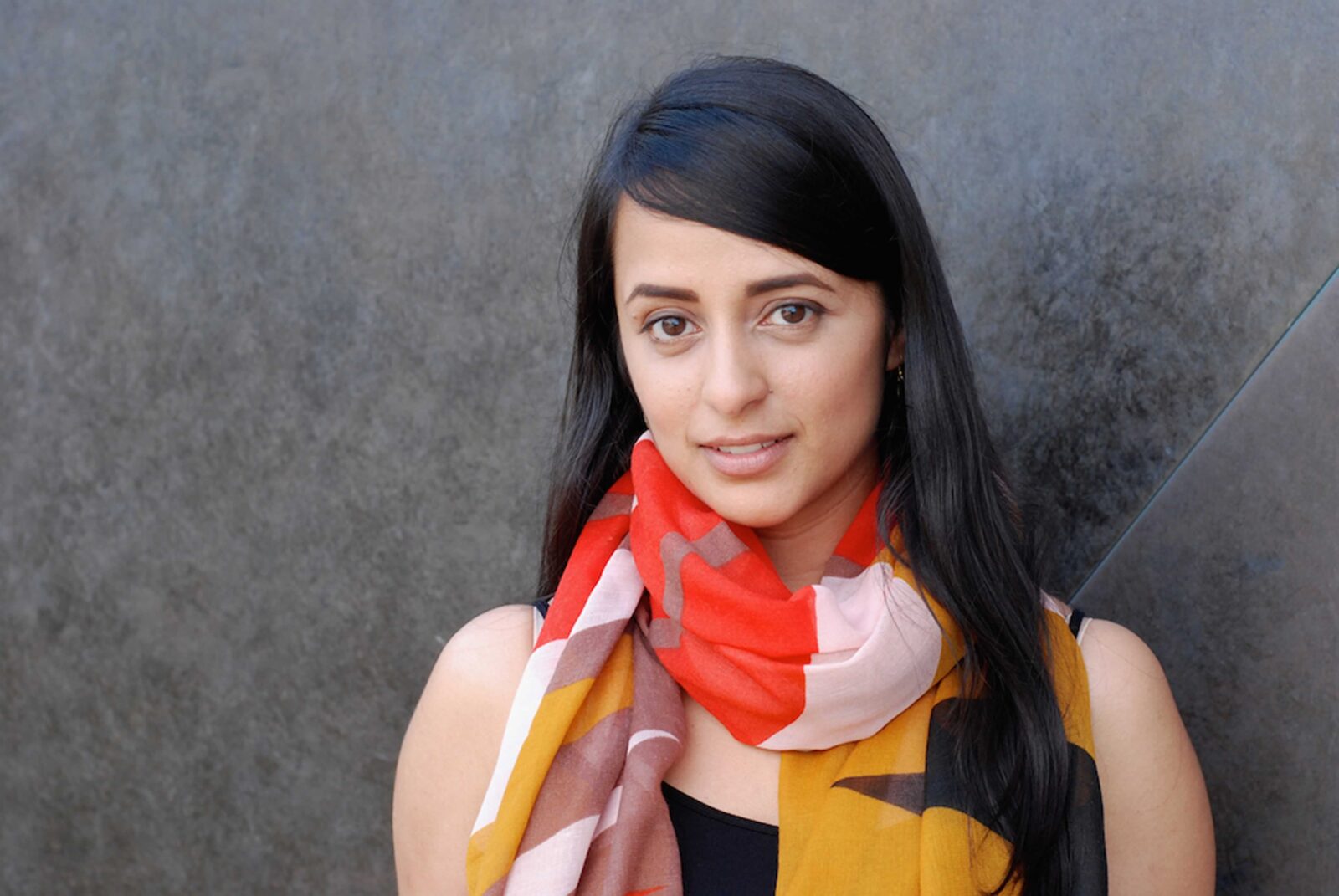
All of which led me, upon my return, to the music of Indian American composer Reena Esmail. She was born to Indian parents in 1983 and continues to live in her hometown of Los Angeles. She studied the traditions of Hindustani music as a Fulbright-Nehru scholar in 2011-12 and is a graduate of Juilliard and Yale. I was introduced to her music several years ago by my daughter but didn’t know about the trove of chamber music in her output until I did a little more digging recently.
As a teenager, Esmail won a life-changing competition which led to playing Mendelssohn’s Piano Trio with members of the Los Angeles Philharmonic. She names Ravel’s Piano Trio as a favorite, and notes: “So much of what I’ve learned about color and texture in my writing comes from Ravel.” As a piano student Esmail had been attracted to the color, texture, and freedom of 19th century French music, and found that she used this lens to more fully understand Hindustani music.
It was in her 2010 Piano Quintet that she began incorporating elements of Hindustani classical music into her work for the first time. As she writes:
My path to Hindustani classical music was circuitous: at the point I wrote this piece, I had been yearning for years to understand the music of my own culture, but I hadn’t quite found my way in. It wasn’t until my mid-20s, and (surprisingly) during my Masters program at Yale School of Music, that I truly began to engage in a thorough study of the music from my own culture. The minute I felt my voice make that first little gamak [an ornamentation technique in Indian classical music] something opened in me, and I knew I had no other choice but to continue peering intently down that path… This piece is the first step of what became, from that moment forward, a lifelong journey into the space between these two cultures that define me.
Esmail’s own website gives you a complete listing of her works and other information about the composer. I’ve named here some of her compositions for chamber ensembles which especially drew me in and cause me to now eagerly seek opportunities to hear and play her music.
Piano Quintet, 2010
Two Violins, Viola, Cello, Piano
Duration: 13′, one movement
Score available in digital or print form
Recording
String Quartet (Ragamala), 2013
Two violins, Viola, Cello
Duration: 19′, four movements
Score available in digital and print formats
(Note: there are several different versions of this work, including one for string quartet and Hindustani vocalist)
Performance
Each movement begins with a quiet drone, imitating the humming that Esmail heard from audiences when a raag was introduced at concerts she attended during her year in India. To her, these drones suggest a deeper connection between audience and performer.
Tasveer, 2012
Clarinet, Violin, Cello, Piano
Duration: 5′
Score
Performance
Tasveer was the first piece Esmail composed after returning from her year in India. She sees this work as the place where she “began to scratch the surface of the ideas and concepts that now form the backbone of the music” she composes. “Hindustani ornamentation is so beautiful and ephemeral, and this was one of my first attempts to capture these little wisps of sound on the page,” she writes.
Dhire, Dhire, 2022
Piano, Violin, Cello, Soprano
Duration: 5′
Score available in digital and print formats
Performance
Esmail has composed this with specifically young musicians in mind, knowing that some of the music (like books) we encounter when we’re young shapes us and stays with us for the rest of our lives. There is also a version for Cello, Piano, and Contralto.
Saans (Breath), 2017
Violin, Cello, Piano
Duration: 8′
Score available in digital and print formats
Performance
A reworking of the slow movement of Esmail’s Clarinet Concerto
Piano Trio, 2019
Violin, Cello, Piano
Duration: 31′, four movements
Score
Performance
Esmail has said that composing a piano trio fulfilled one of her earliest musical ambitions. Authentic raags appear in each movement of the trio. Flutters, slides and harmonics continue in the slow movement, creating a sense of improvisatory freedom and timelessness. The third movement scherzo recalls Mendelssohn’s elfin qualities and Shostakovich’s humor. But Esmail’s musical language is all her own.
I Wonder as I Wander, 2014
Piano, Violin, Cello
Duration: 4′
Score available in digital and print formats
Performance
The Appalachian Christmas carol with a little flavor of Indian classical music in the ornamentation. A score for the string quartet version is in preparation.
The History of Red, 2020
Mezzo-Soprano, Piano, Violin, Cello
Duration: 20′
Score available in digital and print formats
Performance
Esmail writes: The first time I heard Samuel Barber’s Knoxville: Summer of 1915, it changed my life. I was fourteen years old, and as I sat under the stars at the beautiful Ford Theater on a summer night in in Los Angeles with my parents, I completely identified with the voice of the child who narrates the text of the piece – so aware of the huge, complex world that I was seeing, even through young eyes. Just trying to parse it all. I can pinpoint that one performance as a pivotal moment in my decision to be a musician. I just wanted to be someone who could create that kind of beauty.
The History of Red was originally written for soprano and chamber orchestra (like Barber’s Knoxville: Summer of 1915) It’s text by Linda Hogan speaks of a woman grappling with the world around her, and her own complex history.
Interglow, 2020
String Quartet, Flute, Piano, Community Voices
Duration: 5-7′
Score – digital only
Performance
From Esmail’s notes: “This piece is designed for engagement. It requires performers to sing a few notes, and also for the audience to sing. The first section is a call and response between performers, where the audience can participate. The second section requires learning a short melody.
The Light is the Same, 2017
This work exists in two versions:
Woodwind Quintet: Flute (+piccolo), Oboe, Clarinet, Horn, Bassoon (Score)
Trio: Flute, Oboe, Piano (Score)
Duration: 11-12′
Performance: (Quintet version)
Performance: (Trio version)
Esmail mined her own 2016 oratorio, This Love Between Us: Prayers for Unity, and the wisdom of Sufi mystic poet Rumi for inspiration for these two chamber music versions.
The Light is the Same.
Religions are many
But God is one
The lamps may be different
But the Light is the same – Rumi, 13th c.
Khirkiyan: Three Transformations for Brass Quintet, 2017
Brass Quintet: two trumpets, horn, trombone, tuba
Score available in digital and print formats
Performance (third movement)
Duration: 11′, three movements
Khirkiyaan is the Hindi word for “windows,” and Esmail describes this brass quintet as three ‘windows’ into her music. Each movement takes an earlier work by Esmail and reimagines it for brass quintet. The first movement is titled Jog, and is taken from her string quartet, Ragamala. The second movement, Joota, is based on her song cycle for guitar and mezzo soprano. Tuttarana, the third movement, was originally written for women’s choir. This last title is formed from the Italian tutti and tarana, a Hindi work that might best be translated as the jazz term “scat.”
Meri Sakhi Ki Avaaz (My Sister’s Voice), 2019
Piano Quintet and vocals: Soprano, Hindustani vocalist, Piano, Two Violins, Viola, Cello
Duration: 22′, three movements
Score available in digital and print formats
Performance
Esmail writes: At its core, this is a piece about sisterhood. Each movement’s short text epitomizes one of the many facets of having and being a sister. It is also about what sisterhood looks like when expanded beyond a single family or a single culture— when two women, from two different musical cultures create space for one another’s voices to be heard.
Don’t be surprised by the opening recording of Delibes’s famous Flower Duet from his opera Lakme. Actually, do be surprised. Be very surprised at how the entrance of the Hindustani vocalist is momentarily jarring before becoming essential to the dialogue between old and new, east and west. If you have time for nothing else, listen to this piece and allow it to cast its spell upon you. You may find, like me, that it draws you into Esmail’s orbit, an orbit you won’t want to soon leave.
“I wish I could live in India and America at the same time,” says Reena Esmail. “I wish they shared a border, and I could build a little home right in between them. I know I can’t do that in the physical world, but this is where I live every day in my music.”
As someone who can look back on my own life and see all the small ways I too lived on the border of east and west, finding music that speaks to the home I have found in between has been moving. I hope you find something in Esmail’s music that transports you as well across that bridge from west to east.
More Articles
Chamber Music Lifestyles: Vancouver
Vancouver, Canada has a vibrant adult amateur chamber music scene, thanks to ACMP's local NAOC councilor Christina Wolf. If you've never traveled to Vancouver, add it to your list. Where else could you play chamber music with so many great players (and fun people) while looking at the mountains, and eating and drinking a wide variety of local delights?Read More ↗
Member of the Month, September 2026: Marshall Costantino
Marshall Costantino learned to play the violin from his Italian grandfather as a young child. After a 42-year hiatus from playing, he is enjoying a new life in chamber music with his neighbor and new friends he met through the ACMP directory.Read More ↗
Celebrate Beethoven: MSQ’s Vienna Workshop, January 2027
Travel to Vienna and immerse yourself in Beethoven's world and in his String Quartet Op. 127, under the expert guidance of the Manhattan String Quartet. Register by Monday, September 14 for this unique cultural expedition!Read More ↗
Music and Life at Apple Hill
Vermont-based bassist Art DeQuasie was one of the inaugural recipients of an ACMP Scholarship this summer. Read about his experience at the Apple Hill Center for Chamber Music in August 2026.Read More ↗
Explore New Worlds of Chamber Repertoire
Music educators have been working to find music by underrepresented composers that is accessible to students and amateur players of all levels. This includes music by composers of color, women composers, and LGBTQ groups, among others. Considering the changing demographics of our country, amateur chamber music players can reap the rewards of discovering new repertoire through this research.Read More ↗
Meet ACMP’s Development Consultant, Amie Roosevelt
Amie Roosevelt joined ACMP's staff as our first-ever Development Consultant in January 2026. She has enjoyed a long and varied career as a violinist, with a primary focus on historically informed performance. I hope you all will meet and even get to play with Amie. But until you do, you can get to know her and her fascinating story by reading this interview from August 12, 2026.Read More ↗
Make Chamber Music Part of Your Fall at 92NY
For many musicians, chamber music is as much about connection as it is about repertoire—the shared experience of listening, collaborating, and discovering new musical perspectives together. At the 92NY School of Music, two chamber music programs offer welcoming entry points into that experience this fall: Chamber Music Reading and Chamber Music Coaching & Performance. Whether you’re picking up your instrument again, looking to meet fellow players, or hoping to deepen your ensemble work, both programs are designed to bring musicians together in a supportive and engaging environment.Read More ↗
Member of the Month, August 2026: Alison Edwards
There aren’t too many people who come to a professional crossroads before they turn 13. But Alison Edwards faced such a moment. She had taken up the violin at age seven with none other than Dorothy DeLay as her teacher. But indeed, Alison had another calling. Inspired by social justice movements of the 1960s, she became a civil rights lawyer, eventually serving in the appellate division of the Cook County Public Defender’s office. After 25 years working and raising a family, she picked up her violin again and launched on a lifelong chamber music adventure.Read More ↗
After 56 Years, the Bond of Chamber Music Endures
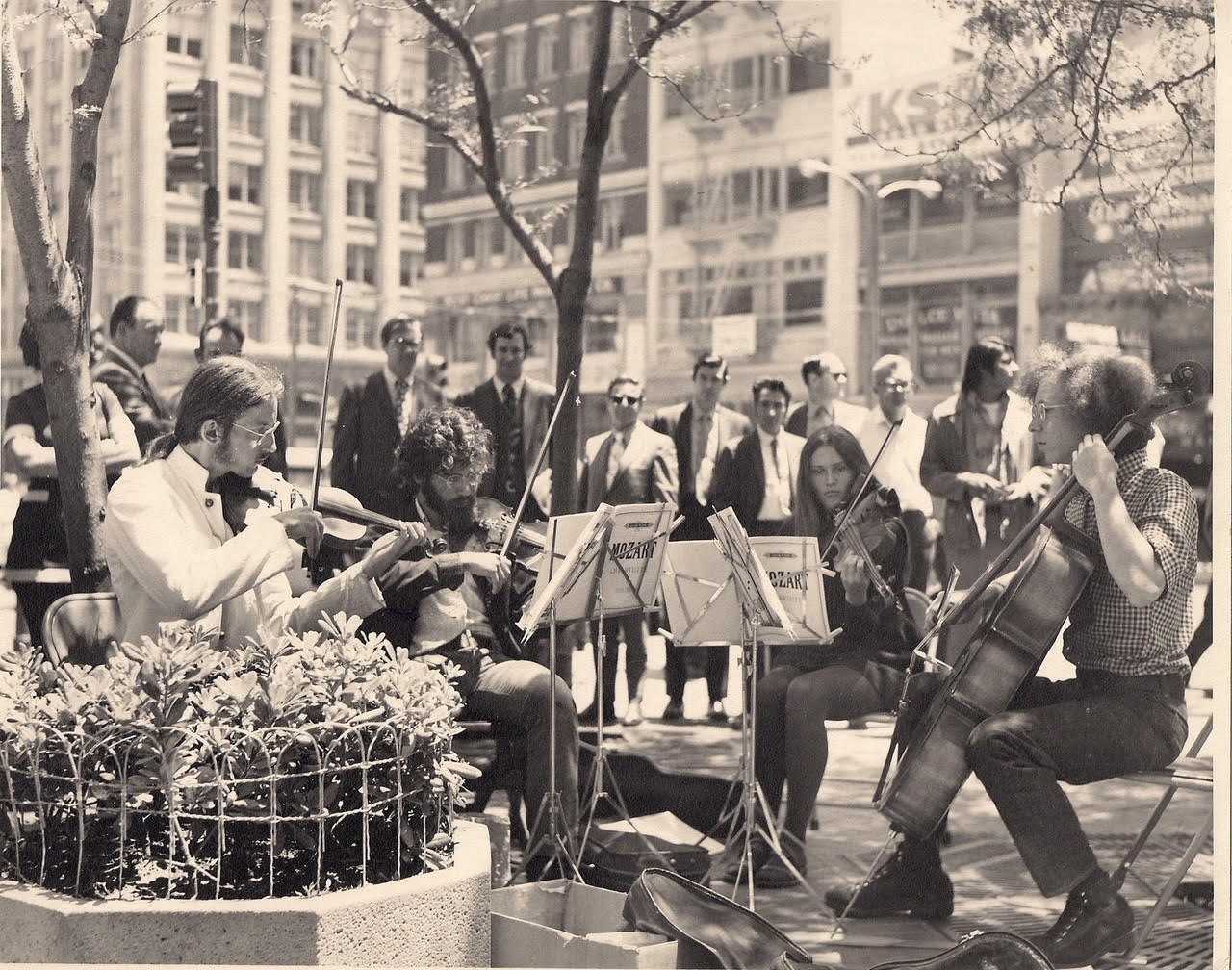
Cellist David Pearl and violinist/violist Gary Chanan played quartets together in the streets of San Francisco in the early 1970s. 56 years later they are playing together again in New York City...they reconnected through ACMP!Read More ↗
Coffee Shop Performances, Coffee-infused Repertoire
ACMP's intrepid cellist Tom Cappaert is at it again - this time with a story about ACMP members in Ecuador and Spain who organized chamber music in coffee shops, inspired by Tom's endeavors.Read More ↗
Member of the Month, July 2026: Sara Langbert
A self-proclaimed “total New Yorker”, cellist Sara Langbert graduated from Music and Art and continued her musical education at Queens College in her native New York borough. But like many ACMP members, she would put her cello aside as she managed the demands of raising a family and pursuing a career in computers and technology. Now she's playing again and is an enthusiastic member of ACMP.Read More ↗
Around the World with ACMP’s Grants (Home Coaching and Play-in)
Over the last few weeks we have been asking members, participants, and organizers to tell us how our rolling grants have been useful to them and their communities. So let’s take a trip around the world and see what folks have to say about our Home Coaching and Play in grants.Read More ↗
Around the World with ACMP’s Grants (Just Play and Impresario)
This summer, we’re hearing from ACMP members, participants, and organizers about how Just Play and Impresario grants have supported chamber music in New York, Italy, Canada, Colorado, and beyond.Read More ↗
ACMP Member of the Month, June 2026: Yoav Segev, the flying cellist returns
It’s probably easy to spot Yoav Segev at the airport. He’s the guy in the pilot’s uniform with the cello on his back. Yoav, you see, is the Flying Cellist, a globe-trotting pilot for El Al Israel Airlines who plays chamber music during his layovers in far-off destinations. Read Bob Goetz's interview with Yoav.Read More ↗
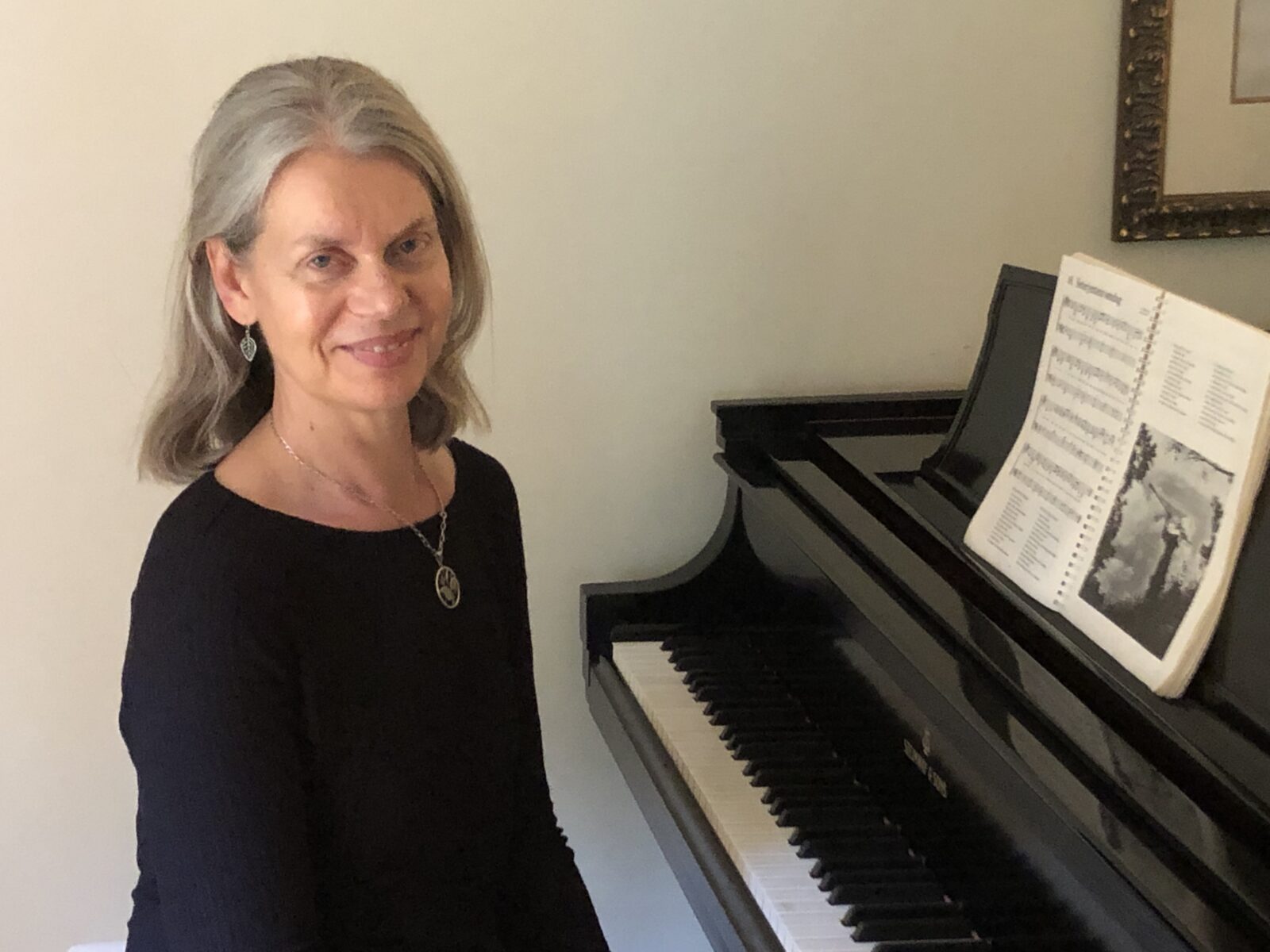
International Spotlight: Kristin Saltonstall in Panama
Kristin Saltonstall comes from a longstanding ACMP family and has been a member of ACMP for as long as she can remember. As a molecular ecologist, she works for the Smithsonian Tropical Research Institute in Panama, where she has forged a new musical life for herself and enjoys the natural beauty that Panama has to offer.Read More ↗
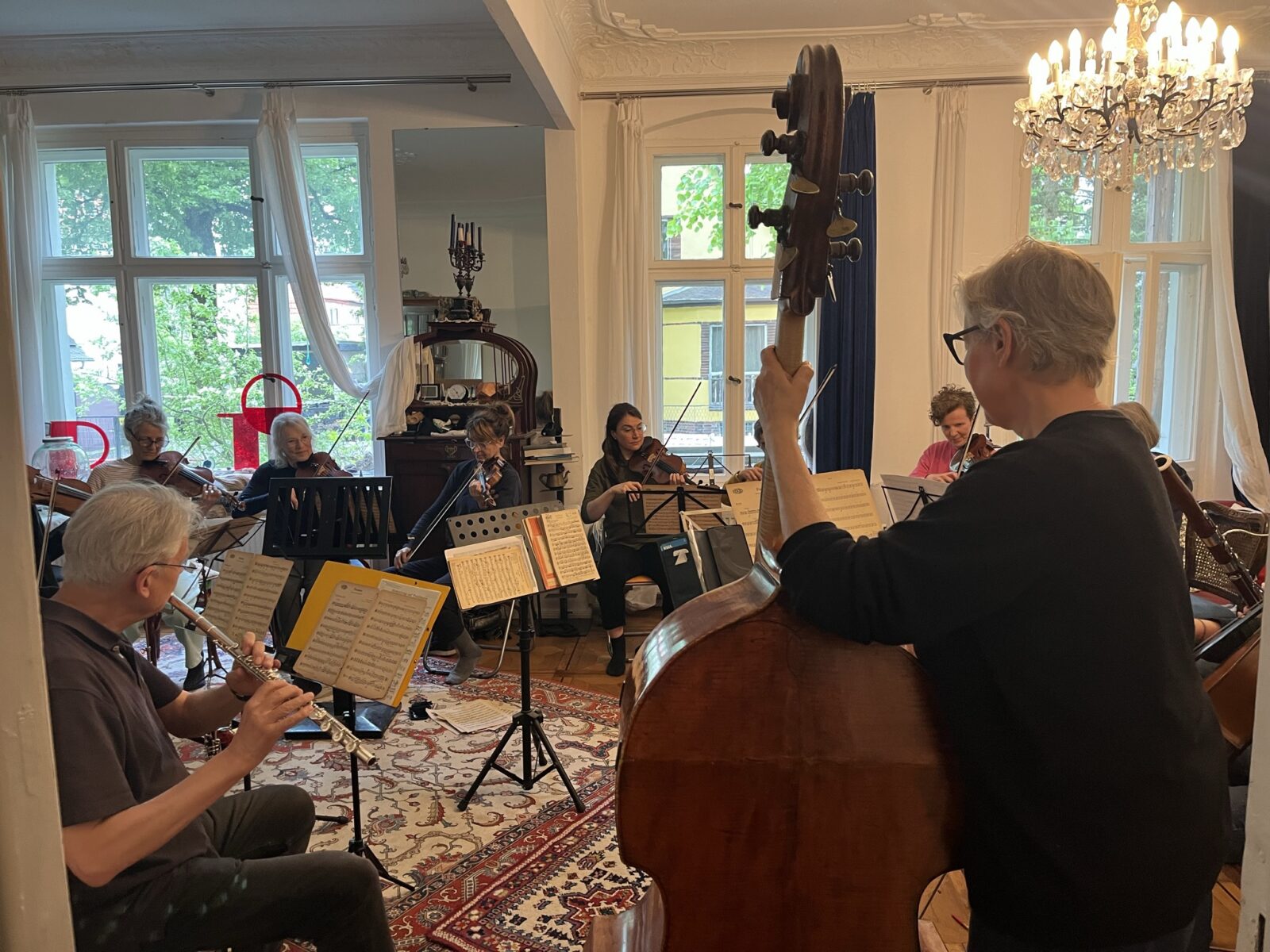
Springtime Extravaganza Light Music Orchestra on May 9, 2026, in Berlin-Karlshorst
Fifteen musicians followed Gudrun Schnellbacher's invitation to a very special kind of play-in – to play in the Springtime Extravaganza Light Music Orchestra. Read the article in English or in German.Read More ↗
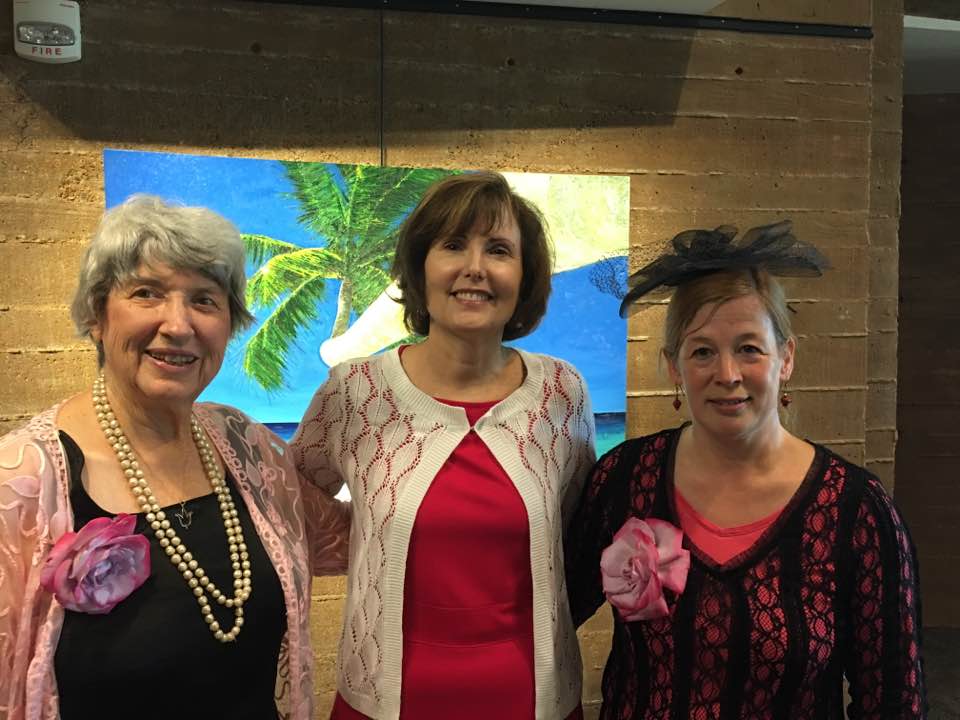
Remembering Pianist Fontaine Laing
Janet White Remembers her friend, and longtime ACMP member pianist Fontaine Laing.Read More ↗
News of Note 2026
It’s that time of year again! The web version of the 2026 News of Note is live, featuring updates from the past our Strategic Plan, and some fun extras, including everyone’s favorite: a new puzzle!Read More ↗
How to Find Players and Build your ACMP Community
There is a time in every player’s musical life when you realize that you want to play more, but not quite sure with whom or where to even begin. Here are some ways to get started and begin building a community around you.Read More ↗
Member of the Month: Amit Rotem
By day, Amit Rotem works as a child psychiatrist specializing in youth addictions at the Centre for Addiction and Mental Health in Toronto. When he is not there, or with his family, there is a good chance he is playing his cello, with as many willing chamber partners as the calendar will allow!Read More ↗
Load More
All Articles By