What I learned from wind players
Perhaps after three weeks of “March Winds,” some of you are wondering why a viola player would spend a whole month collecting and sharing information about wind players and their chamber music repertoire.
I feel like everyone has an instrument that is their destiny, and those of us who find the right one are so fortunate. I remember the short lived clarinet career of my older sister when we were both kids. It was not the right fit, and she was having trouble even putting the thing together. My mother, who knew even less about the clarinet, was trying to help her while spinning Acker Bilk’s LP Call Me Mister on our turntable. I think, maybe, that didn’t help!
I was lucky to find my soul mate, the viola, at the age of nine through the Vancouver Schools String Program. As one does, I mainly played with other strings and piano. For one year I was a member of the Vancouver Youth Symphony, but for me the winds were just kind of there in the background. It didn’t even register to me that they were the featured soloists most of the time.
When I moved to Belgium as a teenager, I joined the Brussels Youth Symphony and became close friends with the oboist Sylvain Jeanmart. We formed a group to play the Mozart Oboe Quartet – and we played it all the time! We even got some gigs at local restaurants where we played in exchange for food. Sylvain was my first wind player friend, and I learned about the challenges of making and adjusting reeds, the volatilities of reeds to weather changes, and most importantly – not being able to eat right before or while playing.
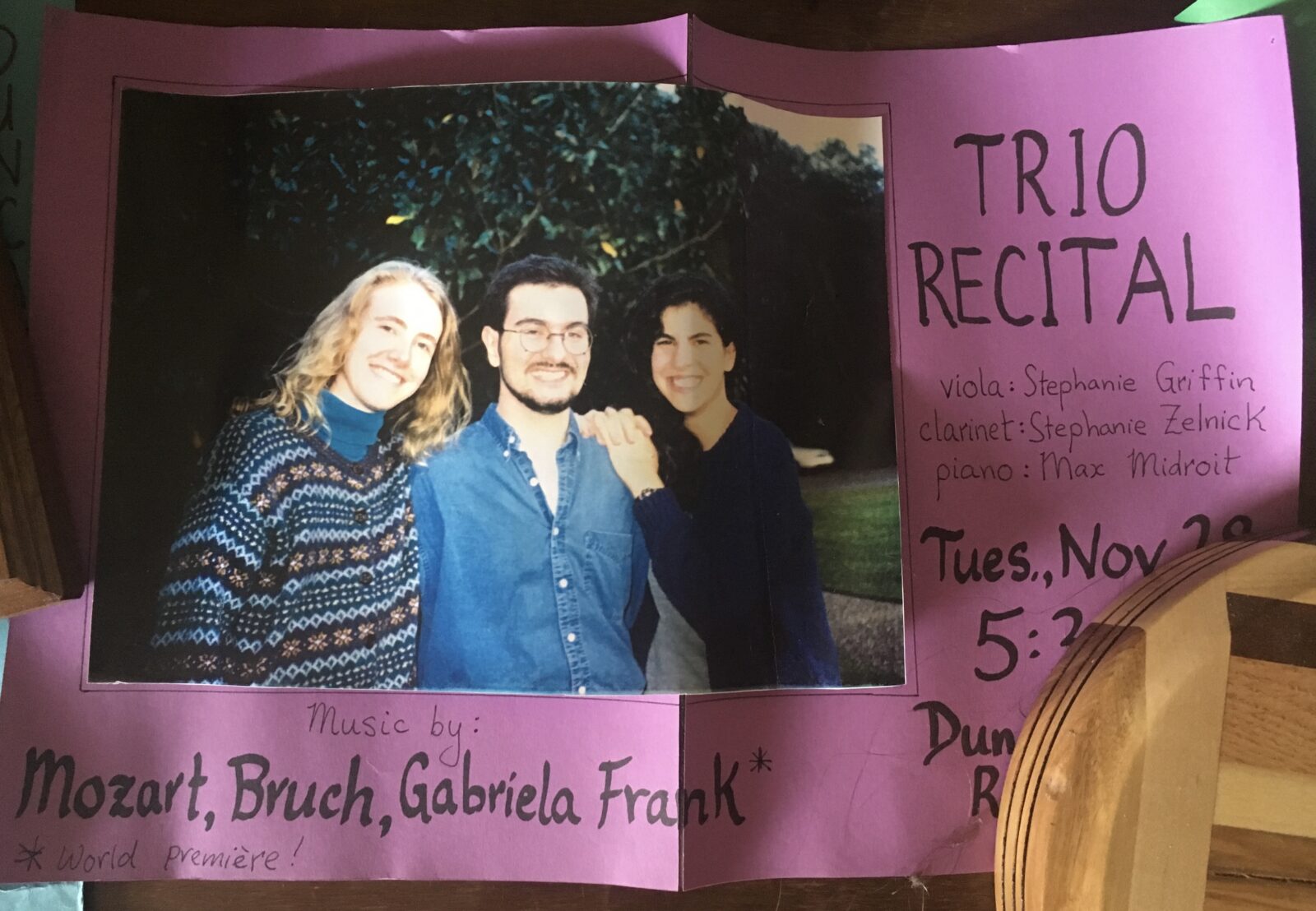
I went straight from Belgium to Houston, Texas to do my undergraduate degree in viola performance at Rice University. Full disclosure: Stephanie Zelnick, who wrote the article Irreverent Friends, the True Inspiration Behind Clarinet’s Chamber Music Gems for the ACMP blog, became one of my closest friends. Stephanie invited me into a world of clarinet music beyond Acker Bilk. I got to hear her practice the Copland Clarinet Concerto, and through her I gained an appreciation for the level of responsibility (and stress) of being an orchestral clarinetist. Most importantly we formed a trio with pianist Max Midroit, with the working band name “Steph to the Max” – later to be called the Feldspar Trio, as a reference to the “Rocks for Jocks” (intro to geology) class the two Stephanies took for science credit. We played Mozart’s famous Kegelstatt Trio and Bruch’s Romantic Pieces, and even “commissioned” a brand new piece by Rice University undergraduate composer Gabriela Lena Frank.
Stephanie and I went on to put a group together to learn both the Mozart and Brahms Clarinet Quintets, which remain to this day two of my all-time favorite chamber pieces.
Through Stephanie, I learned so much about how the breath informs phrasing. Sometimes I felt like I was scratching away at my viola while the music just seemed to flow so naturally through her. Later in life I learned that vocal and wind teachers actually use the bow as an analogy for breath, and I was reminded of this by flutist Jayn Rosenfeld’s recent article On coaching mixed chamber music with winds . All of us musicians can learn so much by listening to and especially playing with musicians who produce sound in a completely different way than we do!
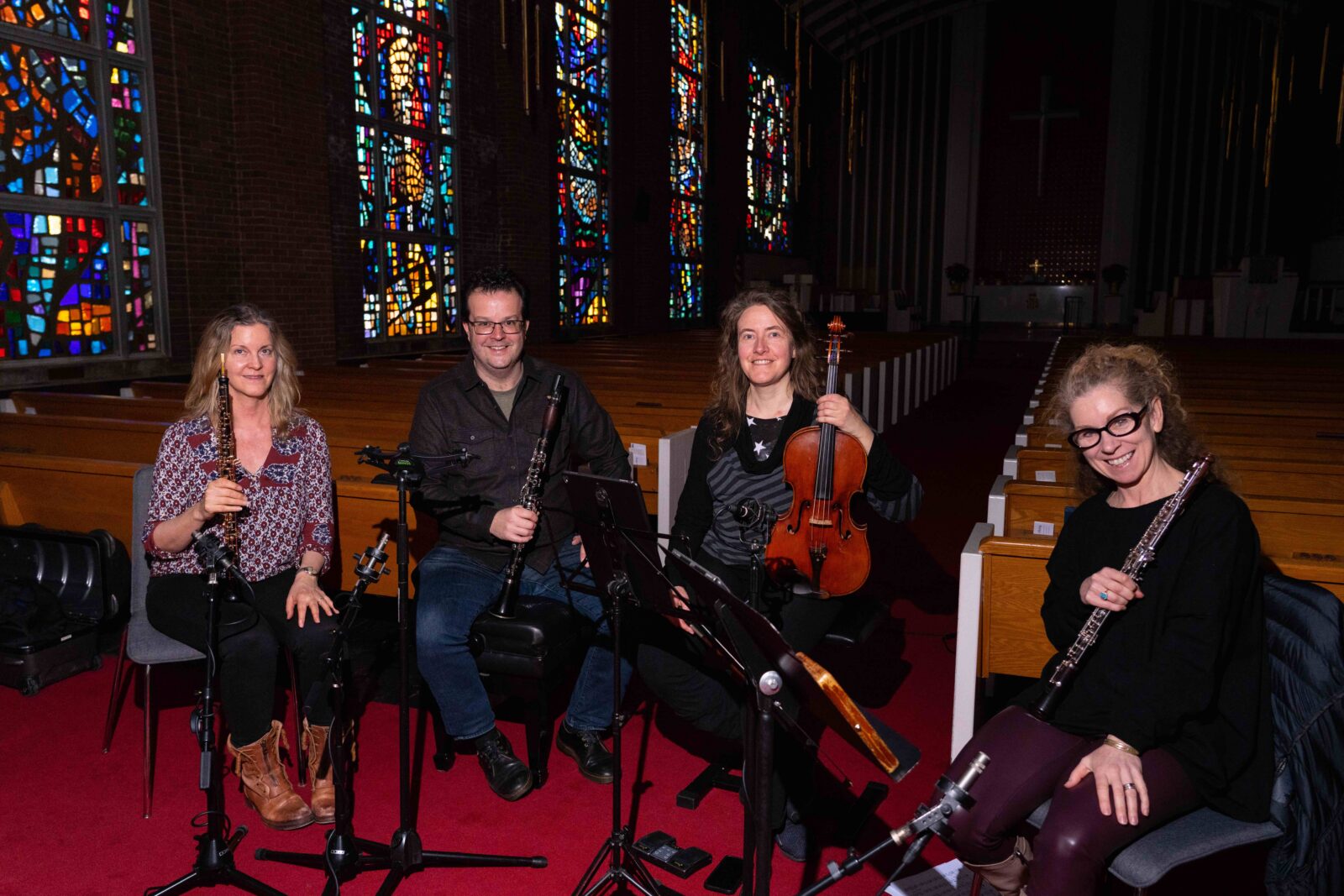
Playing with winds, brass, piano and percussion can cure us string players of our assumptions about articulations. Working with wind players as a violist and later as a composer, I have really come to accept that there is nothing universal about a dash or a dot, or even a slur. And the ways most string players interpret strings of notes with no slurs or articulation markings is vastly different from what wind players do. When I wrote my first pieces for winds, I generally wrote too many staccati. In the early rehearsals for my piece For Sameena (2023) for two oboes, clarinet and viola, I ended up removing almost all of them, and adding dashes in many places to get the smooth sustain into the next note that I envisioned. Where a string player might play a smooth détaché, a wind player would tongue. It seems like the default for an unslurred and unmarked note in the winds is much shorter than how we string players perceive it.
Adding dashes to notes for wind players might produce more of what we string players call détaché, whereas dashes for string players can mean conflicting things. Do dashes denote a seamless connection between notes, or more of a portato where the bow keeps moving but the sound is not sustained?
Then, of course, if you ever get to play 20th- or 21st-century music with winds, you will find notations that mean completely different things. For example, what a string player would interpret as tremolo on a single pitch is a flutter tongue effect on the flute, which can be very dramatic. Can one pluck a flute? Not quite – but they do play pizzicato!
As a composer and violist, perhaps what fascinates me most about the wind instruments is the way in which dynamics and colors are so intricately linked to register, and how timbre can affect one’s perception of register. Flutist Roberta Michel pointed out to me, for example, that the alto flute is the violin of the flute family, with its low G – yet it sounds much more like a viola. Conversely, what may seem like very high notes to most of us is the mellow low register of the piccolo.
Writing my duet For Joni (2024) for alto flute and viola really brought this home for me. I had the opportunity to workshop the piece with flutist Tessa Brinckman in the lead up to our premiere of the piece in January 2024. In rehearsals I made many changes to the dynamics and it became a different piece than I had originally imagined. Especially in the opening material, which recurs throughout the piece, what I had originally intended to have more brilliance took on a sweeter character, more like the cooing of doves.
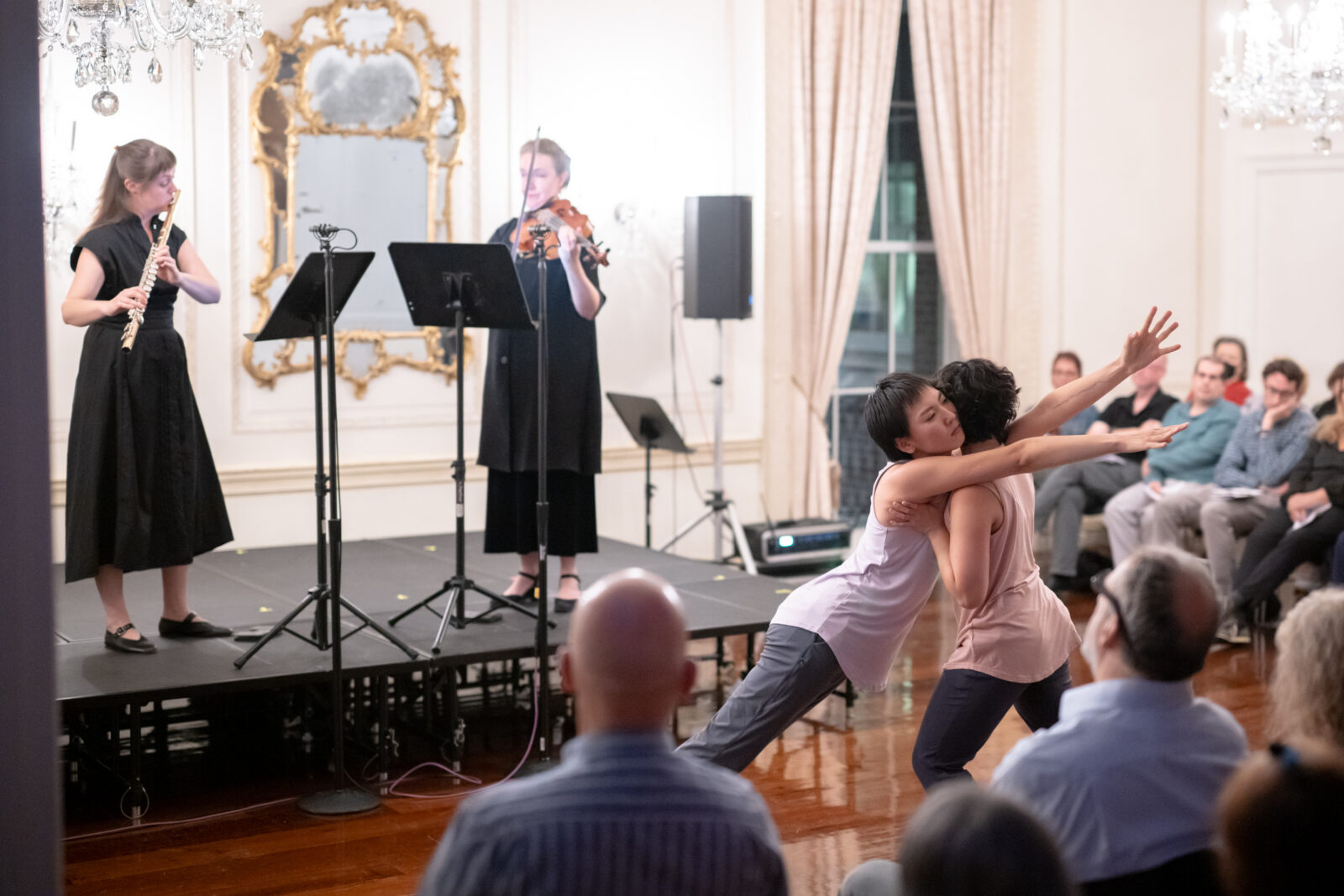
Choreographer Sameena Mitta eventually choreographed the piece, which I programmed again (with her MeenMoves dancers) on the 2025 Momenta Festival as part of a whole program celebrating chamber music with flute called program “Tutti Flutey.” Along with my duet, the program featured Mozart’s G minor flute quartet, a gorgeous quintet for flute and string quartet Blue Minor (2001) by Elizabeth Brown, and the US premiere of modernist composer Kaihosru Sorabji’s Il tessuto d’arabeschi (1979).
More Articles
Chamber Music Lifestyles: Vancouver
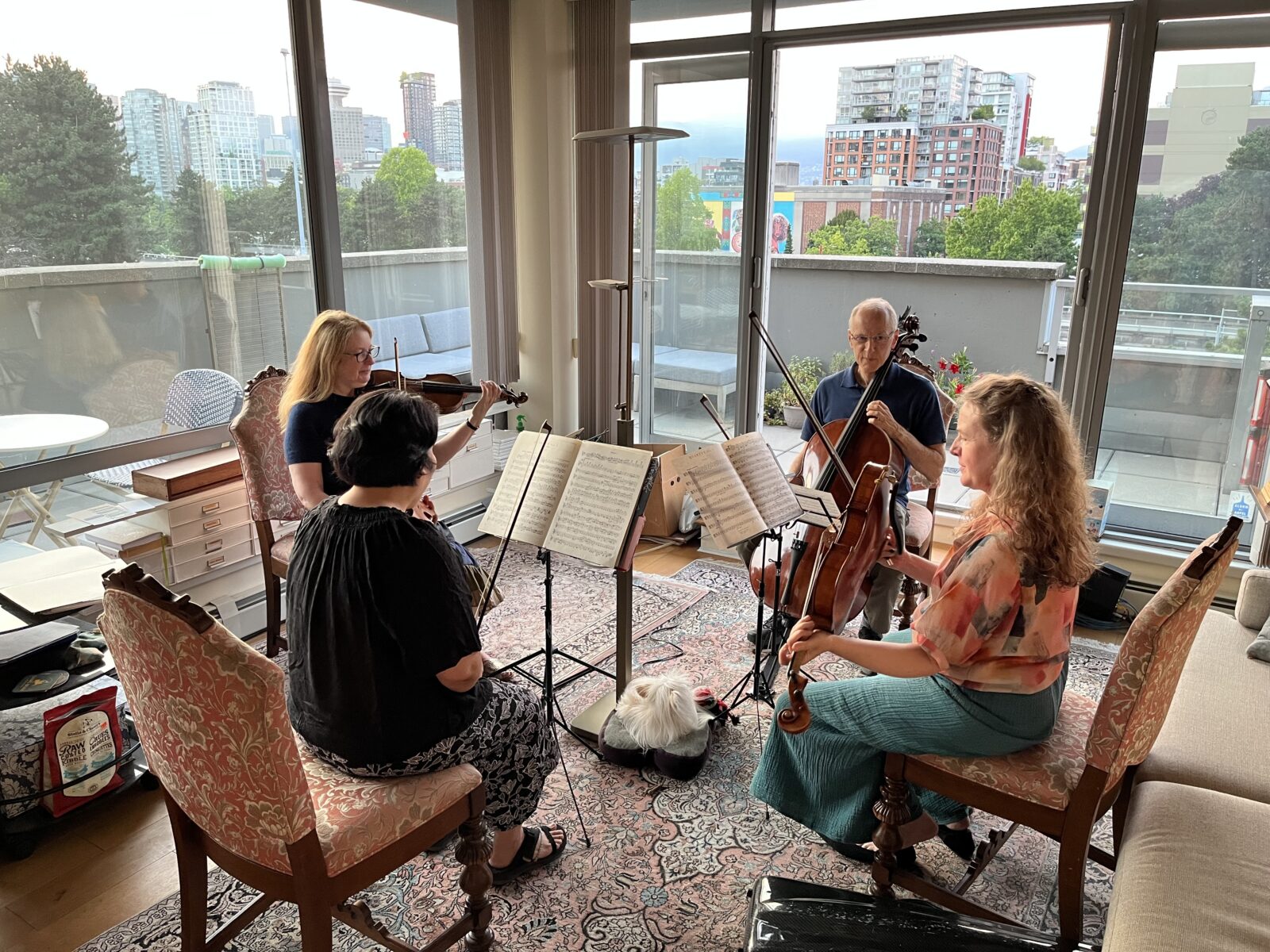
Vancouver, Canada has a vibrant adult amateur chamber music scene, thanks to ACMP's local NAOC councilor Christina Wolf. If you've never traveled to Vancouver, add it to your list. Where else could you play chamber music with so many great players (and fun people) while looking at the mountains, and eating and drinking a wide variety of local delights?Read More ↗
Member of the Month, September 2026: Marshall Costantino
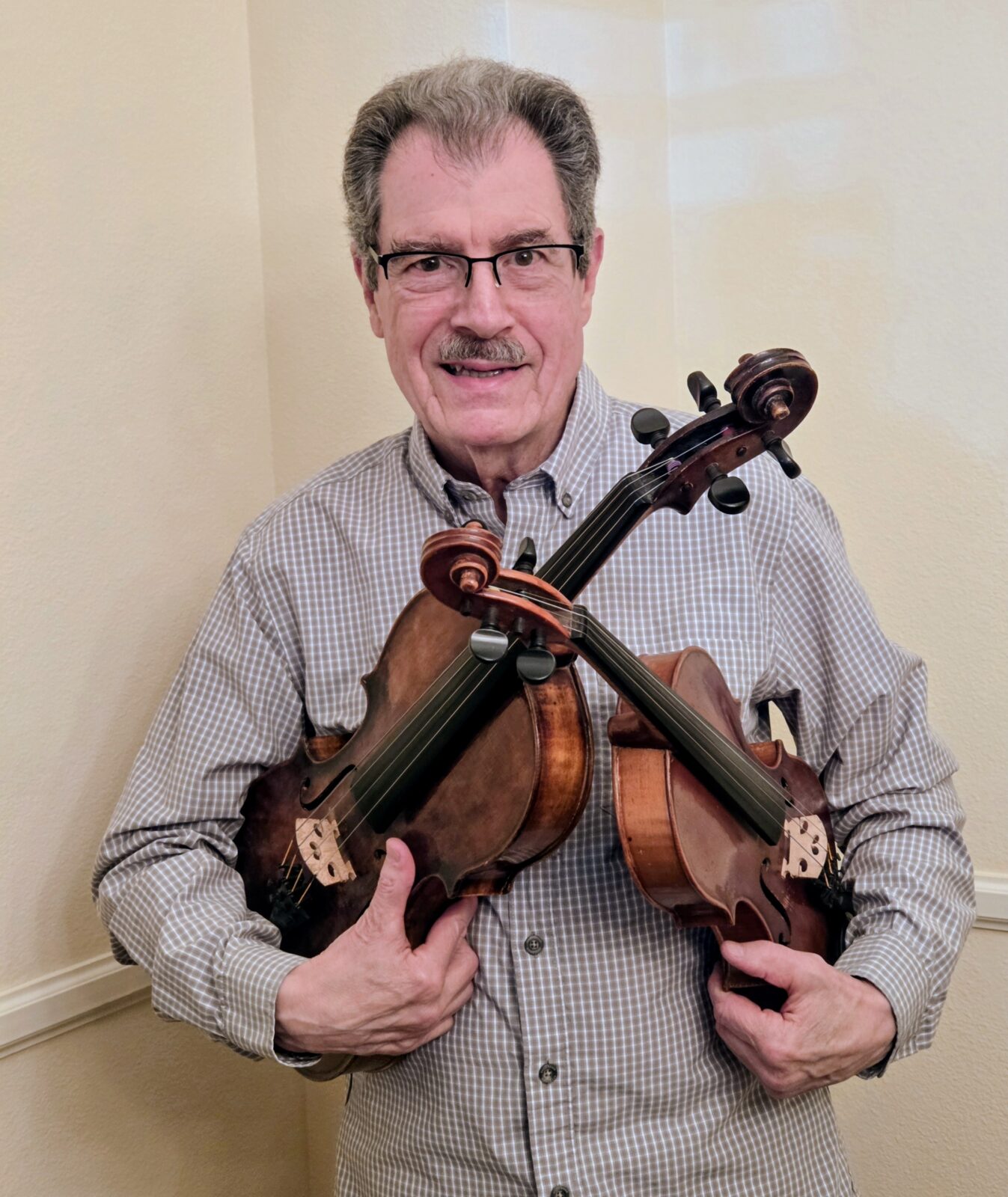
Marshall Costantino learned to play the violin from his Italian grandfather as a young child. After a 42-year hiatus from playing, he is enjoying a new life in chamber music with his neighbor and new friends he met through the ACMP directory.Read More ↗
Celebrate Beethoven: MSQ’s Vienna Workshop, January 2027
Travel to Vienna and immerse yourself in Beethoven's world and in his String Quartet Op. 127, under the expert guidance of the Manhattan String Quartet. Register by Monday, September 14 for this unique cultural expedition!Read More ↗
Music and Life at Apple Hill
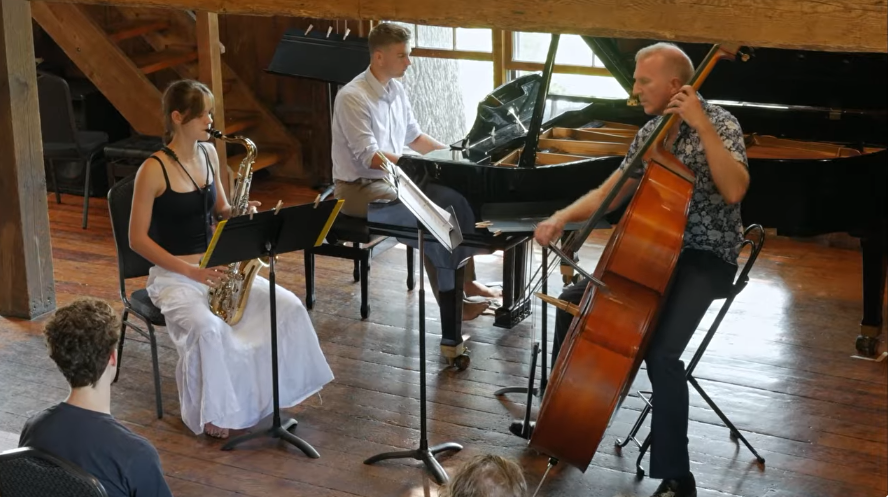
Vermont-based bassist Art DeQuasie was one of the inaugural recipients of an ACMP Scholarship this summer. Read about his experience at the Apple Hill Center for Chamber Music in August 2026.Read More ↗
Explore New Worlds of Chamber Repertoire
Music educators have been working to find music by underrepresented composers that is accessible to students and amateur players of all levels. This includes music by composers of color, women composers, and LGBTQ groups, among others. Considering the changing demographics of our country, amateur chamber music players can reap the rewards of discovering new repertoire through this research.Read More ↗
Meet ACMP’s Development Consultant, Amie Roosevelt
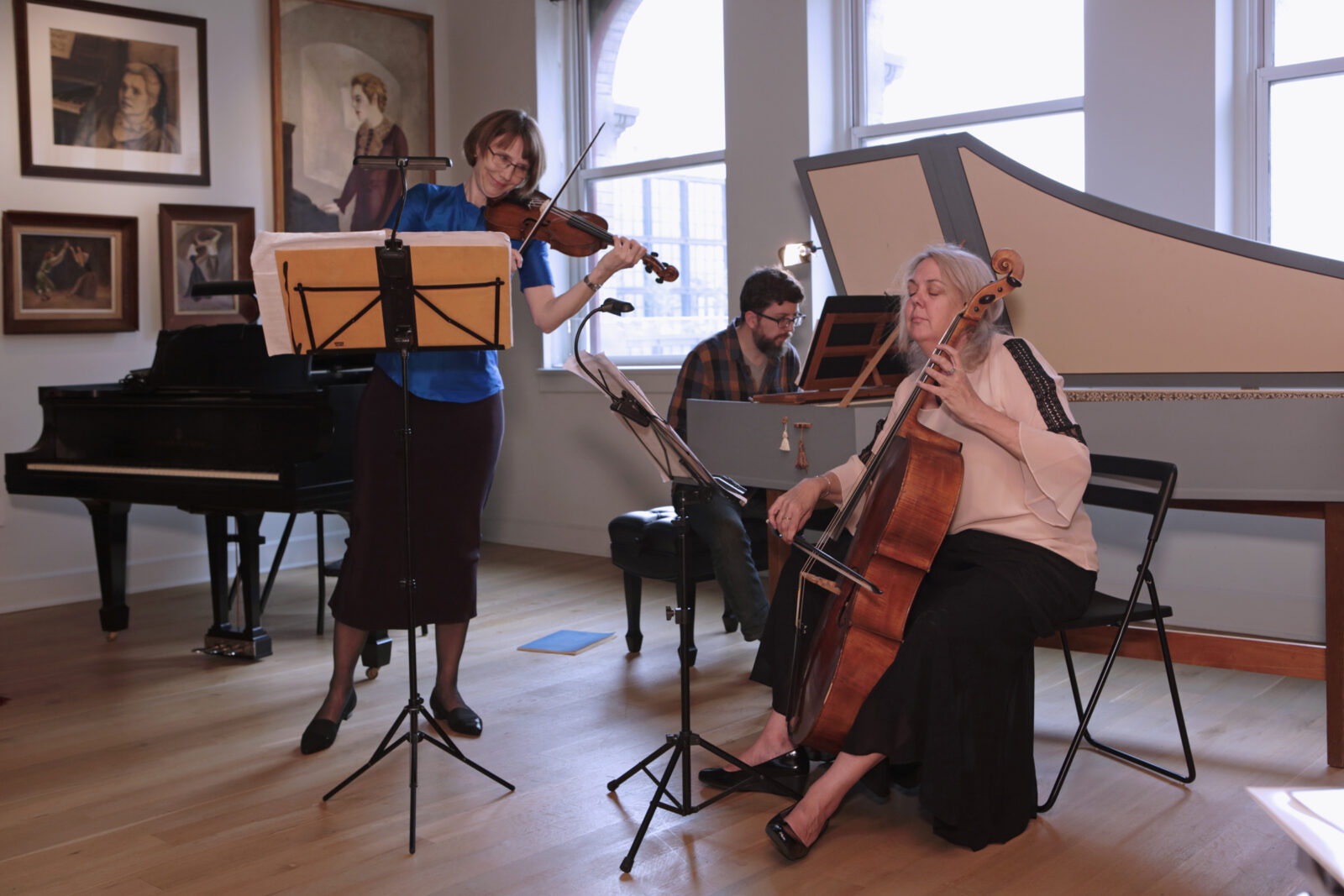
Amie Roosevelt joined ACMP's staff as our first-ever Development Consultant in January 2026. She has enjoyed a long and varied career as a violinist, with a primary focus on historically informed performance. I hope you all will meet and even get to play with Amie. But until you do, you can get to know her and her fascinating story by reading this interview from August 12, 2026.Read More ↗
Make Chamber Music Part of Your Fall at 92NY
For many musicians, chamber music is as much about connection as it is about repertoire—the shared experience of listening, collaborating, and discovering new musical perspectives together. At the 92NY School of Music, two chamber music programs offer welcoming entry points into that experience this fall: Chamber Music Reading and Chamber Music Coaching & Performance. Whether you’re picking up your instrument again, looking to meet fellow players, or hoping to deepen your ensemble work, both programs are designed to bring musicians together in a supportive and engaging environment.Read More ↗
Member of the Month, August 2026: Alison Edwards
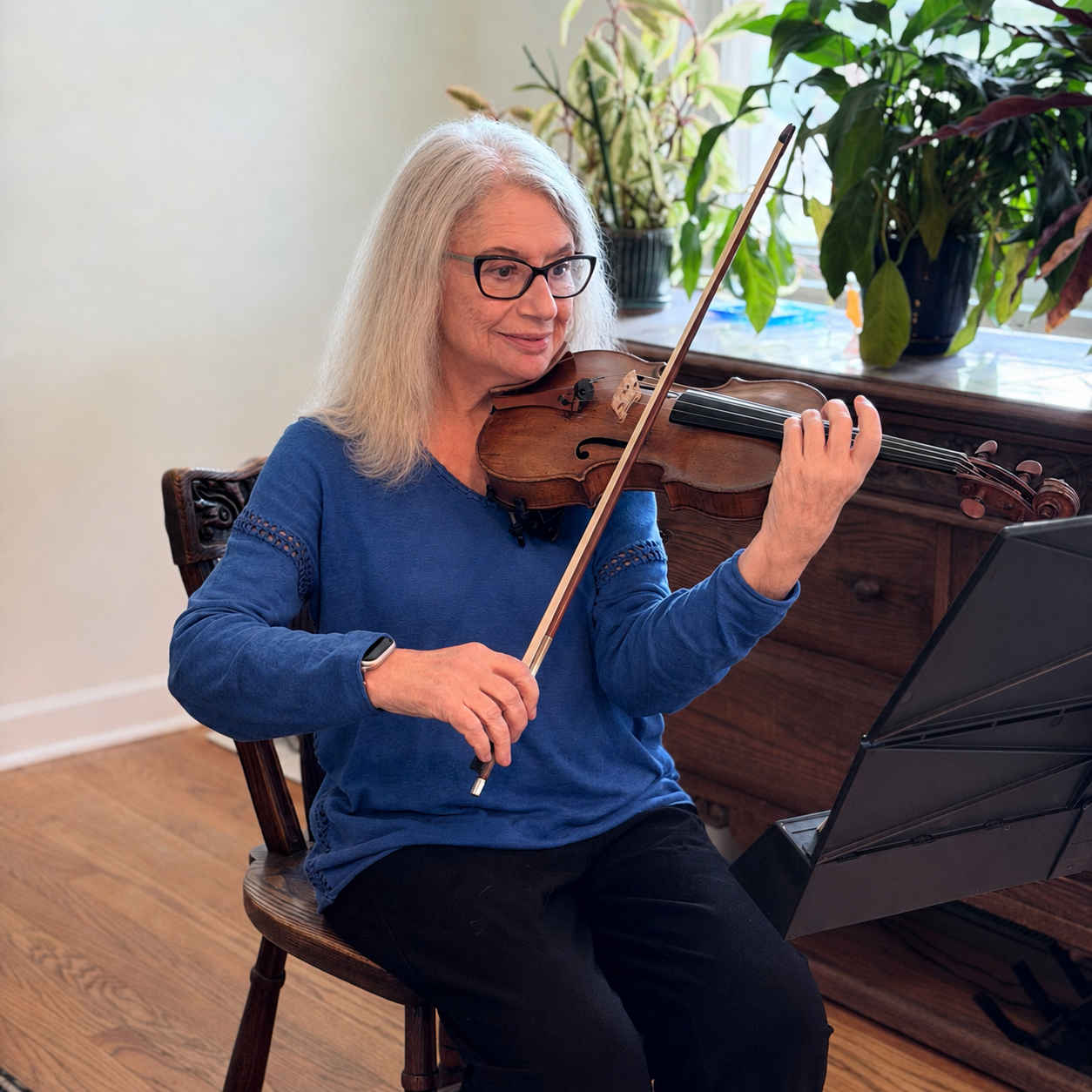
There aren’t too many people who come to a professional crossroads before they turn 13. But Alison Edwards faced such a moment. She had taken up the violin at age seven with none other than Dorothy DeLay as her teacher. But indeed, Alison had another calling. Inspired by social justice movements of the 1960s, she became a civil rights lawyer, eventually serving in the appellate division of the Cook County Public Defender’s office. After 25 years working and raising a family, she picked up her violin again and launched on a lifelong chamber music adventure.Read More ↗
After 56 Years, the Bond of Chamber Music Endures
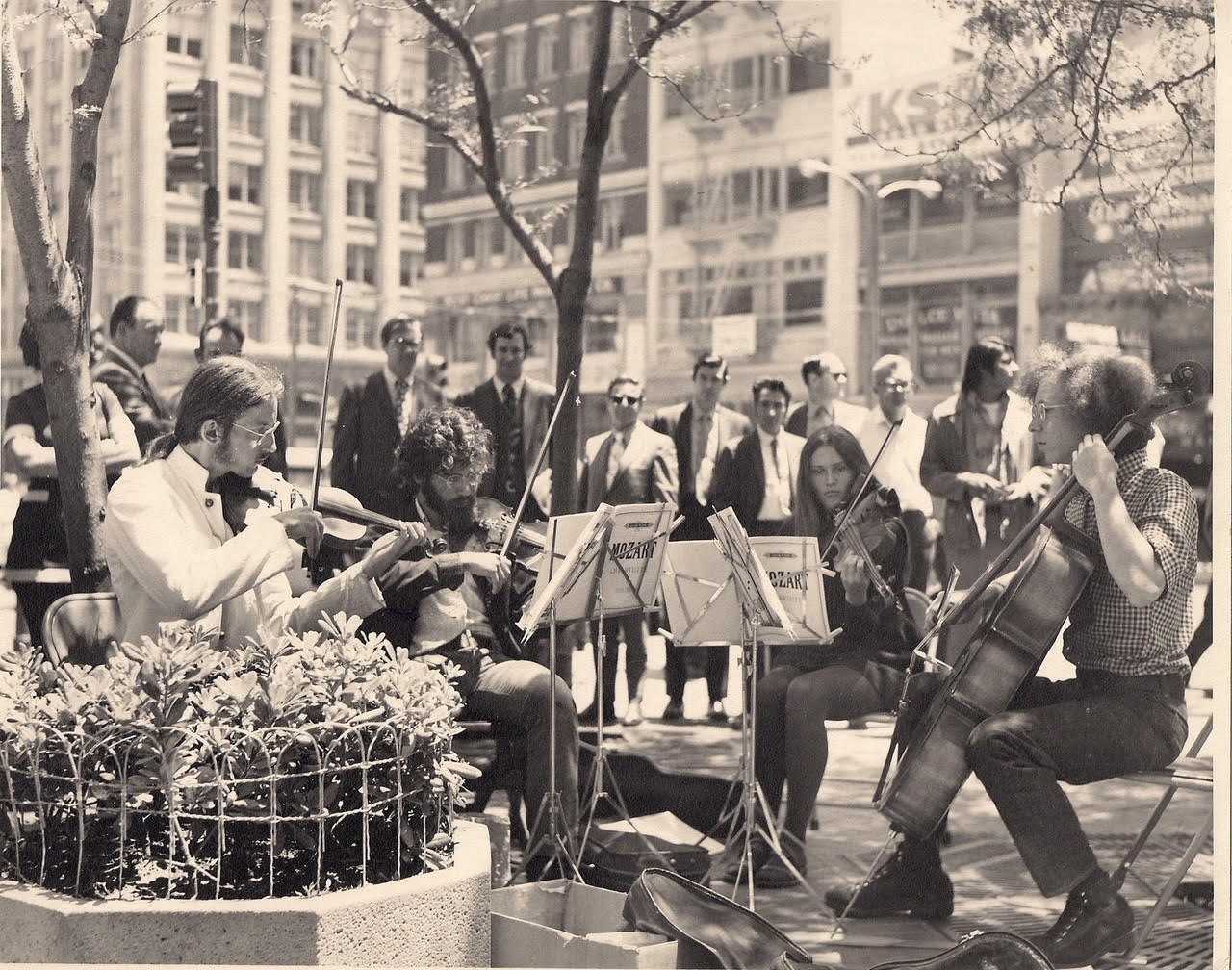
Cellist David Pearl and violinist/violist Gary Chanan played quartets together in the streets of San Francisco in the early 1970s. 56 years later they are playing together again in New York City...they reconnected through ACMP!Read More ↗
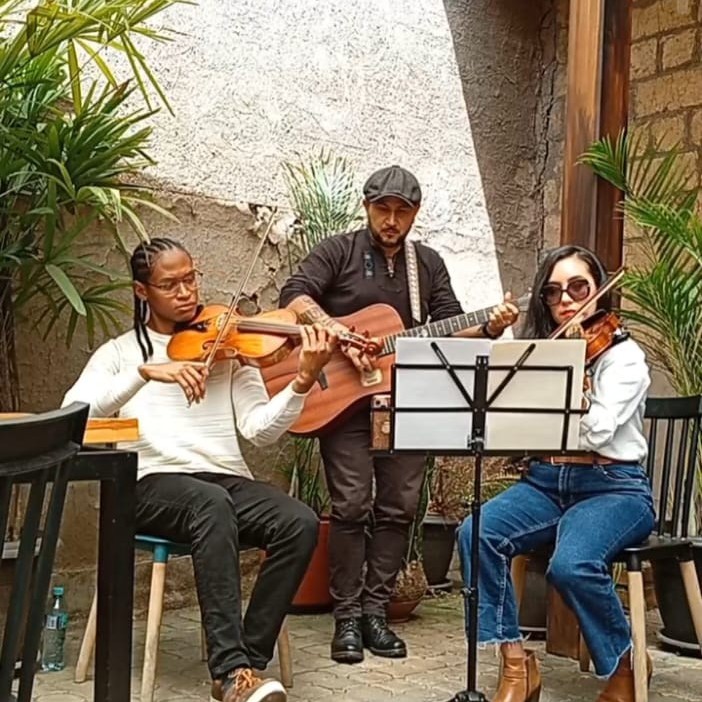
Coffee Shop Performances, Coffee-infused Repertoire
ACMP's intrepid cellist Tom Cappaert is at it again - this time with a story about ACMP members in Ecuador and Spain who organized chamber music in coffee shops, inspired by Tom's endeavors.Read More ↗
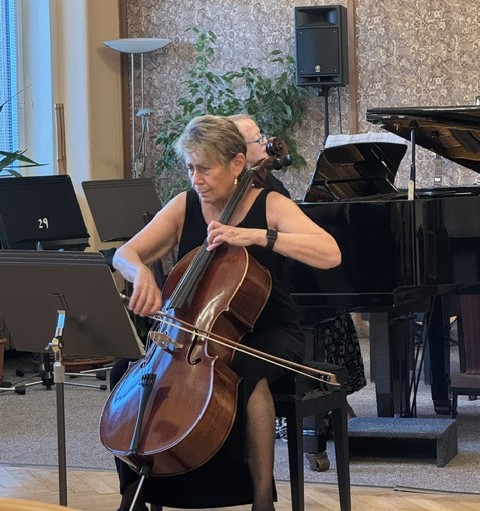
Member of the Month, July 2026: Sara Langbert
A self-proclaimed “total New Yorker”, cellist Sara Langbert graduated from Music and Art and continued her musical education at Queens College in her native New York borough. But like many ACMP members, she would put her cello aside as she managed the demands of raising a family and pursuing a career in computers and technology. Now she's playing again and is an enthusiastic member of ACMP.Read More ↗
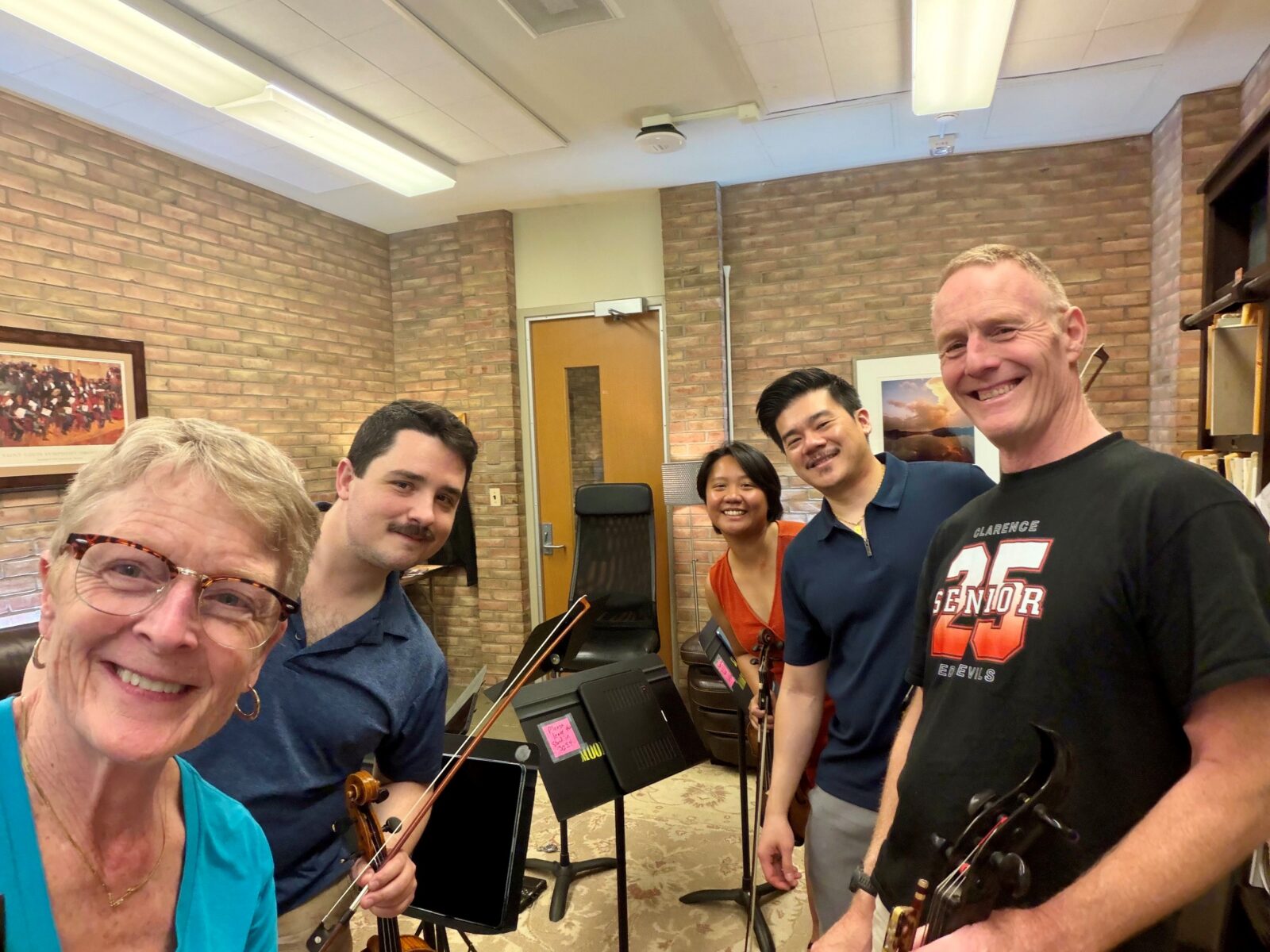
Around the World with ACMP’s Grants (Home Coaching and Play-in)
Over the last few weeks we have been asking members, participants, and organizers to tell us how our rolling grants have been useful to them and their communities. So let’s take a trip around the world and see what folks have to say about our Home Coaching and Play in grants.Read More ↗
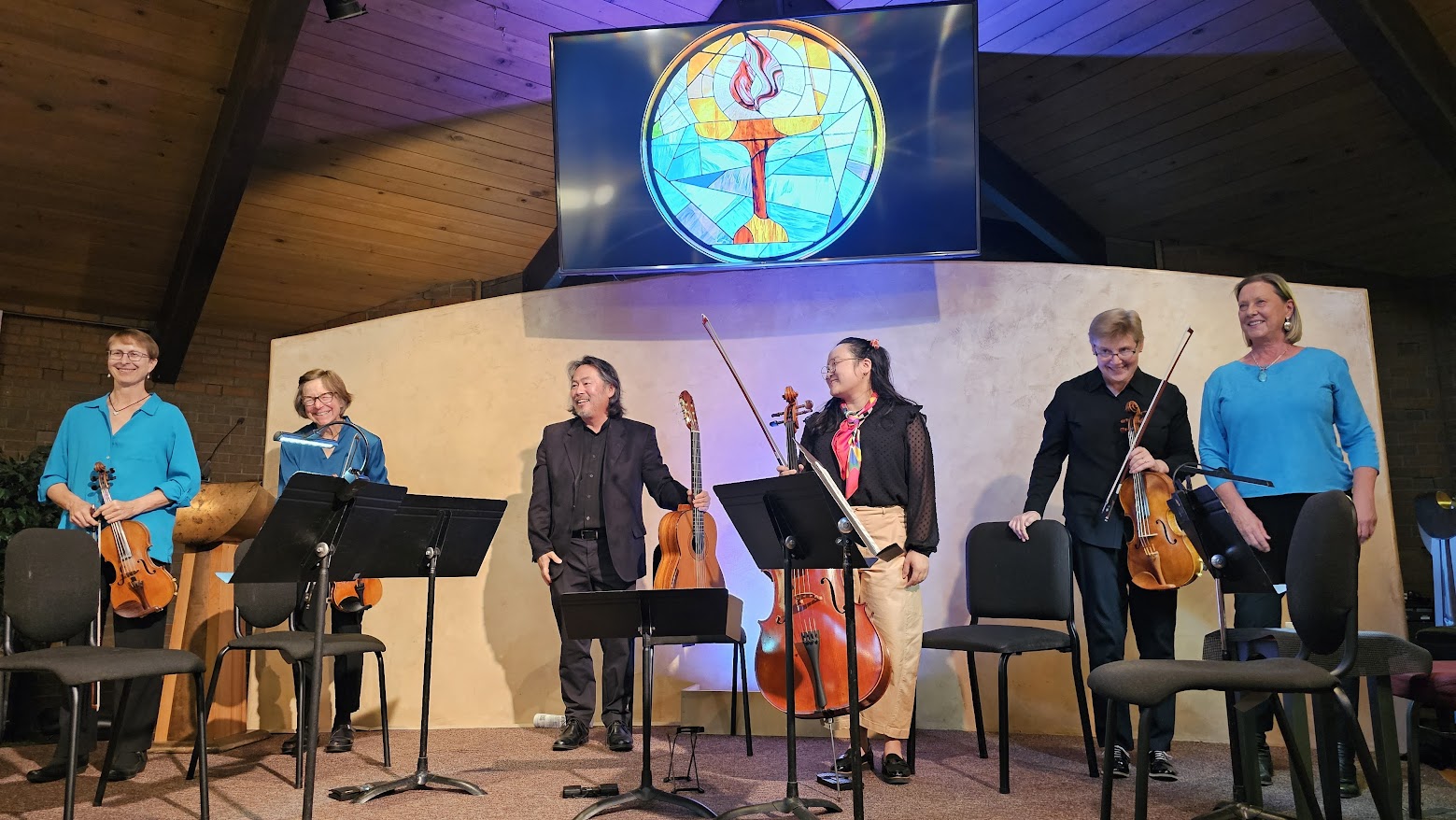
Around the World with ACMP’s Grants (Just Play and Impresario)
This summer, we’re hearing from ACMP members, participants, and organizers about how Just Play and Impresario grants have supported chamber music in New York, Italy, Canada, Colorado, and beyond.Read More ↗
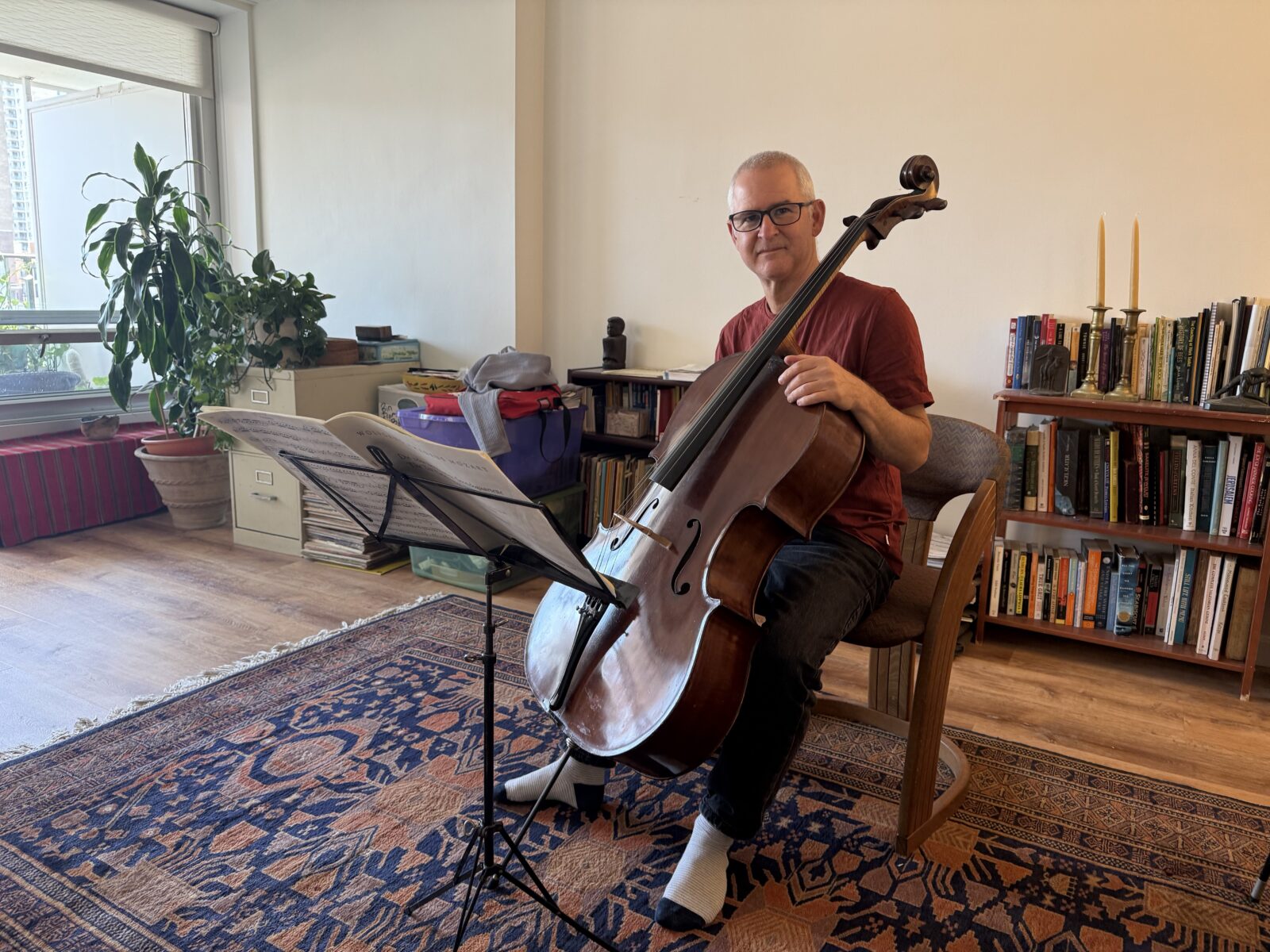
ACMP Member of the Month, June 2026: Yoav Segev, the flying cellist returns
It’s probably easy to spot Yoav Segev at the airport. He’s the guy in the pilot’s uniform with the cello on his back. Yoav, you see, is the Flying Cellist, a globe-trotting pilot for El Al Israel Airlines who plays chamber music during his layovers in far-off destinations. Read Bob Goetz's interview with Yoav.Read More ↗
International Spotlight: Kristin Saltonstall in Panama
Kristin Saltonstall comes from a longstanding ACMP family and has been a member of ACMP for as long as she can remember. As a molecular ecologist, she works for the Smithsonian Tropical Research Institute in Panama, where she has forged a new musical life for herself and enjoys the natural beauty that Panama has to offer.Read More ↗
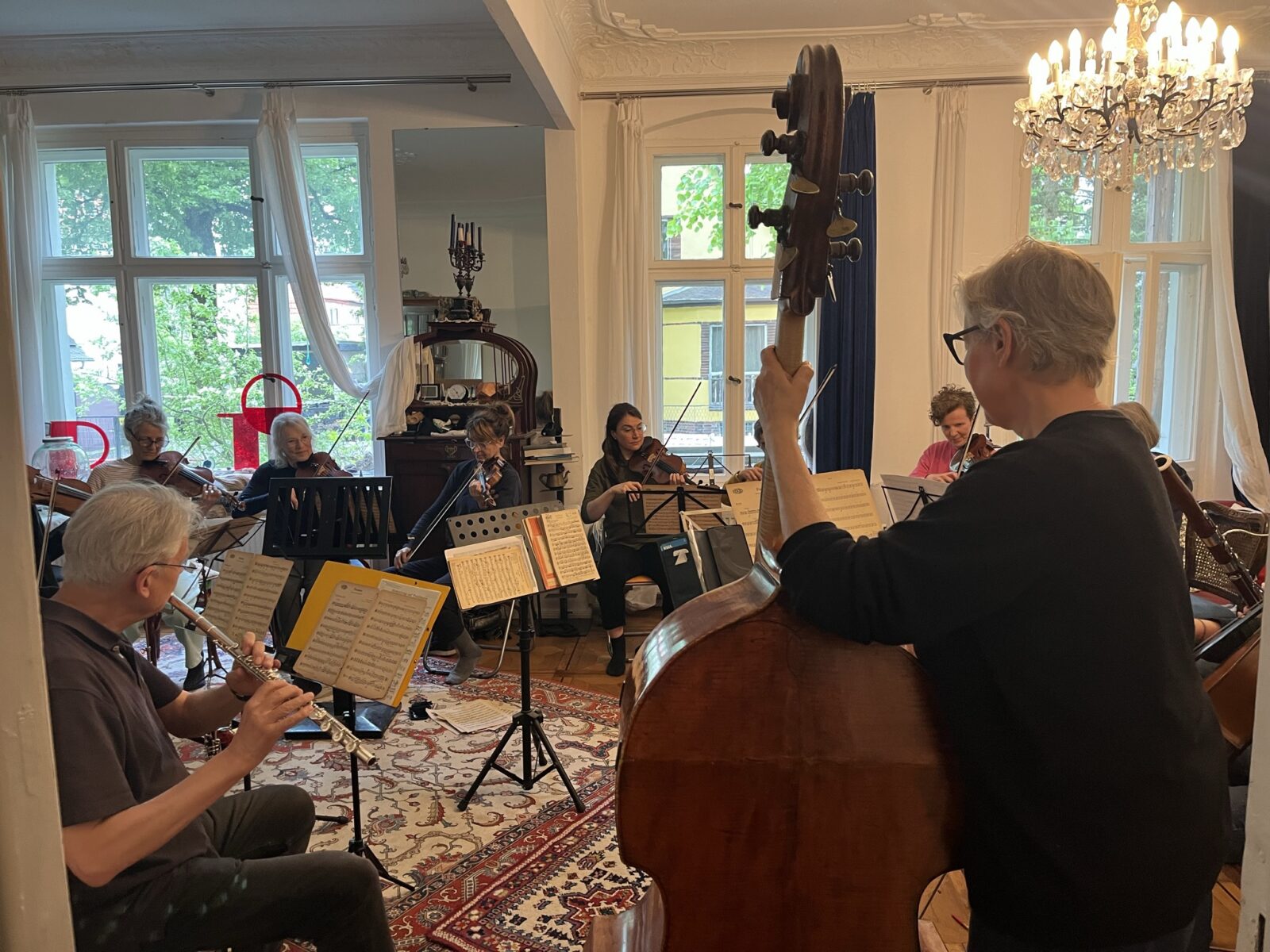
Springtime Extravaganza Light Music Orchestra on May 9, 2026, in Berlin-Karlshorst
Fifteen musicians followed Gudrun Schnellbacher's invitation to a very special kind of play-in – to play in the Springtime Extravaganza Light Music Orchestra. Read the article in English or in German.Read More ↗
Remembering Pianist Fontaine Laing
Janet White Remembers her friend, and longtime ACMP member pianist Fontaine Laing.Read More ↗
News of Note 2026
It’s that time of year again! The web version of the 2026 News of Note is live, featuring updates from the past our Strategic Plan, and some fun extras, including everyone’s favorite: a new puzzle!Read More ↗
How to Find Players and Build your ACMP Community
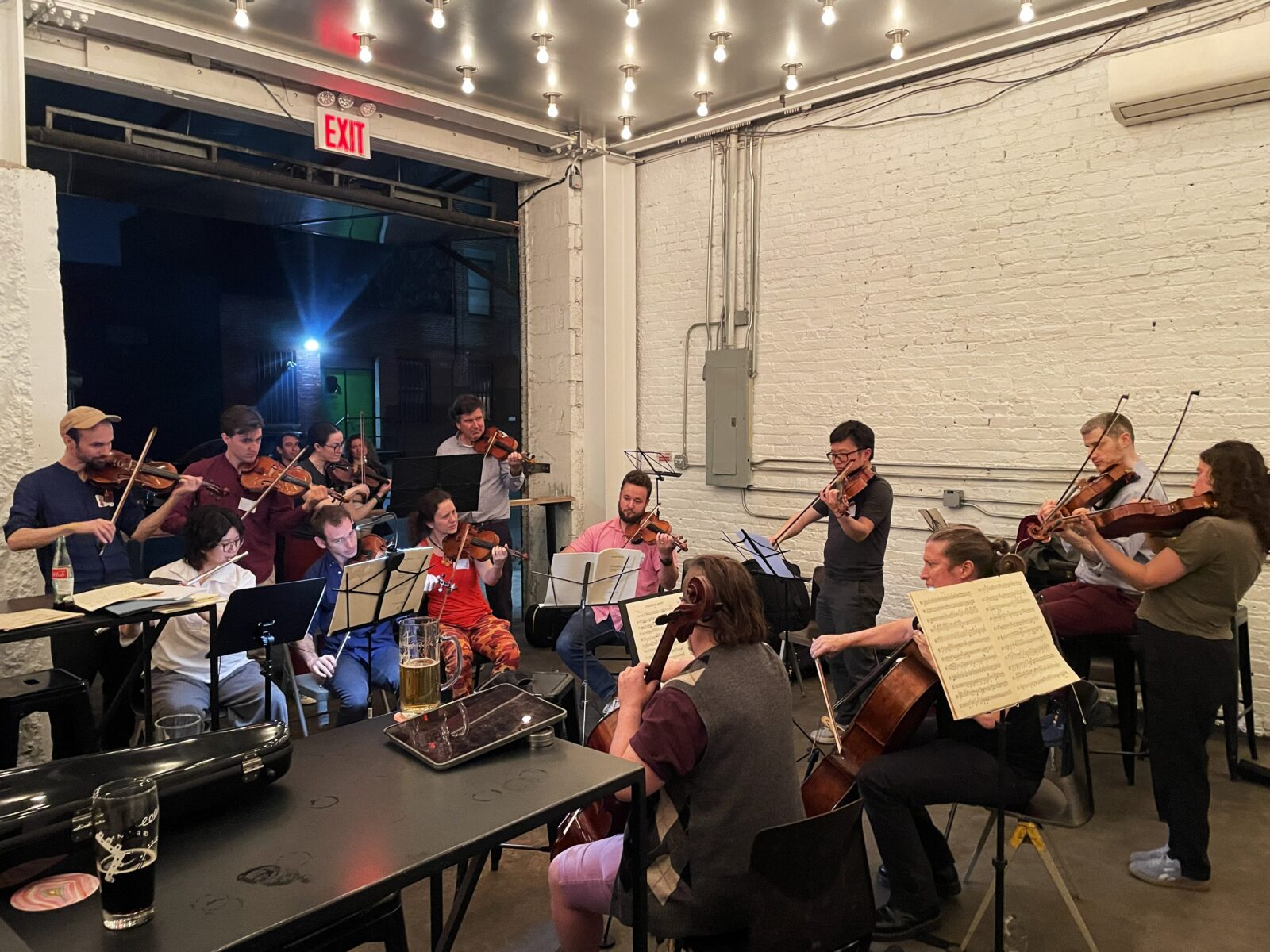
There is a time in every player’s musical life when you realize that you want to play more, but not quite sure with whom or where to even begin. Here are some ways to get started and begin building a community around you.Read More ↗
Member of the Month: Amit Rotem
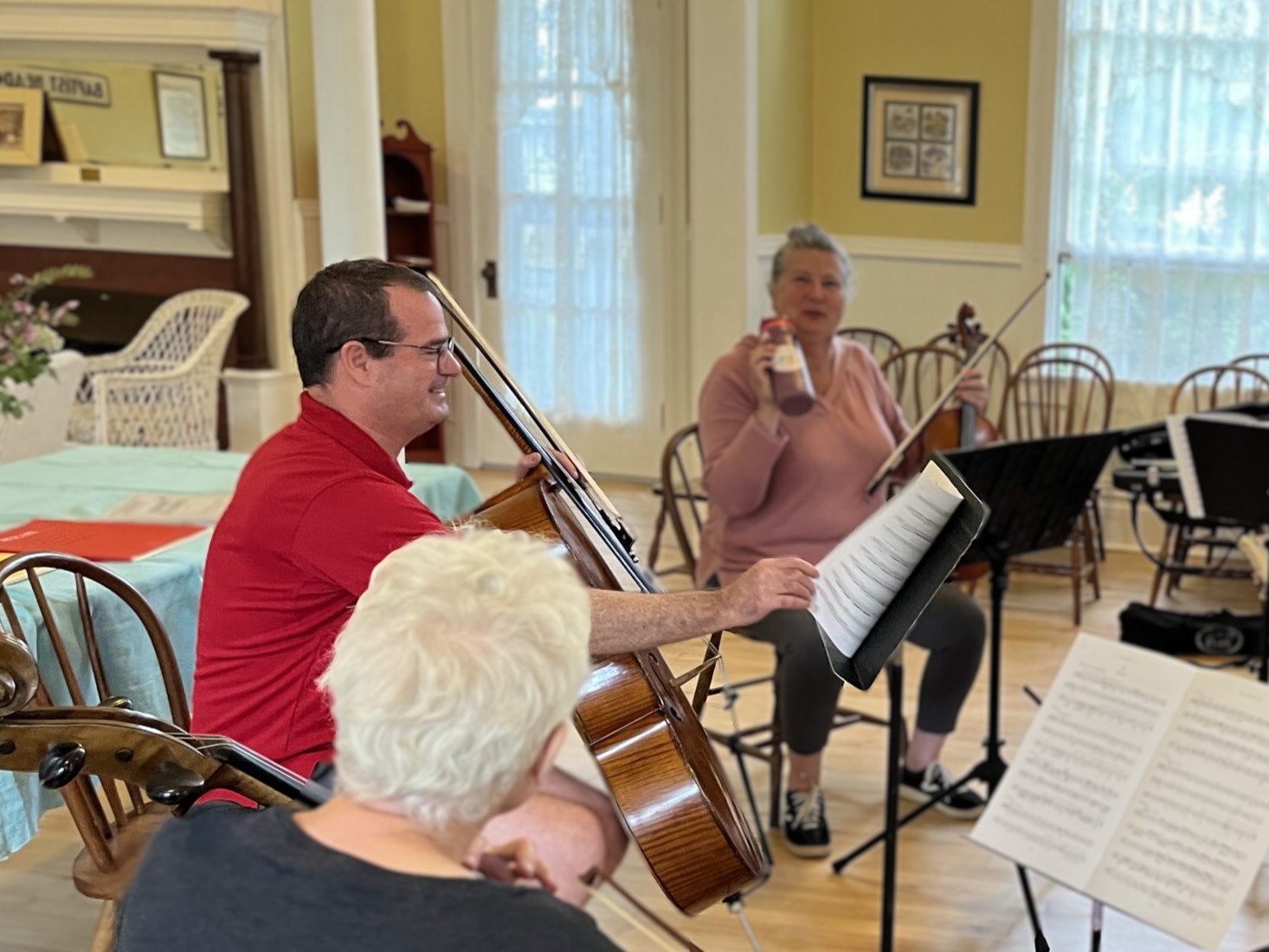
By day, Amit Rotem works as a child psychiatrist specializing in youth addictions at the Centre for Addiction and Mental Health in Toronto. When he is not there, or with his family, there is a good chance he is playing his cello, with as many willing chamber partners as the calendar will allow!Read More ↗
Load More
All Articles By