International Spotlight: Kristin Saltonstall in Panama
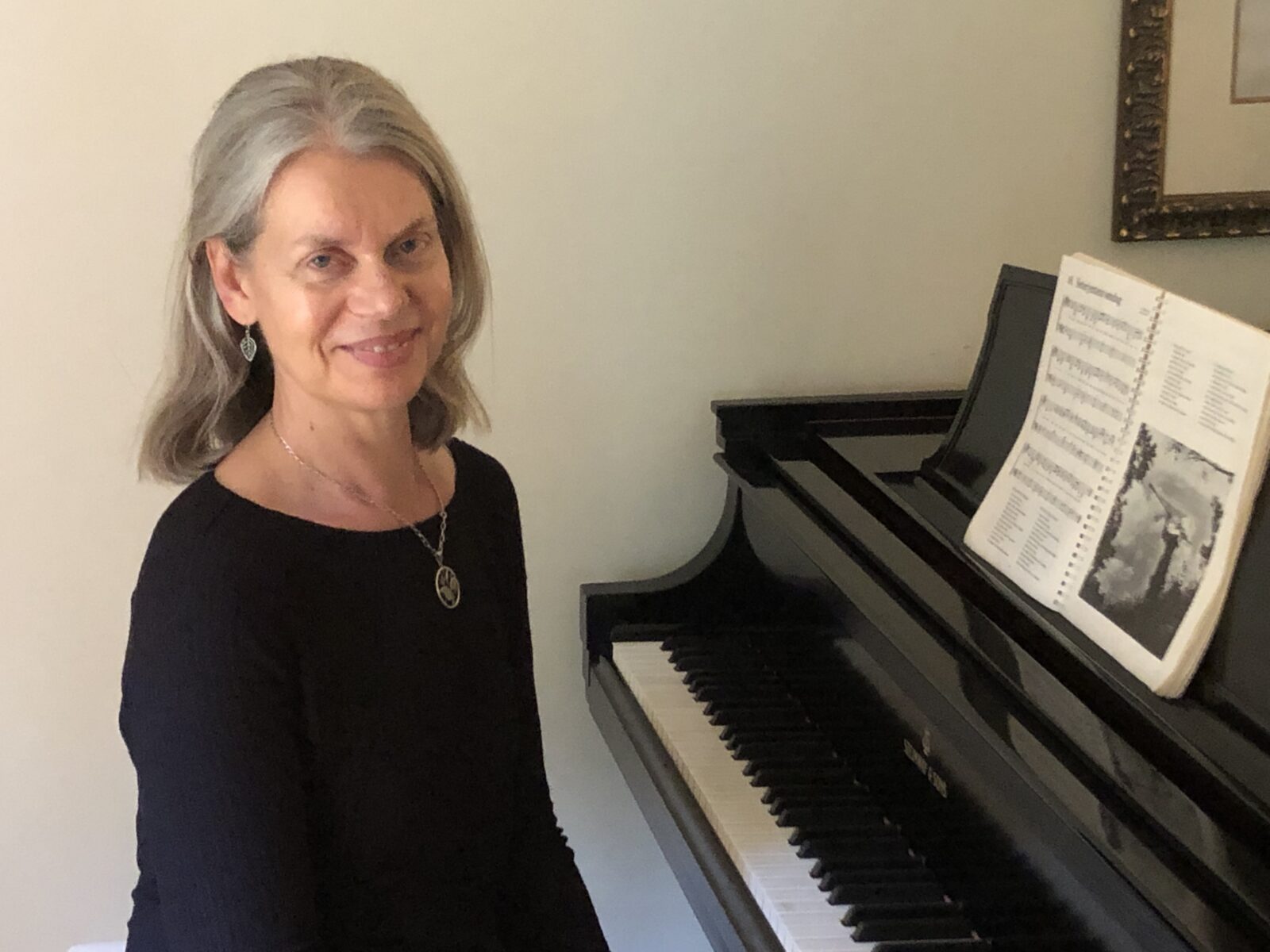
ACMP is an international community, with members in 55 countries. In some countries, such as Canada, the United Kingdom and Germany, we have over 100 members, but there are many countries where we just have a handful of members. Over the next year or so, I will be reaching out to members in those countries to find out more about how they got involved with ACMP and about the chamber music situation where they live.
My first article in this series will cast a spotlight on Panama. On Friday, May 22, 2026 I interviewed ACMP pianist Kristin Saltonstall, who represents 50% of the ACMP population in Panama!
Kristin and I chatted for over half an hour – the excerpts from our interview, below, are edited for clarity.
A member of a longstanding ACMP family
Stephanie: I’d like to start by asking you how you got involved with ACMP. Since your last name is Saltonstall, are you by any chance related to our former board member Cecilia Drinker Saltonstall?
Kristin: Yes! Cecilia Drinker Saltonstall was my grandmother, and she first introduced me to ACMP, so I’ve been a member since I was in high school or college, I think. I can’t remember when I joined, but it’s been a long time.
Stephanie: Was Cecilia also related to the author Sophie Drinker? I have Sophie Drinker’s book here about women in music, and I’ve always wondered if there’s some connection between Cecilia and her.
Kristin: Yes, Sophie was her mother – my great-grandmother. She and my great-grandfather Henry Drinker lived in Philadelphia, and both were very active amateur musicians. He was a lawyer professionally, but he was high up in the “American Association of Choruses”. I think he might have been the president for a time. They would host music parties every week in their home – chamber music and singing parties, and even some small orchestra events. So, music was a really big part of my grandmother’s life growing up. She was a violinist, and I think she majored in music at Bennington College, intending to be a professional musician, but then, you know, life got in the way. But music was always a big part of her life, and it’s possible that she was one of the founding members of ACMP. She was certainly involved with ACMP for many years.
Stephanie: Did Cecilia play any other instruments?
Kristin: Yes – she also played viola and recorder. When she could no longer play the violin and viola because of arthritis, she picked up the string bass. She played piano, and although it wasn’t her primary instrument, she could still play it well. And then, of course, she loved to sing, and she would play guitar when she sang. She loved American folk music, and had large collections of folk songs. She would put together books and taught children folk songs, going into schools to do music programs as well. Growing up, I would go spend every summer with my grandparents in Stratham, New Hampshire, and there was a lot of music in the house.
Stephanie: Lovely. And were your parents also involved in music, or was it mainly through your grandmother that you got involved in music?
Kristin: Mostly through my grandmother but my parents also have a great appreciation of music. My grandmother Cecilia is my father’s mother. I think my father probably resisted a bit the push that she had towards her children playing instruments! But he played the guitar and banjo actively. He also liked to sing. So, we had music in our house. My grandfather on my mother’s side was also a singer – he sang in his town’s choir in Norway for many years. Growing up we always listened to classical music in our house. No other music was allowed, and although neither of my parents really played classical music they encouraged me and my sisters to all play an instrument. I started playing music myself at the age of 4, when my grandmother Cecilia taught me how to play the recorder. And then I started playing the piano when I was 7, and that’s what really got me started, and I’ve played ever since.
Stephanie: Did you continue with music in college?
Kristin: Yes, I took a lot of music courses while I was at Wellesley College, just outside of Boston. I was a biology major, but I did also minor in music. I studied piano with Charles Fisk. I already loved playing with other people, but I really honed that skill and grew to love chamber music during that time. I played all kinds of chamber music, sometimes with strings, sometimes with winds, with horns. My senior year, we did the Brahms Horn Trio, and his clarinet trio. I did that in addition to doing my own senior recital, which was all solo music, so I did a lot of performance, even though I wasn’t a music major.
Stephanie: That’s very ambitious repertoire!
Kristin: Yes, it was a lot of fun. I wish I could still play it! The last time I played chamber music here in Panama, we actually played the horn trio with Helene on violin and a friend who doesn’t play the horn. He played it on a euphonium instead! So, we were all adjusting a little bit. We certainly weren’t playing at full speed, but it was a lot of fun to make it work.
Relocating to Panama
Stephanie: So now that I know you joined ACMP as an American before you moved to Panama, I’d also love to know what brought you to Panama?
Kristin: My husband and I both work for the Smithsonian Tropical Research Institute. We’re biologists here, and we’ve been here for 20 years now. And it just turned into the place we live. It wasn’t the plan originally, but it happened that way.
Stephanie: So, outside of work, since there are only two ACMP members in Panama, do you know the other member?
Kristin: No, it’s news to me that there’s another member! Well, it’s possible there’s a second member, because it’s somebody that I encouraged to join, and they ended up joining, because I have told people about ACMP, and I encourage them to join, especially now that it’s free!
Stephanie: Thank you! And the other member is Helene Muller-Landau.
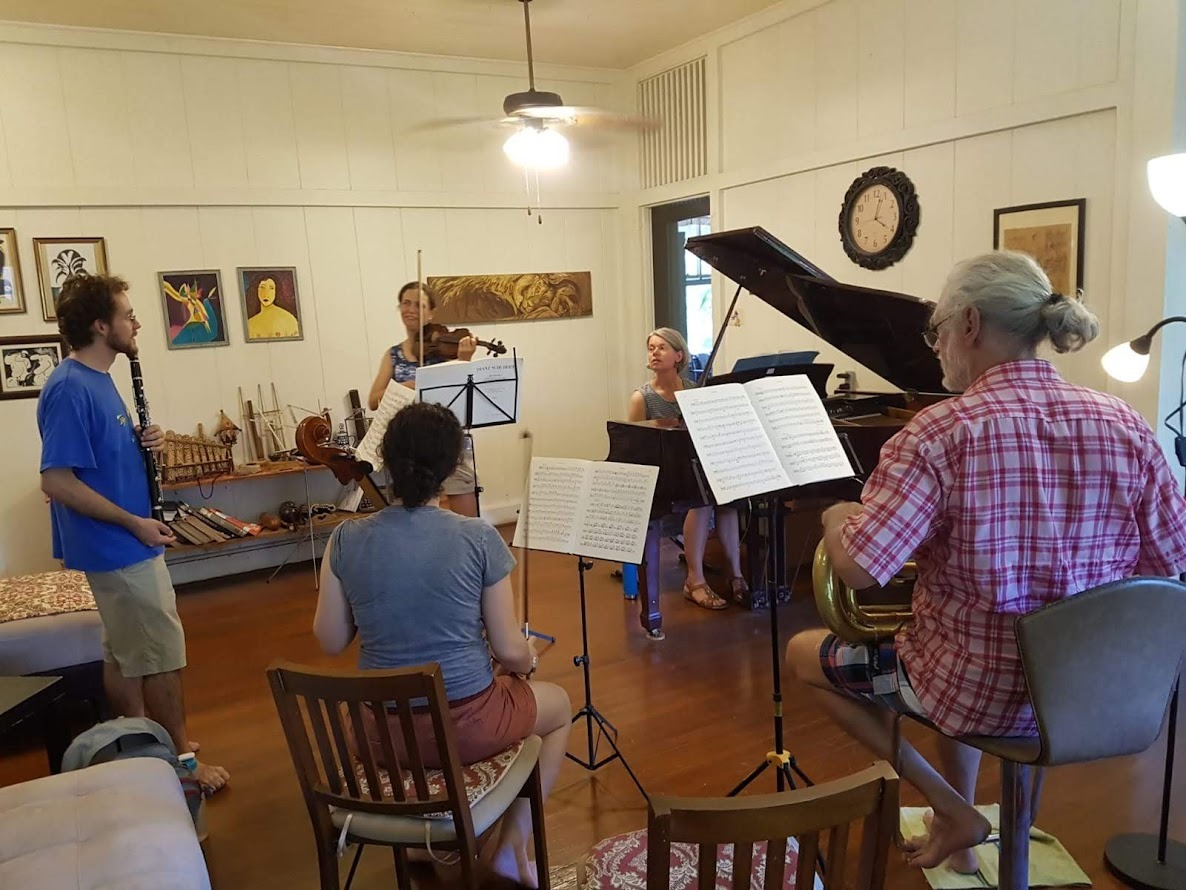
Kristin: Yes, Helene is a colleague of mine at the Smithsonian, and she’s an excellent violinist, and we play chamber music together.
Stephanie: In addition to playing with Helene, are there other groups there that you manage to play with? Or, you know, are there other ways for you to… people that you can network with and find to play chamber music with locally?
Kristin: There are, but I have not been able to take advantage of that local network. Chamber music is not a big thing here. There is a music festival that is about to start that happens annually. It’s the Alfredo de Saint Malo Festival and they bring in chamber musicians from other parts of the world to perform here, and there’s some excellent concerts that happen. But I know very few musicians that want to play chamber music, even professional musicians, maybe because they need to earn money and they don’t play for fun so much. So, the network of people that I play with is usually Helene and other friends that live near Helene. And we have a lot of visitors at the Smithsonian that come from all over the world, and some of them are musicians, so we’ve played with some of our visiting scientists as well, which is a lot of fun when there’s somebody new coming in. The problem often, though, is that they don’t have their instruments with them, so then we have to find somebody to borrow an instrument from, which can be a challenge.
Stephanie: Have any of those visiting scientists found you because they’re also ACMP members, and they were looking up someone who’s in Panama to play with, or is it just a coincidence?
Kristin: I don’t think so. I’ve never heard anyone mention that.
Stephanie: As you know, ACMP’s has always had that function. And I’m always very happy to see that people still contact members and meet new friends when they travel. Maybe after I post an article about you, people will start visiting you!
Kristin: That would be fun!
Forging a musical life in Panama
Stephanie: Do you have a piano over there in Panama, and are you still active?
Kristin: Well, that’s more complicated. It’s really hard to have a piano and keep it in good condition here in Panama. I never thought before I moved here that I would be happy having an electronic keyboard, but that’s what I’ve settled on, so…I have a nice full-size Yamaha keyboard that I use now, and it’s good because I can travel with it, so when I need to play the piano somewhere, I take it with me.
Stephanie: I’ve been in the tropics before – I’ve traveled to Indonesia several times, because I work with a composer from there. He had an upright piano in his studio that was about a minor third flat.
Kristin: Yes, it’s really hard to keep them in tune, and the soundboards tend to warp, so you have to keep a heater on it all the time. I have friends who have upright pianos that have the same problem. My parents have a lovely grand piano in their home that I get to play when I’m there, and I play real pianos whenever I can, but for now, I’m happy with the setup that I have. Having something portable is also really nice, because it does allow me to play music in places outside my home.
Stephanie: Do you play any other instruments other than piano?
Kristin: I play the recorder and I used to play the flute as well, but the piano is my main instrument. And because of the lack of opportunities I’ve had to play piano over the years, I started singing. So now I direct a community choir here in Panama. And that takes most of my energy and time that I have for music these days.
Stephanie: Did you found the choir yourself?
Kristin: No, I joined it when I moved here almost 20 years ago, and for the first couple years, I sang as a choir member, and then the director left town, and I was the singer that had the skill set most conducive towards becoming the director, and so that’s when I started directing the choir, in 2009 . It’s a very international group. One of the things I like about it is it gets me outside of the Smithsonian social circle. I’ve met a lot of really interesting people over the years with this choir. Most of our members are either Panamanian, Venezuelan, Colombian or from the United States or Europe, expats who are living here. And we’re a bilingual choir, singing mostly in Spanish and English. We sing all kinds of music – folk music from all around the world, and some classical. We do a lot of early Latin American Baroque music. And then some popular songs. One of the best compliments I’ve had about our programs is that they’re very eclectic, so people never know what to expect, because I try and get a little bit of everything in there.
Stephanie: So now that you’re the director, you get to choose the repertoire, too?
Kristin: I do, and I do a lot of arranging of music for the group, too, which is also fun. We’re about to do a concert in honor of the World Cup football event that’s about to happen, because Panama qualified this year, which is a big deal around here. So, we’re singing one song from each of the 48 countries that qualified for the World Cup! That’s been a real challenge and a lot of fun to find music from all the countries and to put together a program that’s going to be less than an hour and a half in length, and that was possible for our choir members to do. Many of them don’t read music, so they learn by listening and just practicing.
Stephanie: So, you had to find recordings and then give them the recordings to practice with?
Kristin: Yes. I make practice parts of each voice part or find recordings. If I buy the music, then I find a recording on YouTube of another group singing it and pass that along.
Stephanie: Do you use music writing software to do this so that you can make a MIDI-generated audio?
Kristin: I use MuseScore when I’m arranging, so, yes, I can make MIDI-generated audios, but then, I also usually sing practice tracks so that people can hear how the lyrics fit to the music.
Stephanie: That must take a lot of time! So, you have to record all the parts for 48 pieces?
Kristin: Yes, it does. Planning a concert is in stages. First, I have to find the music, then I have to arrange anything that needs arranging, and then after I give out the music, I have to start making the practice tracks. So…it takes a lot of time, but it’s a good distraction for me. It’s important for me to have music in my life!
Stephanie: Yes…that keeps you busy. And obviously your biologist job is a full-time job as well.
Kristin: Yes, it is!
Stephanie: Do you spend a lot of time out in the field?
Kristin: Not as much as I’d like to. I’m a molecular ecologist, so I work with DNA. We do a lot of biodiversity studies here in Panama, in the oceans and in the forests. Every organism has DNA, so we use DNA as a tool to study biodiversity. I can go out and collect all the samples I need in a very short amount of time, usually, and then most of my time is spent in the lab and with data analysis.
Stephanie: That sounds fascinating. And when is this next concert of yours?
Kristin: We have a concert on June 6th, where we’re singing in a public mall area, so it’ll be accessible to anybody who’s there. And then we have a more formal concert on the 14th.
Stephanie: And do you, are any of these going be recorded and available online or live streamed or anything?
Kristin: We won’t be live streaming, but we do have our own YouTube channel, Cantus Panama. We don’t typically put up the full concerts, but we’ll definitely be highlighting selections from this concert, because there’s a lot of really interesting, fun music from all over the world that we’re going to be singing.
Visit Kristin in Panama!
Stephanie: One last question: what would you recommend if an ACMP member wanted to come to Panama for a vacation and bring their instrument? Where would you recommend they go? What are some of the highlights that you think would be fun for people to explore if they were to come to where you are?
Kristin: Well, Panama is a fascinating and beautiful country. Panama City is on the Pacific Ocean, and you can drive north for an hour and be on the Caribbean coast. The Panama Canal is an amazing sight and we have lovely beaches as well as tropical rainforests nearby. And there are many kinds of animals that you can see just right around the city. If you go to the western part of the country, up in the mountains, it’s much cooler, and it’s a different kind of forest. And there are communities of musicians in all of the big cities. They may not be ACMP members, but I think you could find people to play music with. So I live in Panama City, and my colleague Helene lives nearby in Gamboa, which is right on the Panama Canal. We play outside in the rainforest, listening to the birds, so it’s a different experience! There are some really lovely places to visit.
Stephanie: So if any ACMP members come, they could also reach out to you and meet and play with you and Helene in the rainforest at some point?
Kristin: Oh, absolutely – we’d love that. Panama’s also a really good place for birders. Anybody who’s into birds would know that, but people come here from all over the world just to see the birds, especially in January and February during the dry season, when the neotropical migrants are around here. There are beautiful birds, and musicians like birds. Just come here and see!
More Articles
Meet Joy Hsieh: ACMP intern and event planner par excellence!
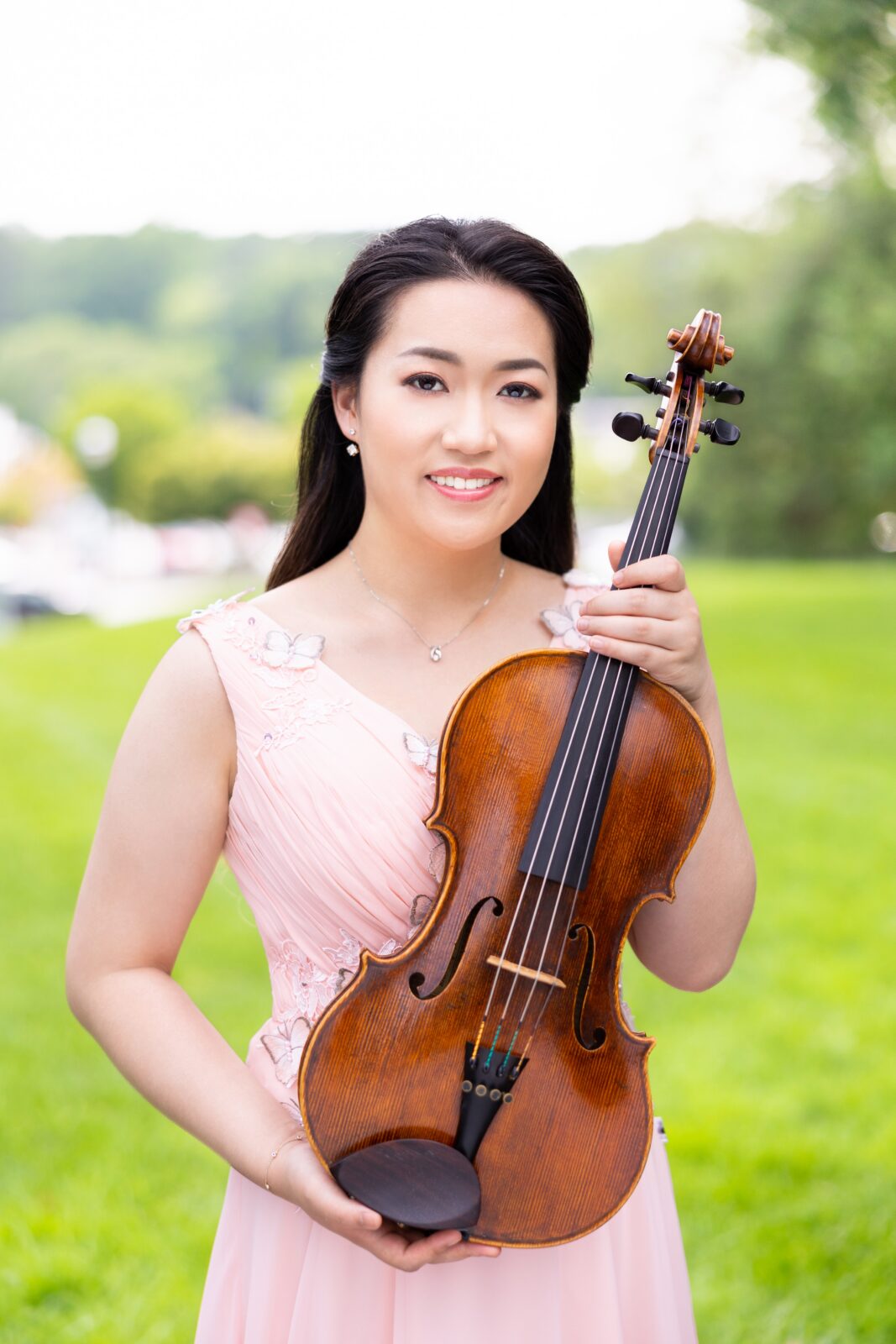
ACMP is happy to announce its newest team member, violist Joy Hsieh, who is working with us on event planning for the fall semester through the Eastman School of Music's Institute for Music Leadership Catherine Filene Shouse Arts Leadership Certificate of Achievement (ALP) program. Joy is a doctoral candidate in viola performance at Eastman, studying with Phillip Ying from the Ying Quartet. Get to know Joy - and come meet her in-person in Rochester on October 25 and Boston on December 6!Read More ↗
Filipino folk music, by way of Ecuador
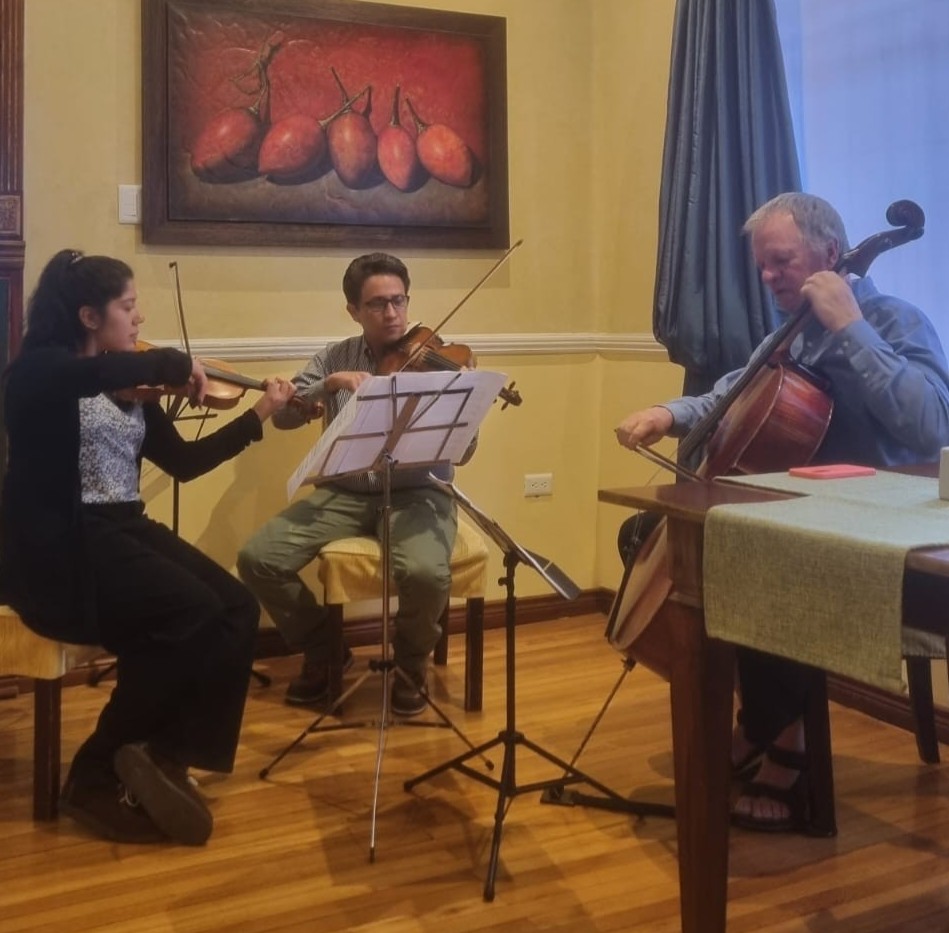
What do classical music and fine dining have in common? They are both about sensory delight; they come in many flavors and textures; and they are natural complements for an ACMP event. Tom Cappaert has organized a series of such programs, at a pizza joint in Riobamba, coffee houses in Spain and Ecuador, and most recently with a string trio performance on the theme of Let’s eat Filipino!Read More ↗
ACMP x ECMS Play-In Rochester, NY
ACMP is partnering with the Eastman Community Music School (ECMS) on a fun and festive chamber music Play-In on Sunday, October 25 in Rochester, New York. All instruments and playing levels are welcome!Read More ↗
Member of the Month, October 2026: Loryn Gorsett
There is little that Loryn Gorsett hasn’t done as a violist and violinist in the Denver area. She has played in orchestras, both professional and amateur. She built a studio of students. She has played more weddings than she can count. She has been a strolling violinist in an Italian restaurant. But through it all, chamber music has been her true musical passion.Read More ↗
Chamber Music Lifestyles: Vancouver
Vancouver, Canada has a vibrant adult amateur chamber music scene, thanks to ACMP's local NAOC councilor Christina Wolf. If you've never traveled to Vancouver, add it to your list. Where else could you play chamber music with so many great players (and fun people) while looking at the mountains, and eating and drinking a wide variety of local delights?Read More ↗
Member of the Month, September 2026: Marshall Costantino
Marshall Costantino learned to play the violin from his Italian grandfather as a young child. After a 42-year hiatus from playing, he is enjoying a new life in chamber music with his neighbor and new friends he met through the ACMP directory.Read More ↗
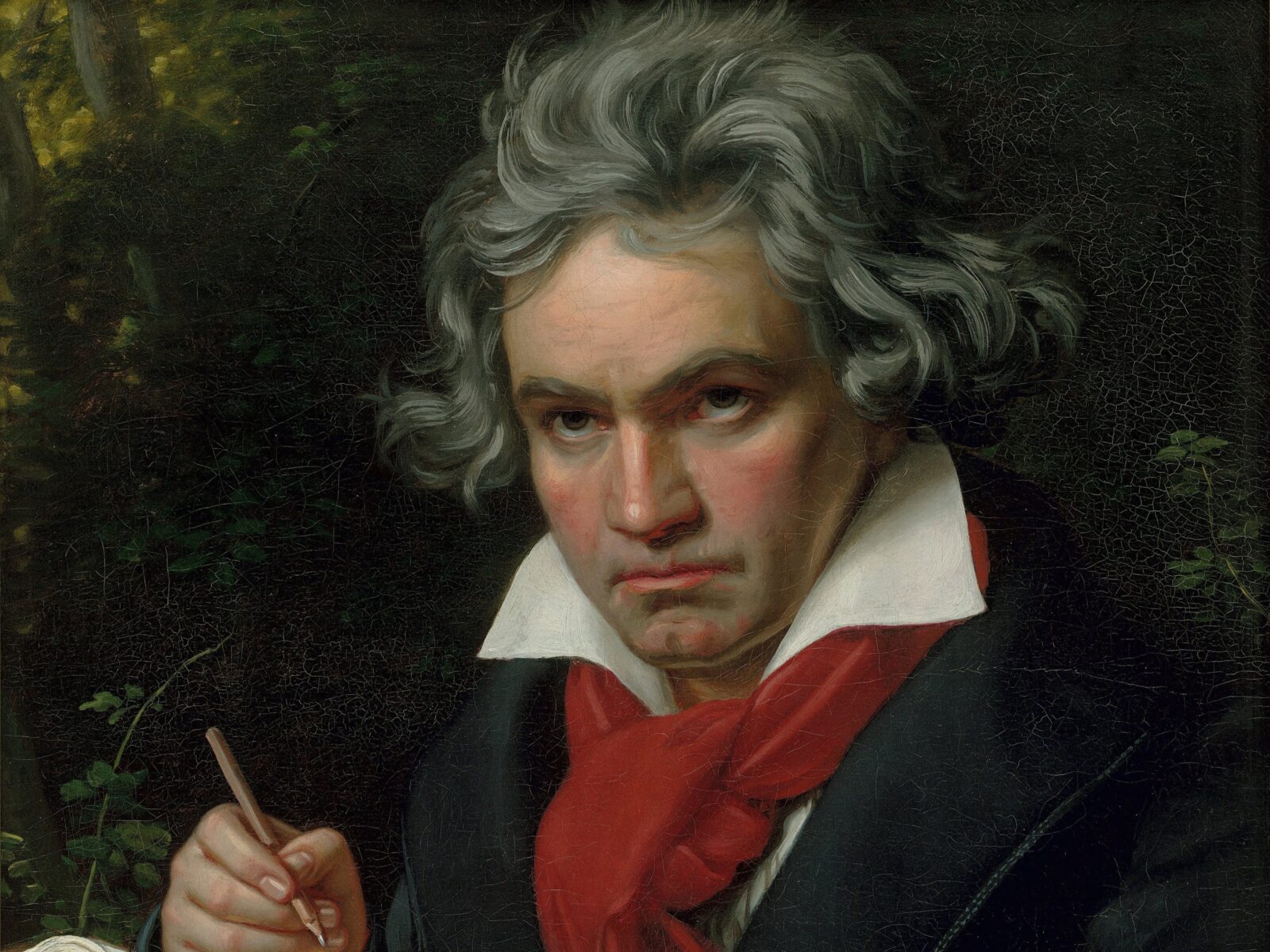
Celebrate Beethoven: MSQ’s Vienna Workshop, January 2027
Travel to Vienna and immerse yourself in Beethoven's world and in his String Quartet Op. 127, under the expert guidance of the Manhattan String Quartet. Register by Monday, September 14 for this unique cultural expedition!Read More ↗
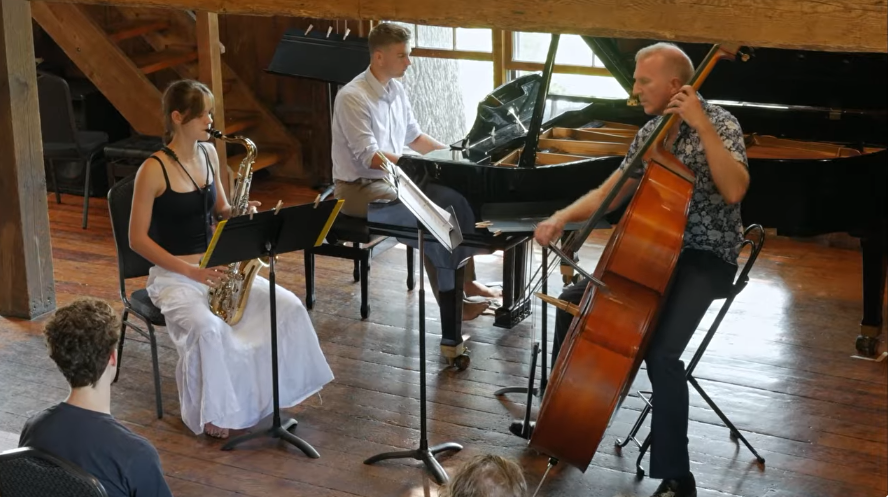
Music and Life at Apple Hill
Vermont-based bassist Art DeQuasie was one of the inaugural recipients of an ACMP Scholarship this summer. Read about his experience at the Apple Hill Center for Chamber Music in August 2026.Read More ↗
Explore New Worlds of Chamber Repertoire
Music educators have been working to find music by underrepresented composers that is accessible to students and amateur players of all levels. This includes music by composers of color, women composers, and LGBTQ groups, among others. Considering the changing demographics of our country, amateur chamber music players can reap the rewards of discovering new repertoire through this research.Read More ↗
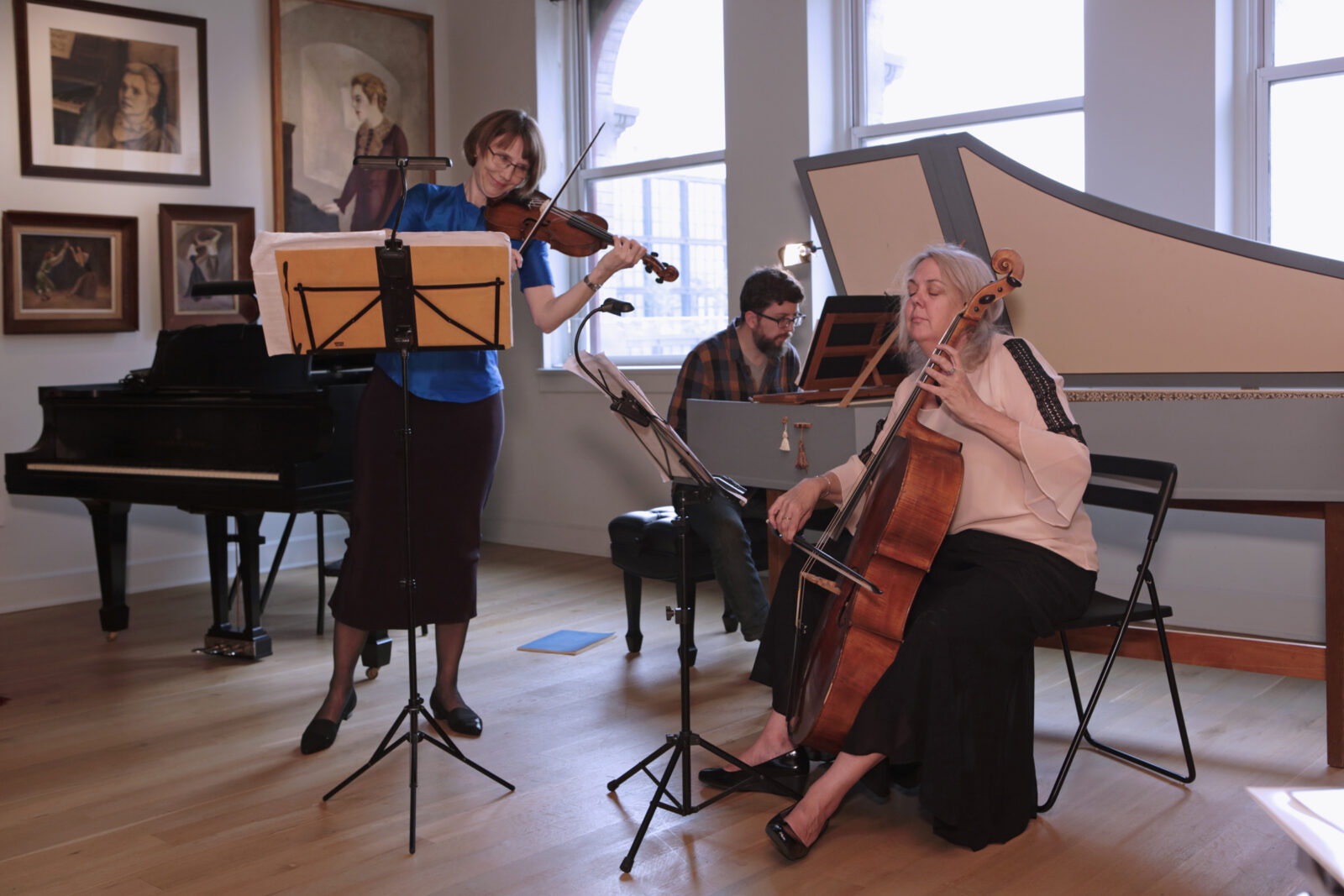
Meet ACMP’s Development Consultant, Amie Roosevelt
Amie Roosevelt joined ACMP's staff as our first-ever Development Consultant in January 2026. She has enjoyed a long and varied career as a violinist, with a primary focus on historically informed performance. I hope you all will meet and even get to play with Amie. But until you do, you can get to know her and her fascinating story by reading this interview from August 12, 2026.Read More ↗
Make Chamber Music Part of Your Fall at 92NY
For many musicians, chamber music is as much about connection as it is about repertoire—the shared experience of listening, collaborating, and discovering new musical perspectives together. At the 92NY School of Music, two chamber music programs offer welcoming entry points into that experience this fall: Chamber Music Reading and Chamber Music Coaching & Performance. Whether you’re picking up your instrument again, looking to meet fellow players, or hoping to deepen your ensemble work, both programs are designed to bring musicians together in a supportive and engaging environment.Read More ↗
Member of the Month, August 2026: Alison Edwards
There aren’t too many people who come to a professional crossroads before they turn 13. But Alison Edwards faced such a moment. She had taken up the violin at age seven with none other than Dorothy DeLay as her teacher. But indeed, Alison had another calling. Inspired by social justice movements of the 1960s, she became a civil rights lawyer, eventually serving in the appellate division of the Cook County Public Defender’s office. After 25 years working and raising a family, she picked up her violin again and launched on a lifelong chamber music adventure.Read More ↗
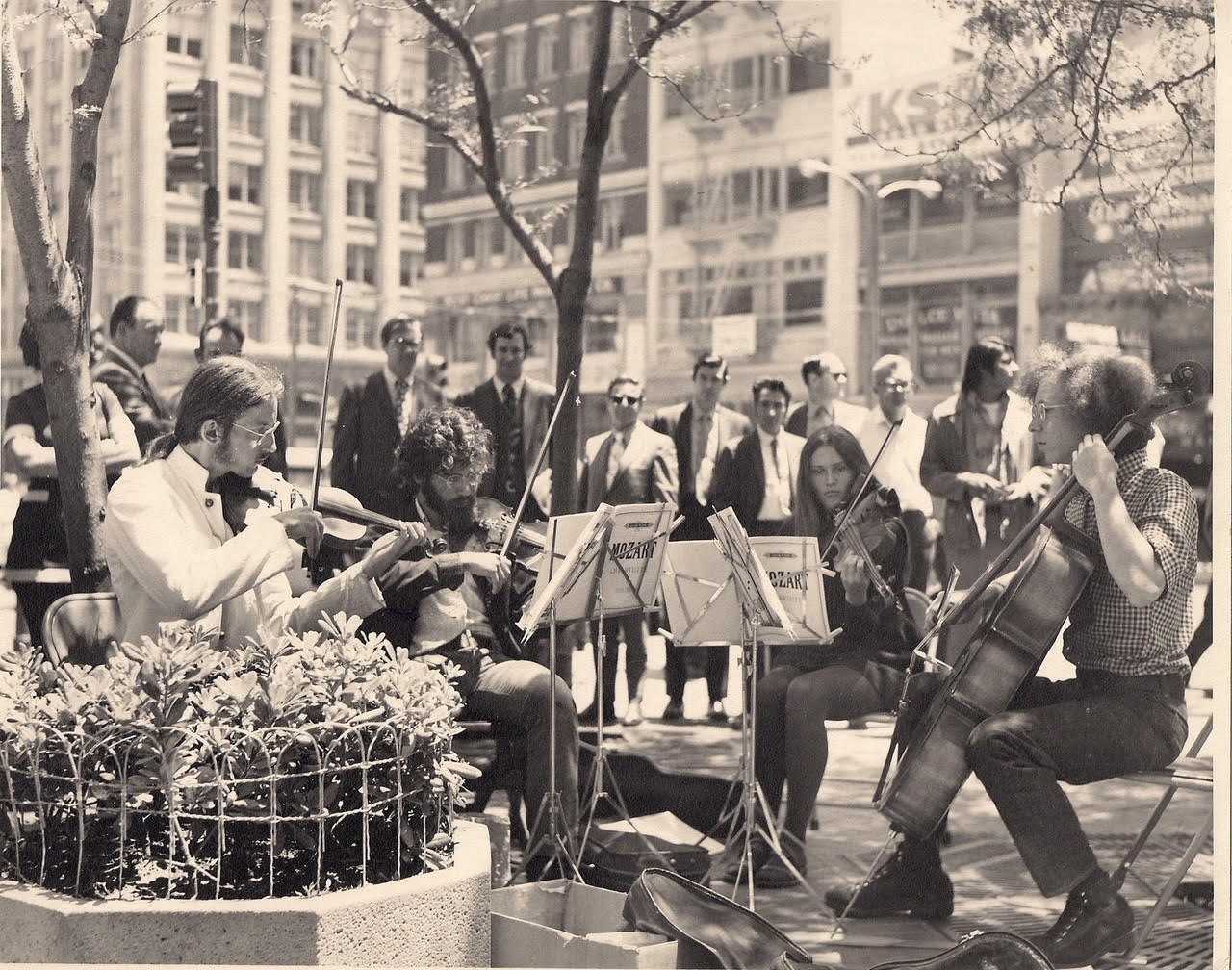
After 56 Years, the Bond of Chamber Music Endures
Cellist David Pearl and violinist/violist Gary Chanan played quartets together in the streets of San Francisco in the early 1970s. 56 years later they are playing together again in New York City...they reconnected through ACMP!Read More ↗
Coffee Shop Performances, Coffee-infused Repertoire
ACMP's intrepid cellist Tom Cappaert is at it again - this time with a story about ACMP members in Ecuador and Spain who organized chamber music in coffee shops, inspired by Tom's endeavors.Read More ↗
Member of the Month, July 2026: Sara Langbert
A self-proclaimed “total New Yorker”, cellist Sara Langbert graduated from Music and Art and continued her musical education at Queens College in her native New York borough. But like many ACMP members, she would put her cello aside as she managed the demands of raising a family and pursuing a career in computers and technology. Now she's playing again and is an enthusiastic member of ACMP.Read More ↗
Around the World with ACMP’s Grants (Home Coaching and Play-in)
Over the last few weeks we have been asking members, participants, and organizers to tell us how our rolling grants have been useful to them and their communities. So let’s take a trip around the world and see what folks have to say about our Home Coaching and Play in grants.Read More ↗
Around the World with ACMP’s Grants (Just Play and Impresario)
This summer, we’re hearing from ACMP members, participants, and organizers about how Just Play and Impresario grants have supported chamber music in New York, Italy, Canada, Colorado, and beyond.Read More ↗
ACMP Member of the Month, June 2026: Yoav Segev, the flying cellist returns
It’s probably easy to spot Yoav Segev at the airport. He’s the guy in the pilot’s uniform with the cello on his back. Yoav, you see, is the Flying Cellist, a globe-trotting pilot for El Al Israel Airlines who plays chamber music during his layovers in far-off destinations. Read Bob Goetz's interview with Yoav.Read More ↗
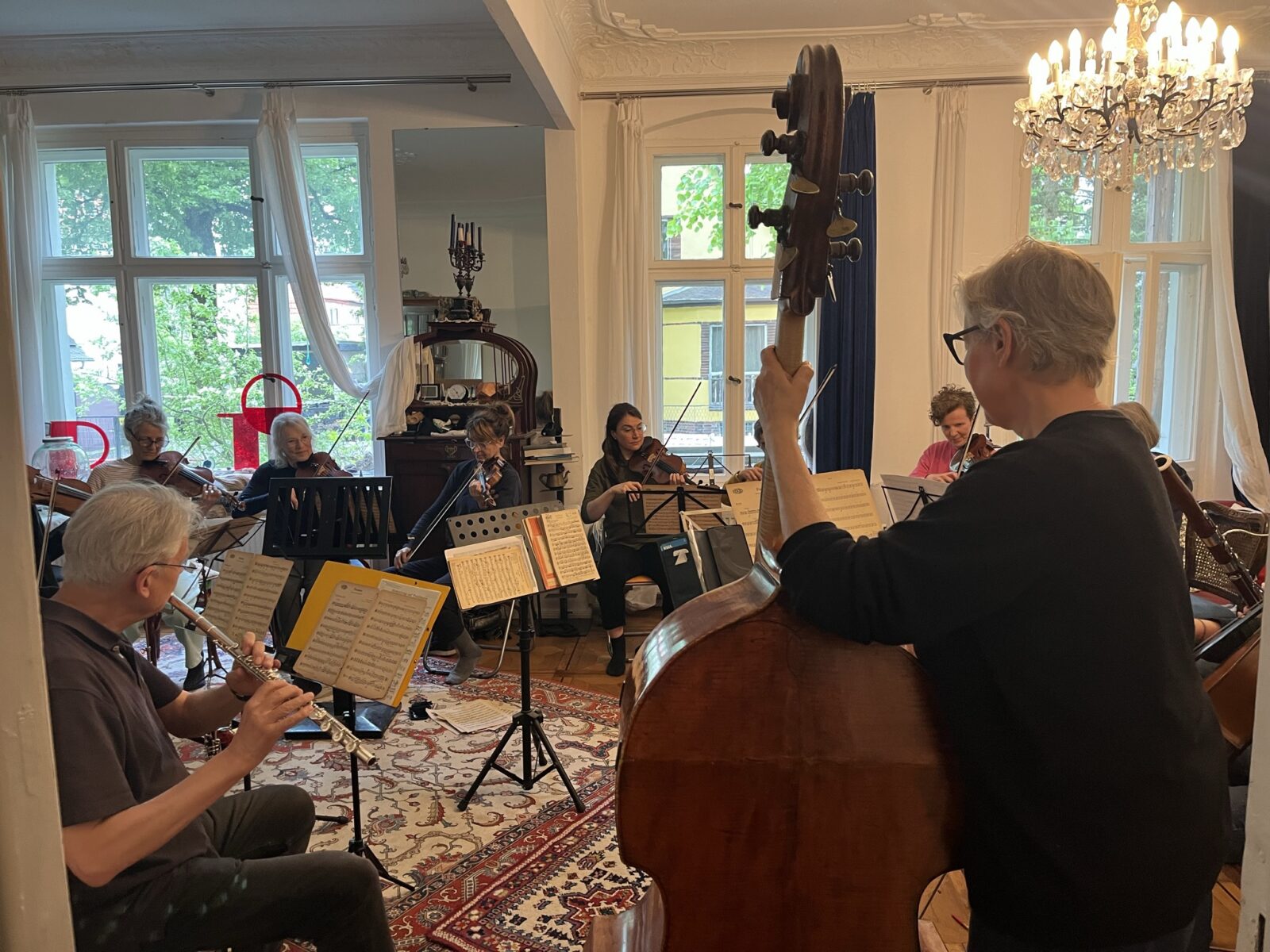
Springtime Extravaganza Light Music Orchestra on May 9, 2026, in Berlin-Karlshorst
Fifteen musicians followed Gudrun Schnellbacher's invitation to a very special kind of play-in – to play in the Springtime Extravaganza Light Music Orchestra. Read the article in English or in German.Read More ↗
Remembering Pianist Fontaine Laing
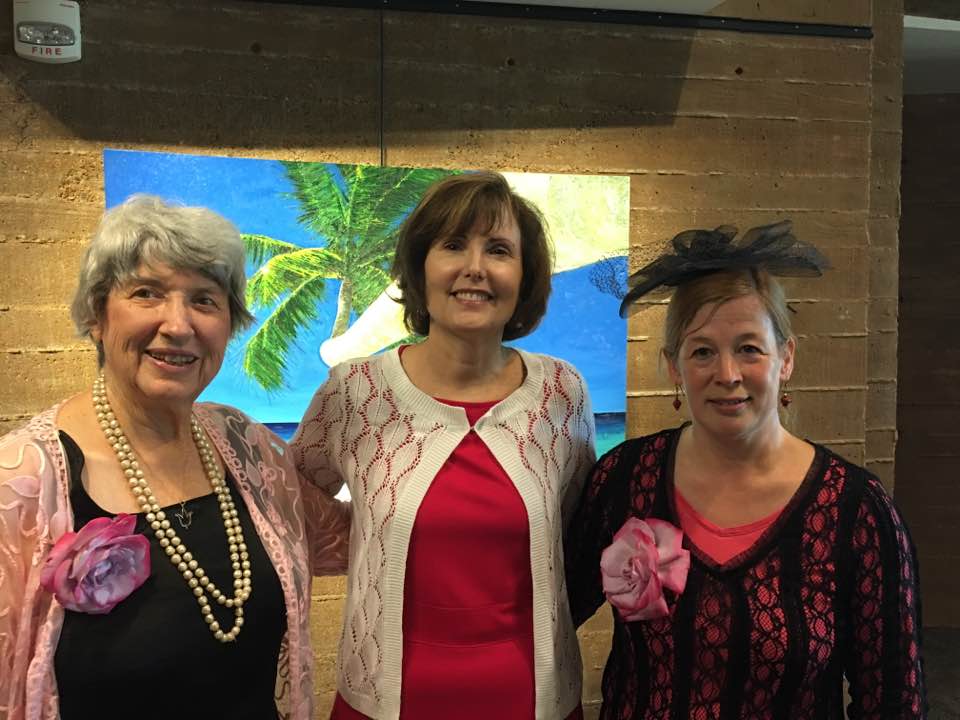
Janet White Remembers her friend, and longtime ACMP member pianist Fontaine Laing.Read More ↗
Load More
All Articles By