The Flute: Beloved of Amateurs
The flute has been a favorite instrument of avocational musicians in the US for centuries, dating back to the colonial period. The identities of most of those players are lost to history, logically, but quite an impressive number of distinguished historical figures have taken up the instrument. In the early days, the flute was a gentleman’s instrument—and thus it was favored by John Quincy Adams and Henry David Thoreau, whose male relatives were also flutists.
In the 20th century, particularly with the growth of school music programs, the gender balance among amateurs shifted. In the 1950s and ‘60s, it was common for a school band’s flute section to be entirely female. So it is perhaps not surprising that two female NASA astronauts, Ellen Ochoa and Cady Coleman, took their flutes into space.
John Quincy Adams
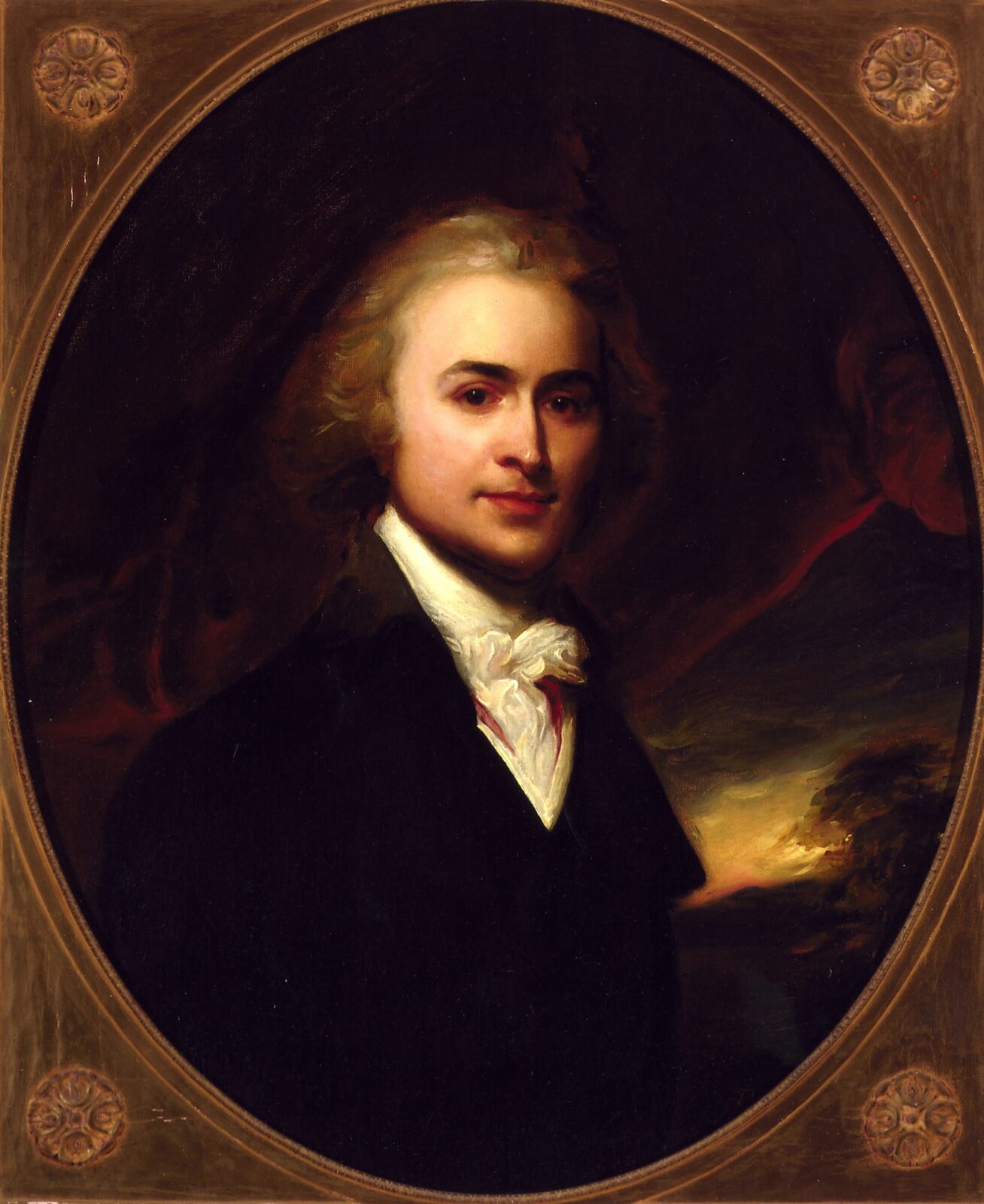
In 1778, 10-year-old John Quincy Adams accompanied his father on a diplomatic mission to France. There he heard his first opera—the night they arrived. He studied music at a French boarding school, became a good dancer, and enjoyed the theater. But his experience as a performer began after he enrolled as an undergraduate at Harvard, class of 1787. Using a flute bought by his cousin, he took lessons and played duets with his fellow students. He wrote in his diary that they went “serenading” (the ladies) in the wee hours of the morning. Adams was a member of the Pierian Sodality, an ensemble founded in 1808 and composed primarily of flutists in its early days—strings and brass joined later, and it ultimately morphed into the Harvard-Radcliffe Orchestra. According to a report in the Harvard Crimson, “scarcely a sound but flutes was heard. From these the gentle murmurings or liquid trills rose from every side of the quadrangle the moment the bell at twelve rang the close of the morning study hours.”
JQA’s sister Nabby was alarmed by his report in January 1787 that he had taken up the flute; playing such an instrument, she believed, would be injurious to his health. On the contrary, he wrote, “it has been since my residence here my greatest amusement, and the chief relaxation after study; and indeed it affords me so much pleasure that I cannot think of giving it up.”
As a young diplomat, he told a French colleague, “If I could be permitted to cite myself as an instance, I am extremely fond of music, and by dint of great pains have learnt to blow very badly the flute.”
There is no evidence that JQA’s flute-playing continued once his political career ascended. He remained, however, an enthusiastic member of the audience. In late 1815, for example, while serving as minister to Great Britain, Adams, his wife Louisa, and son George (who also played the flute) attended a concert at Covent Garden in London. After excerpts from Handel’s Messiah, a 23-year-old rising star, the French flute virtuoso Louis Drouet, took the stage. Adams reported that “Mr. Drouet, first flute player of the king of France’s chapel, performed a Concerto upon the flute, and surpassed every thing that I had ever heard upon that instrument.”
Henry David Thoreau
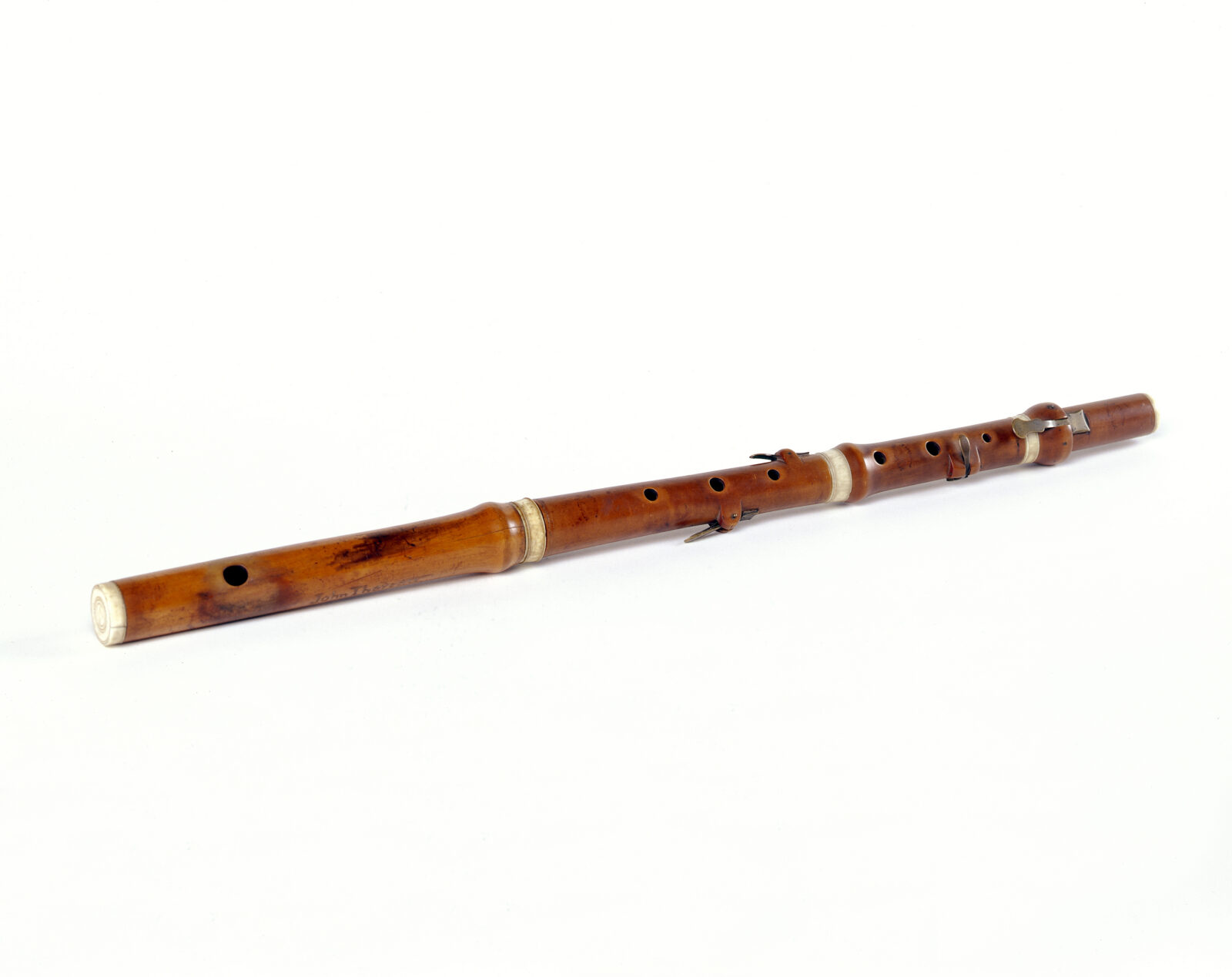
Another flute player, Henry David Thoreau, trailed Adams at Harvard by exactly 50 years. For Thoreau, the flute, and music more broadly, was something of philosophical significance, but it was also, more simply, an everyday pleasure.
Thoreau enjoyed hearing the music emanating from neighboring houses in his hometown of Concord, Massachusetts, and the same activity took place in his own home. The family owned a piano, played by his sister Sophia, and Henry’s father and older brother, John Sr. and Jr., were flutists. The Thoreau family sang a variety of popular songs and ballads, particularly “old-time” and Scotch melodies. William Ellery Channing recalled, “One was surprised to see him dance…he had been well taught, and was a vigorous dancer…and oh, how sweetly he played upon his flute!”
Thoreau scholar Walter Harding noted that he did not attend classical concerts in Boston, as his friends did. “What he preferred was what he thought of as the music of nature.” He made his own Aeolian harp and notated local birdsong, and wrote a great deal about the importance of music.” The composer Charles Ives observed, ‘Thoreau was a great musician, not because he played the flute but because he did not have to go to Boston to hear ‘the Symphony.’”
Thoreau played his flute on Walden Pond, watching the perch hover as he did so. He sailed on the Assabet River at night with his flute at hand, “and my music was a tinkling stream which meandered with the river—and fell from note to note as a brook from rock to rock.” His friends appreciated his flute-playing; in June 1841, for instance, Emerson sent him a note inviting him to the Cliff, “where our ladies will be greatly gratified to see you & the more they say if you will bring your flute for the echo’s sake.”
Thoreau’s neighbor Joseph Hosmer related a possibly apocryphal tale: Thoreau described a fearless mouse that lived under the family house and collected crumbs in plain sight of the family; it even ate cheese from Henry’s fingers. Hosmer reported, secondhand, that “when he played upon the flute, it would come and listen from its hiding place,” disappearing when he changed the tune.
When Henry died, he was immortalized by fellow Transcendentalist Louisa May May Alcott in the poem “Thoreau’s Flute,” published in the Atlantic in 1863[NT1] . It begins:
We,sighing, said, “Our Pan is dead;
His pipe hangs mute beside the river; —
Around it wistful sunbeams quiver,
But Music’s airy voice is fled.
The flute survives in the Concord Museum, as does the Thoreau family’s sheet music. Some of those pieces, by Hook, Pleyel, and others, have been published as The Thoreau Family Flute Book[NT2] , a collection of duets transcribed by Edward Scibilia (Falls House Press) and recorded by the Walden Duo.
Flutes in Space I: Ellen Ochoa
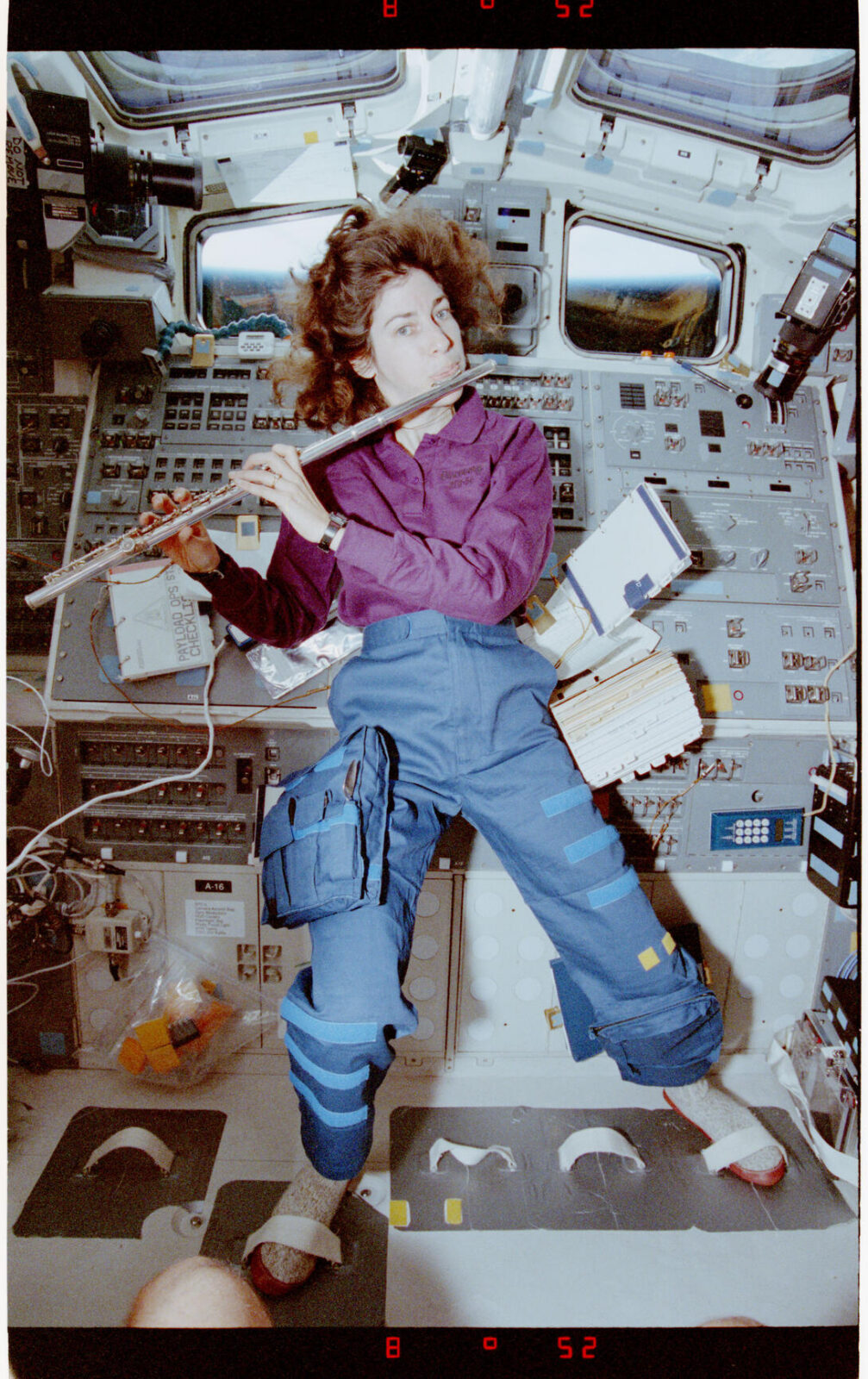
Ellen Ochoa, the first Latina astronaut, was also the first astronaut to play the flute in space, though other astronauts had taken along different instruments (sax, bells, electronic keyboard, and guitar). She began playing the flute at age 10, hoping to join her clarinetist sister in the marching band, and as an undergraduate she considered a music major but decided it was not sufficiently practical (her brother, however, became a professional horn player, a member of the Charleston Symphony). While a grad student in electrical engineering at Stanford, she studied seriously with the legendary flute pedagogue Frances Blaisdell (former principal flutist of the New York City Ballet).
Ochoa received a BS in physics from San Diego State University in 1980 and an MS and doctorate in electrical engineering from Stanford University in 1981 and 1985, respectively. “I remember at college taking four physics classes and two labs, and then getting to go to wind ensemble. That was a real nice break in the day, that’s for sure. So, I think for me it’s been mainly something to do that I enjoy doing. For me it’s really provided a lot of …I guess “happiness” is what you would call it.”
Dr. Ochoa joined NASA as a research engineer in 1988 and was selected as an astronaut two years later. She made her first flight in April 1993 as a mission specialistonthe space shuttle Discovery, whose crew studied the effect of solar activity on the Earth’s climate and environment. She was responsible for the scientific instruments and also for operating the robotic arm on the shuttle.
For an in-flight concert, she chose to play the Mozart G major flute concerto and “Spring” from Vivaldi’s The Four Seasons. She explained that choice to The Flutist Quarterly: “because it was important to our flight that we launch in the spring to measure the atmosphere just as the sun was warming up the air in the very northern part of the northern hemisphere. It was important to our instruments. So, it was kind of a theme for our flight to launch in the spring. And then my commander was a Marine, so he said the only way I could take the flute on board was if I played the Marine Corps Hymn, so I had to do that. I also had to play something for all the other people on our flight. Two of them were in the Navy, so I played the Navy Anthem, and one of the guys on the flight is half British, so I played ‘God Save the Queen.’ But my own interests have been classical.”
Ochoa points out that the skills involved in musical ensembles are useful. “You have to work on our own skills and be valuable as an individual, but you also have to stay aware of the goals of the group and do your part to help make the entire team the best it can be.” She went to become director of the Johnson Space Center in Houston, and she still plays the flute.
Flutes in Space II: Cady Coleman
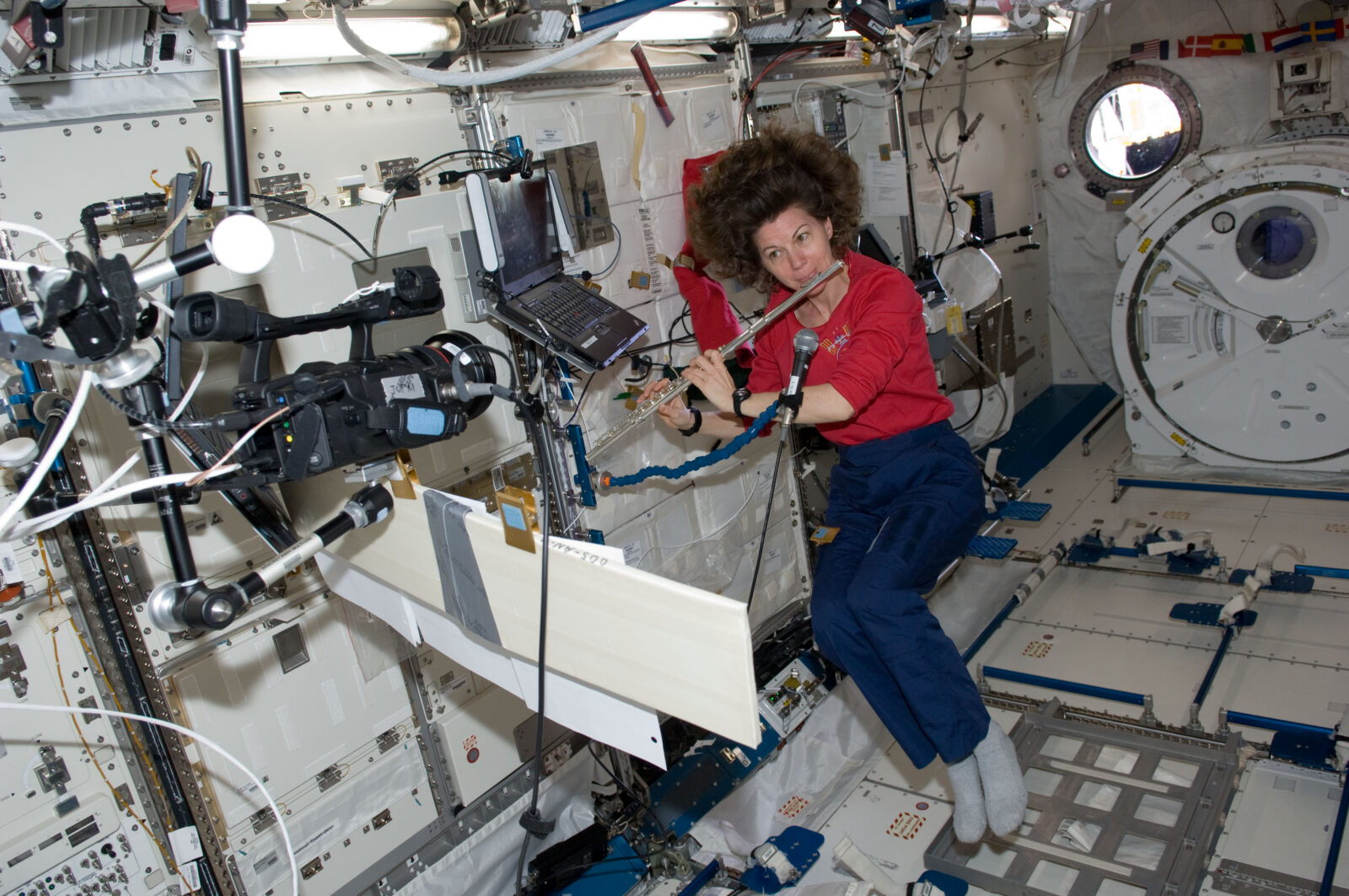
Astronaut Catherine “Cady” Coleman followed Ochoa’s example, in multiples: she brought four flutes with her to the International Space Station: her own personal flute, a pennywhistle from Paddy Moloney of The Chieftains, an old Irish flute from Matt Malloy of The Chieftains, and a flute from Ian Anderson of Jethro Tull.
Coleman, who holds a BS in chemistry from MIT and a PhD in polymer science and engineering from the University of Massachusetts, was a colonel in the US Air Force before becoming an astronaut. She has held numerous research and administrative positions with NASA, including Chief of Robotics for the Astronaut Office, and she made two shuttle flights on Columbia as mission specialist, in 1995 and 1999. In 2011 she spent 159 days on the International Space Station.
During that mission, she collaborated with Anderson, who was then on tour in Perm Russia, in an Earth-space duet, a portion of the song “Bourree[NT3] .” Jethro Tull had played an arrangement of that song as Neil Armstrong and Buzz Aldrin stepped onto the moon in 1969. “It is really different to play up here,” Coleman observed. “I’ve been having the nicest time up in our cupola. I float around in there. A lot of the times I play with my eyes closed.” Said Anderson afterwards, “Thanks Col. Catherine Coleman… today’s cosmonauts, scientists and astronauts are still every bit the rocket heroes they were 50 years ago.”
Selected Bibliography
Biographical data, Catherine “Cady” Coleman. NASA. https://www.nasa.gov/wp-content/uploads/2023/05/coleman.pdf
Biographical data, Ellen Ochoa. NASA. https://www.nasa.gov/wp-content/uploads/2017/05/ochoa.pdf
“Flutes In Space: Astronaut Plays Aboard Space Station,” NPR, Feb. 15, 2011.
https://www.npr.org/2011/02/15/133780067/flutes-in-space-astronaut-plays-aboard-space-station
Hopkins, Barbara. “The Musical World of John Quincy Adams.” Traverso: Historical flute newsletter 23/1 (2011): 1–4.
Koster, Ron. “Sing Along with Henry.” www.henrythoreau.org/music/index.html
Schwoebel, Sandra. “First Flutist in Space! An interview with Ellen Ochoa.” Flutist Quarterly 19/1 (fall 1993): 14-16.
Walls, Laura Dasson. Thoreau: A Life. Chicago: University of Chicago Press, 2017.
Author biography
Nancy Toff is the author of four books and numerous articles on the flute, including The Flute Book and Monarch of the Flute: The Life of Georges Barrère. A retired vice president and executive editor at Oxford University Press, she is archivist-historian and former president of the New York Flute Club.
[NT1]https://www.theatlantic.com/media/archives/1863/09/12-71/132121219.pdf
[NT2]https://www.presser.com/fh0068-the-thoreau-family-flute-book.html
[NT3]https://www.nasa.gov/multimedia/videogallery/index.html?media_id=79119001
More Articles
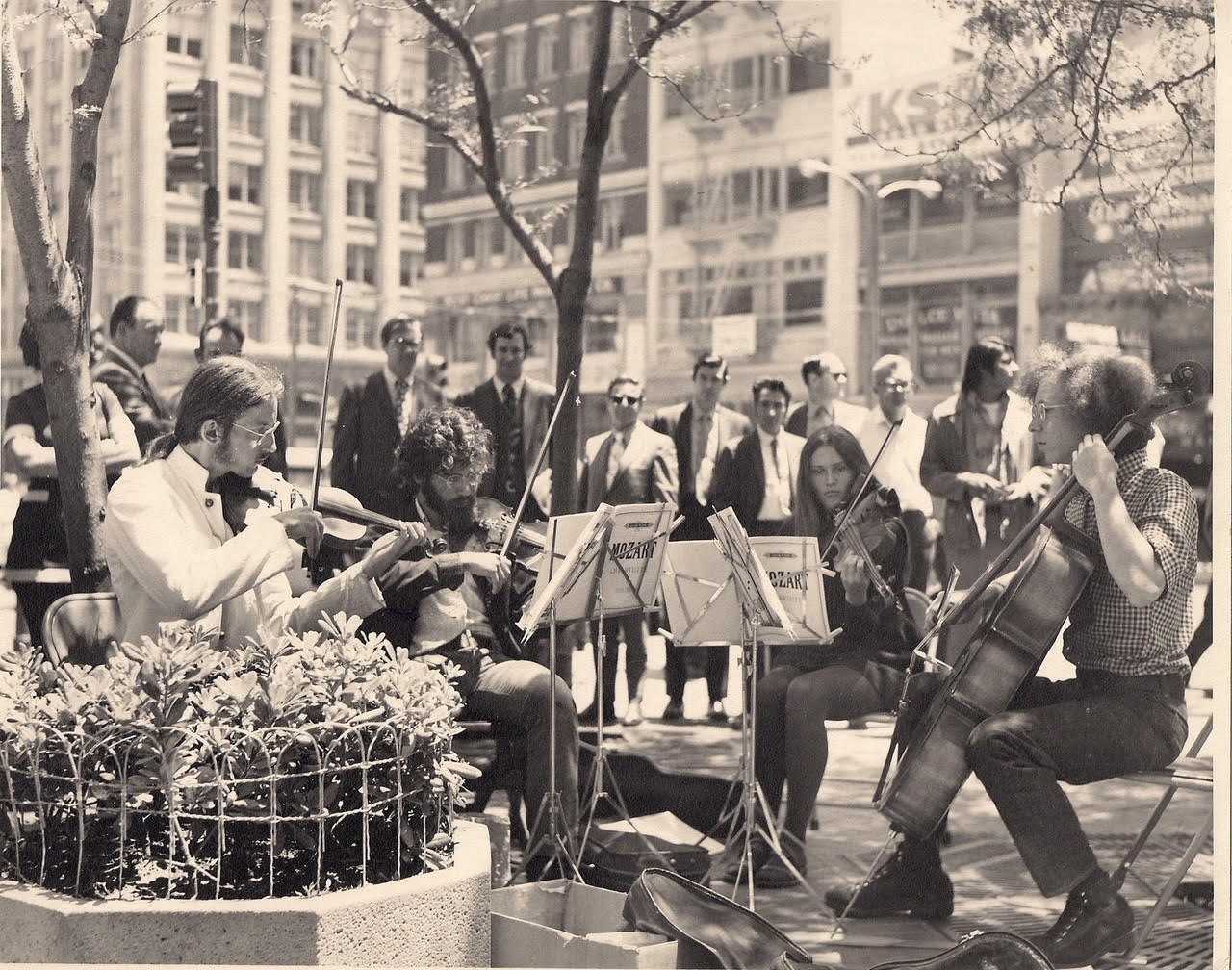
After 56 Years, the Bond of Chamber Music Endures
Cellist David Pearl and violinist/violist Gary Chanan played quartets together in the streets of San Francisco in the early 1970s. 56 years later they are playing together again in New York City...they reconnected through ACMP!Read More ↗
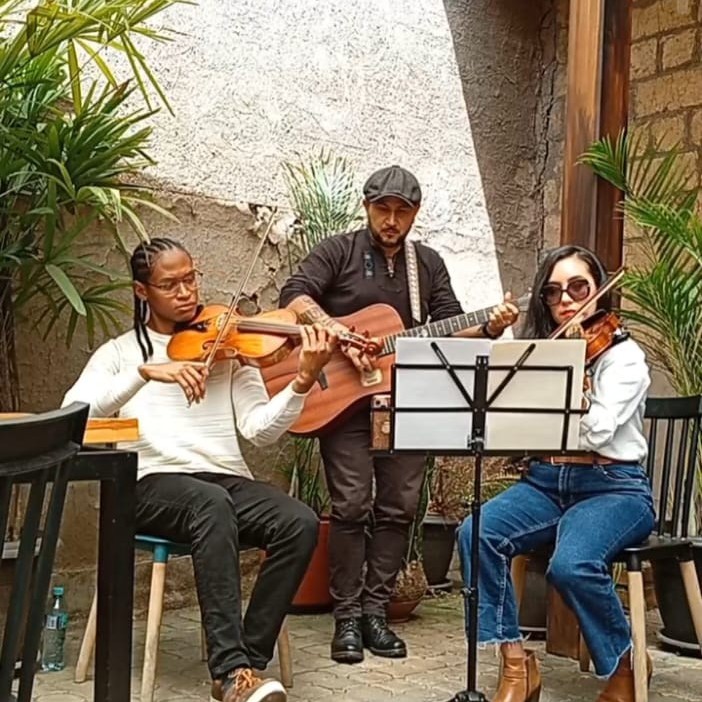
Coffee Shop Performances, Coffee-infused Repertoire
ACMP's intrepid cellist Tom Cappaert is at it again - this time with a story about ACMP members in Ecuador and Spain who organized chamber music in coffee shops, inspired by Tom's endeavors.Read More ↗
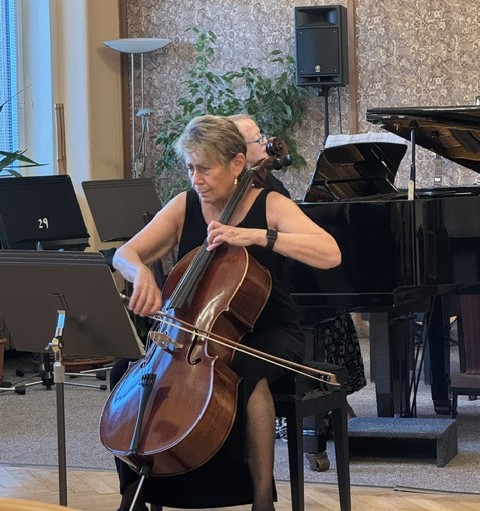
ACMP Member of the Month, July 2026: Sara Langbert
A self-proclaimed “total New Yorker”, cellist Sara Langbert graduated from Music and Art and continued her musical education at Queens College in her native New York borough. But like many ACMP members, she would put her cello aside as she managed the demands of raising a family and pursuing a career in computers and technology. Now she's playing again and is an enthusiastic member of ACMP.Read More ↗
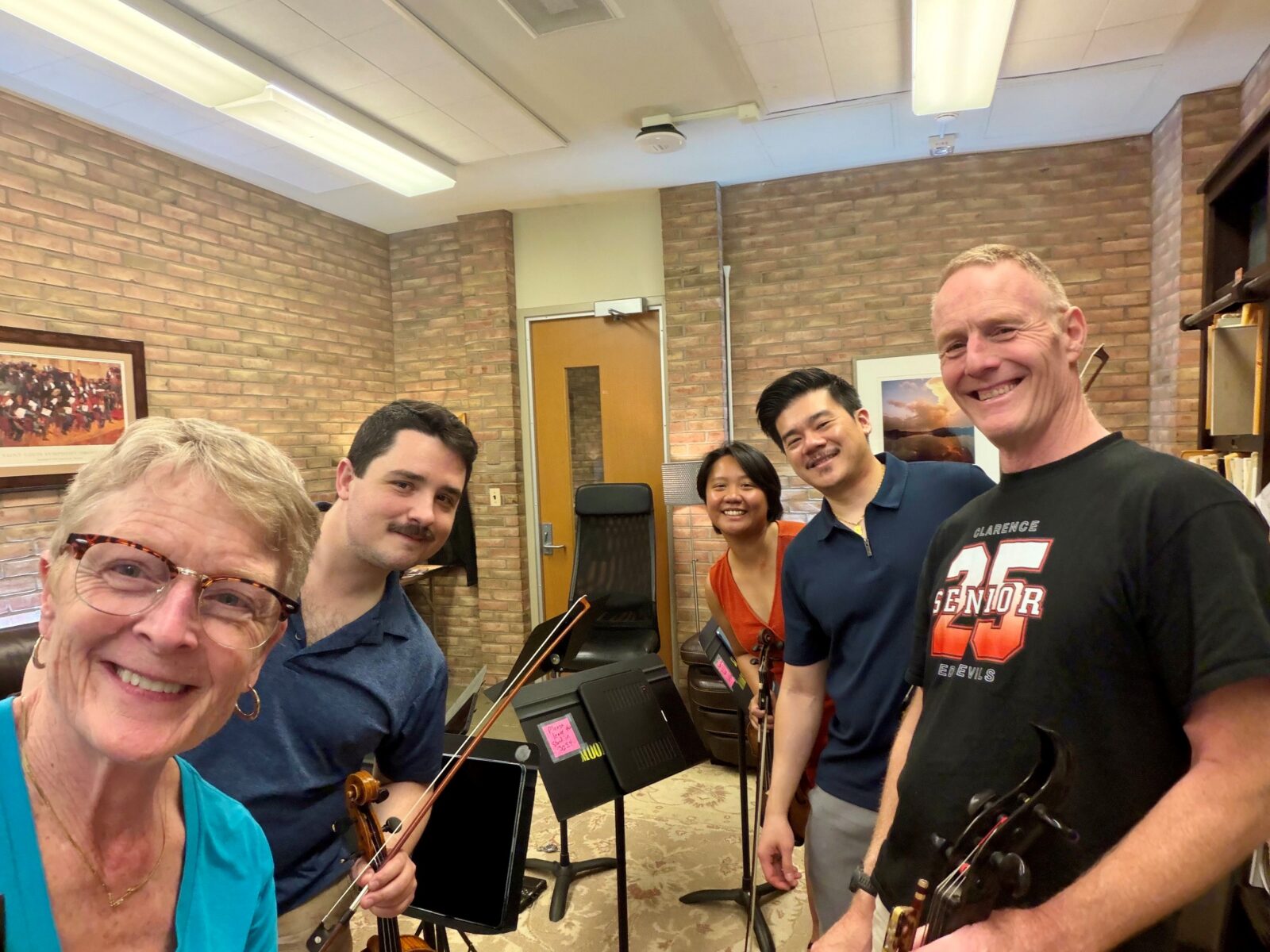
Around the World with ACMP’s Grants (Home Coaching and Play-in)
Over the last few weeks we have been asking members, participants, and organizers to tell us how our rolling grants have been useful to them and their communities. So let’s take a trip around the world and see what folks have to say about our Home Coaching and Play in grants.Read More ↗
Around the World with ACMP’s Grants (Just Play and Impresario)
This summer, we’re hearing from ACMP members, participants, and organizers about how Just Play and Impresario grants have supported chamber music in New York, Italy, Canada, Colorado, and beyond.Read More ↗
ACMP Member of the Month, June 2026: Yoav Segev, the flying cellist returns
It’s probably easy to spot Yoav Segev at the airport. He’s the guy in the pilot’s uniform with the cello on his back. Yoav, you see, is the Flying Cellist, a globe-trotting pilot for El Al Israel Airlines who plays chamber music during his layovers in far-off destinations. Read Bob Goetz's interview with Yoav.Read More ↗
International Spotlight: Kristin Saltonstall in Panama
Kristin Saltonstall comes from a longstanding ACMP family and has been a member of ACMP for as long as she can remember. As a molecular ecologist, she works for the Smithsonian Tropical Research Institute in Panama, where she has forged a new musical life for herself and enjoys the natural beauty that Panama has to offer.Read More ↗
Springtime Extravaganza Light Music Orchestra on May 9, 2026, in Berlin-Karlshorst
Fifteen musicians followed Gudrun Schnellbacher's invitation to a very special kind of play-in – to play in the Springtime Extravaganza Light Music Orchestra. Read the article in English or in German.Read More ↗
Remembering Pianist Fontaine Laing
Janet White Remembers her friend, and longtime ACMP member pianist Fontaine Laing.Read More ↗
News of Note 2026
It’s that time of year again! The web version of the 2026 News of Note is live, featuring updates from the past our Strategic Plan, and some fun extras, including everyone’s favorite: a new puzzle!Read More ↗
How to Find Players and Build your ACMP Community
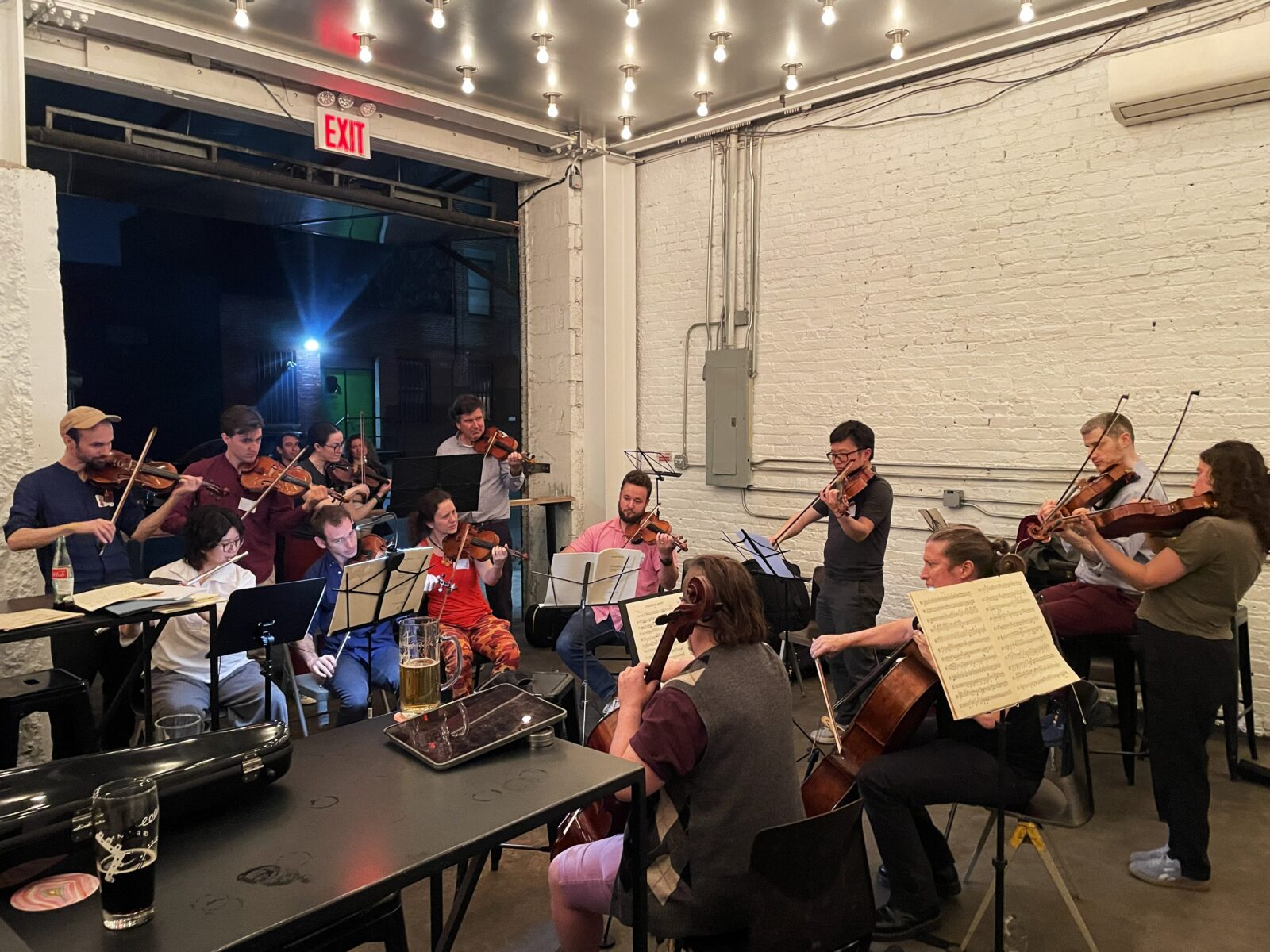
There is a time in every player’s musical life when you realize that you want to play more, but not quite sure with whom or where to even begin. Here are some ways to get started and begin building a community around you.Read More ↗
Member of the Month: Amit Rotem
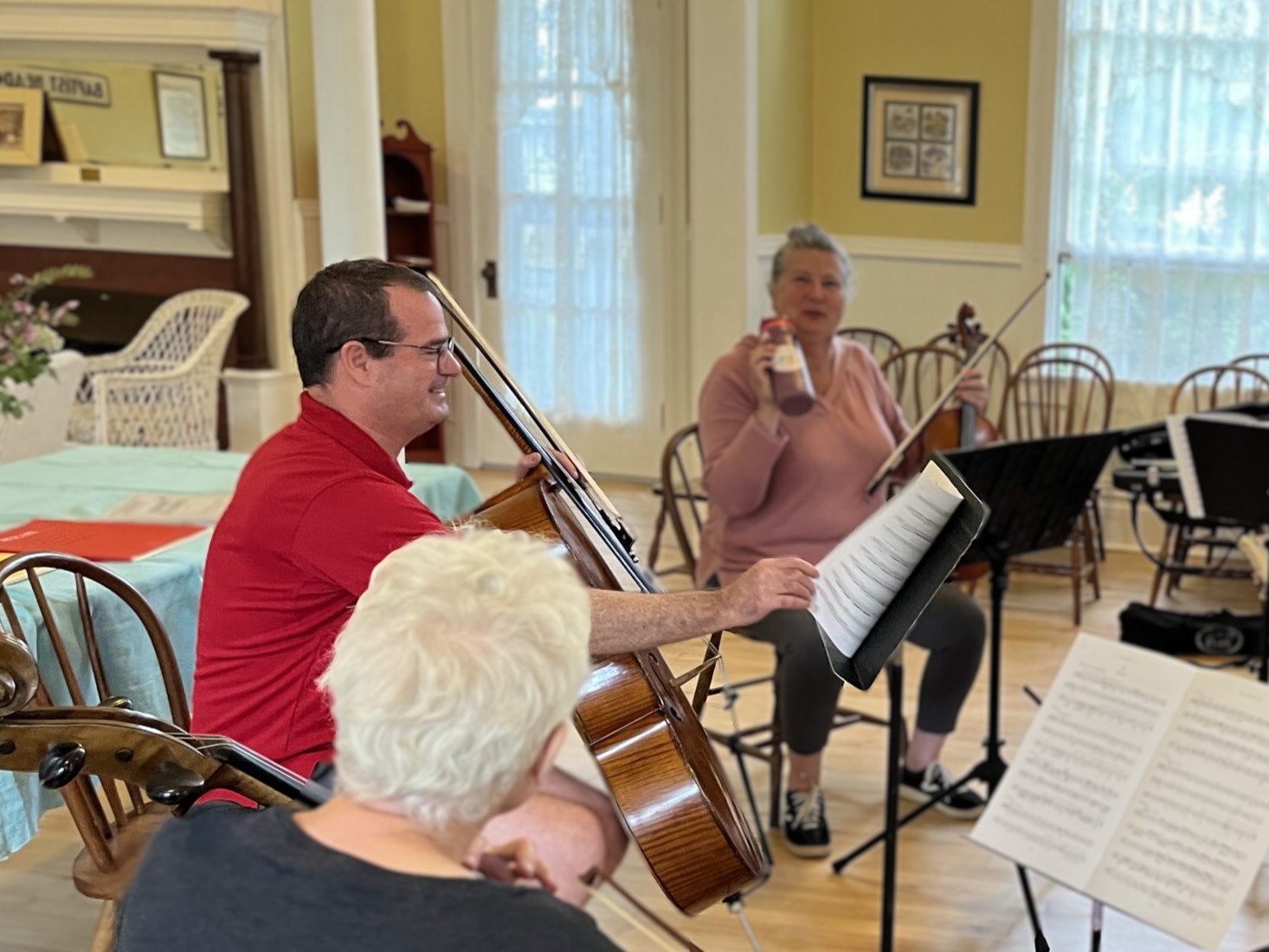
By day, Amit Rotem works as a child psychiatrist specializing in youth addictions at the Centre for Addiction and Mental Health in Toronto. When he is not there, or with his family, there is a good chance he is playing his cello, with as many willing chamber partners as the calendar will allow!Read More ↗
2026 Worldwide Play-In Events
ACMP’s Official Worldwide Play-In Weekend takes place from Friday, May 15 through Sunday, May 17, 2026, but we are encouraging more play-ins throughout the month of May which is National Chamber Music Month in the United States. Keep checking this article for links to May play-ins!Read More ↗
Find Your Musical Community This Spring at 92NY
For many musicians, chamber music is as much about connection as it is about repertoire—the shared experience of listening, collaborating, and discovering new musical perspectives together. At the 92NY School of Music, two chamber music programs offer welcoming entry points into that experience this spring: Chamber Music Reading and Chamber Music Coaching & Performance. Whether you’re picking up your instrument again, looking to meet fellow players, or hoping to deepen your ensemble work, both programs are designed to bring musicians together in a supportive and engaging environment.Read More ↗
ACMP’s debut in Argentina: a cello gathering in Buenos Aires
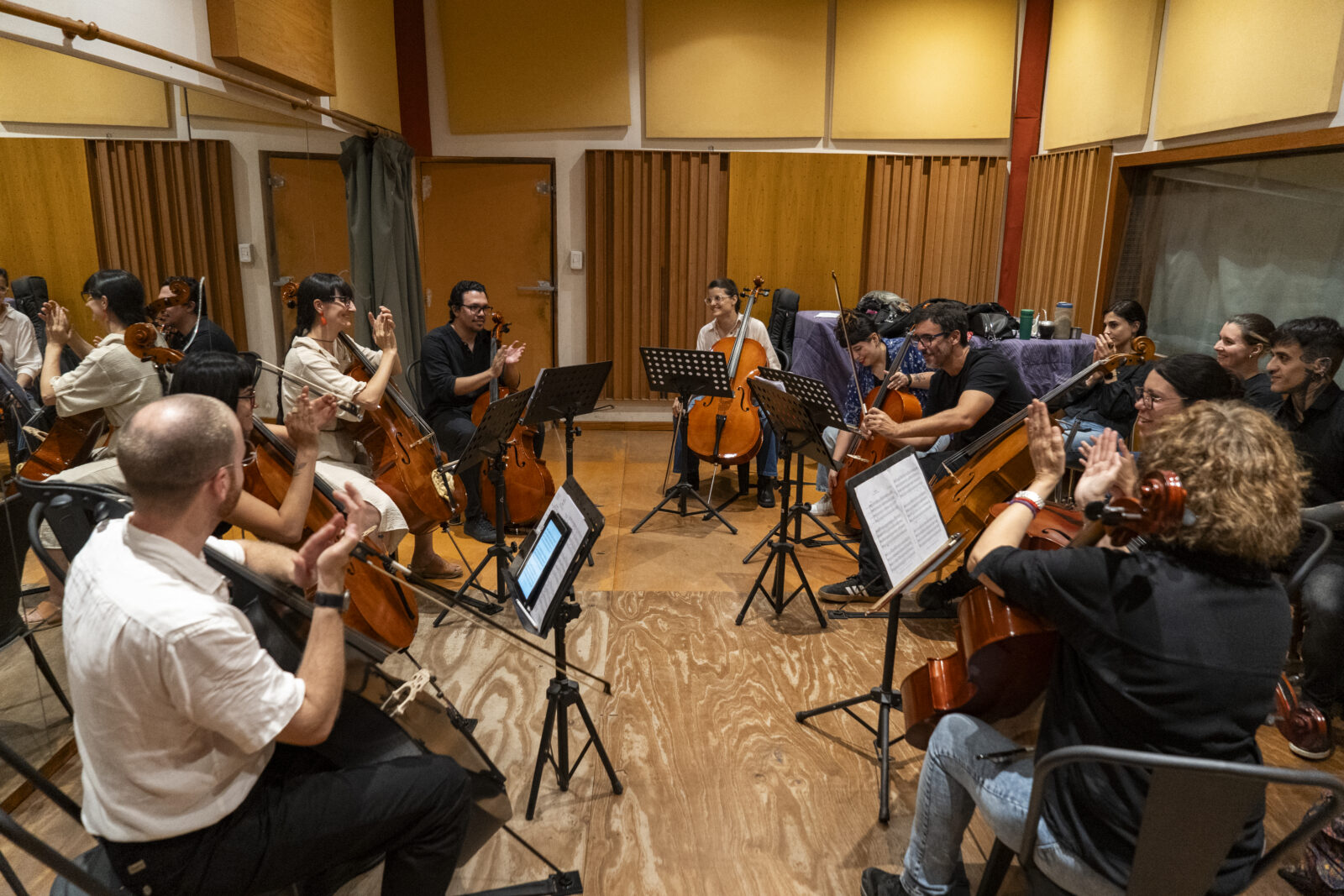
Cellist Andrew Brush organized ACMP's first event in Argentina: an all-cello play-in, guided by Chilean professional cellist Denisse Almonacid in Buenos Aires.Read More ↗
Jan Magnus, cellist – Retirement can wait. Chamber music can’t
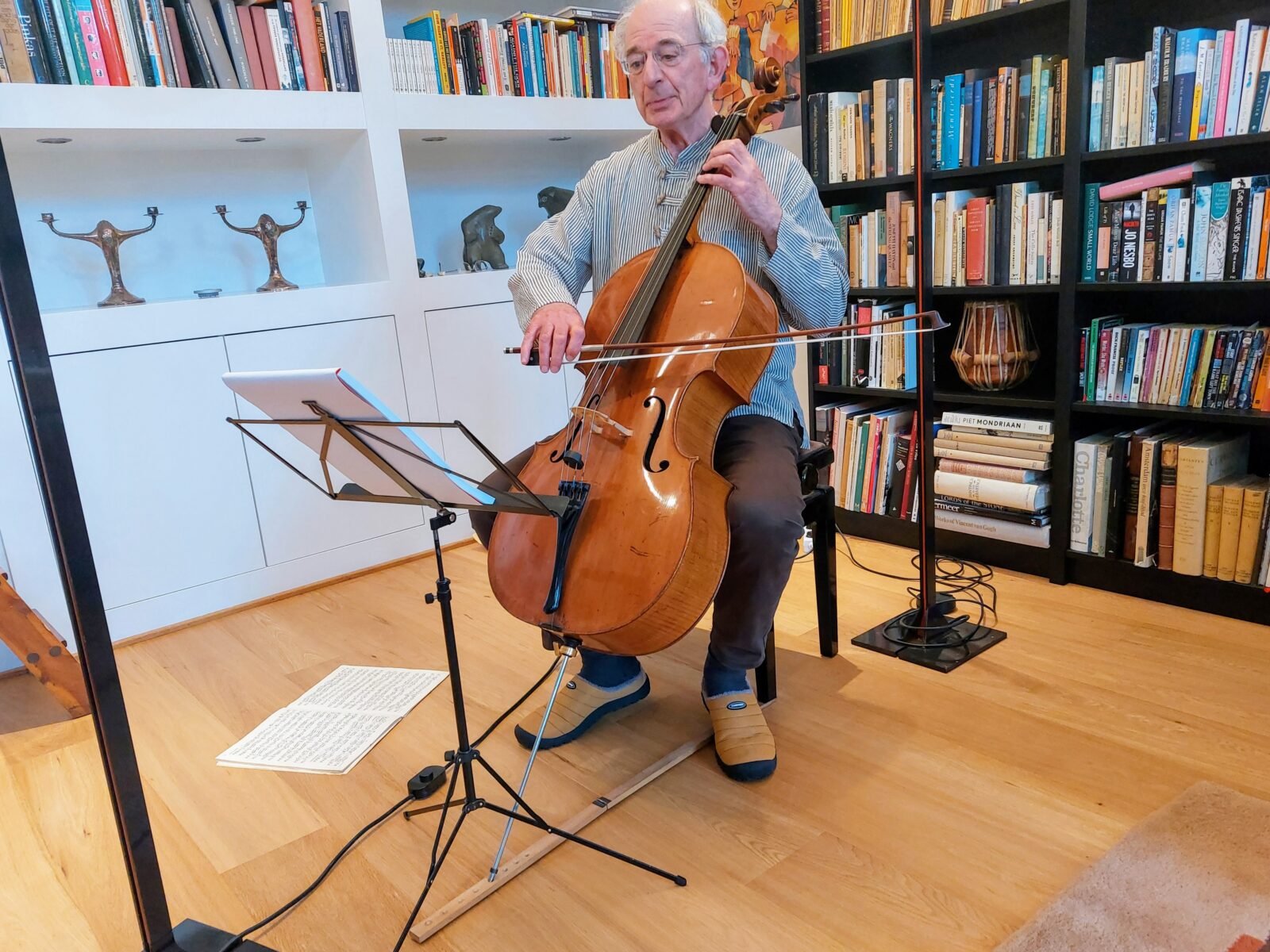
At 76, Jan Magnus is still teaching in Amsterdam and making chamber music wherever he goes, with no plans of slowing down.Read More ↗
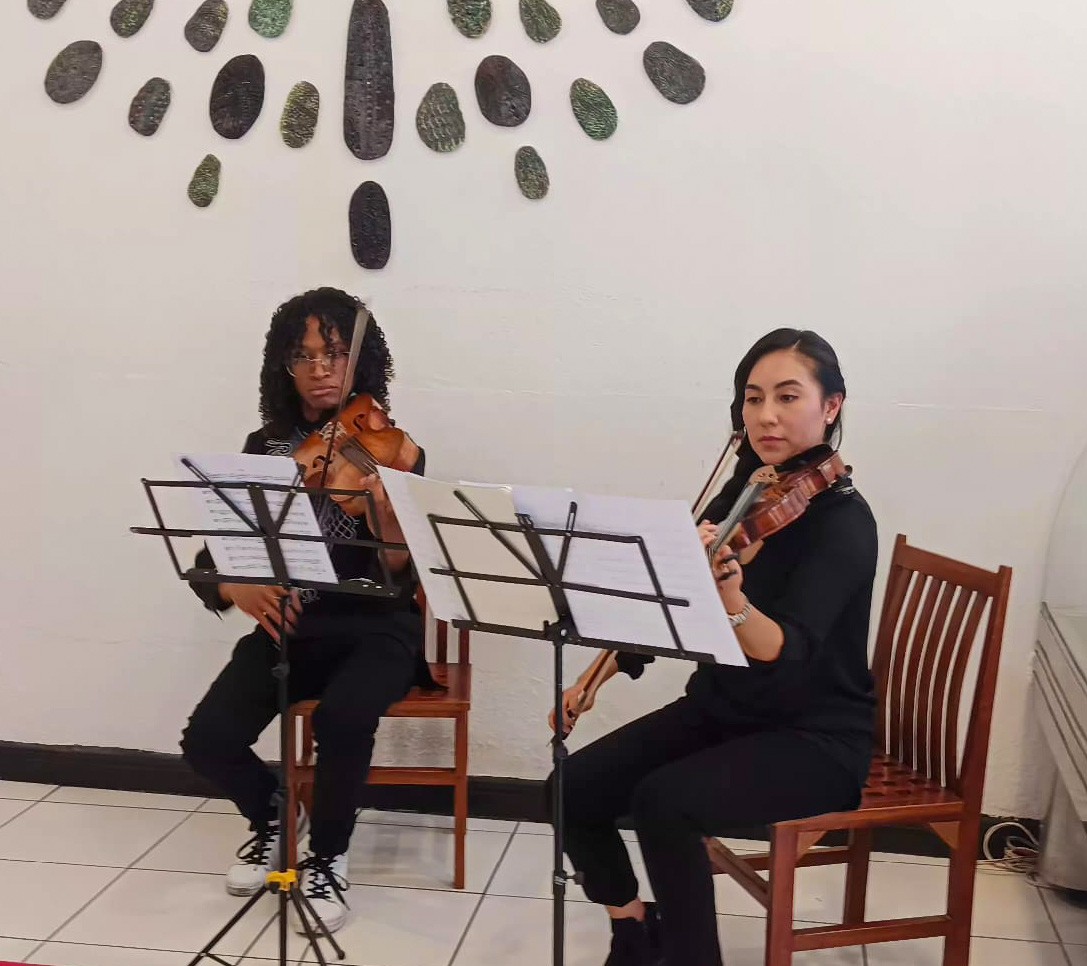
Music on the Menu in Cuenca, Ecuador
New ACMP members played a café concert in Cuenca, Ecuador.Read More ↗
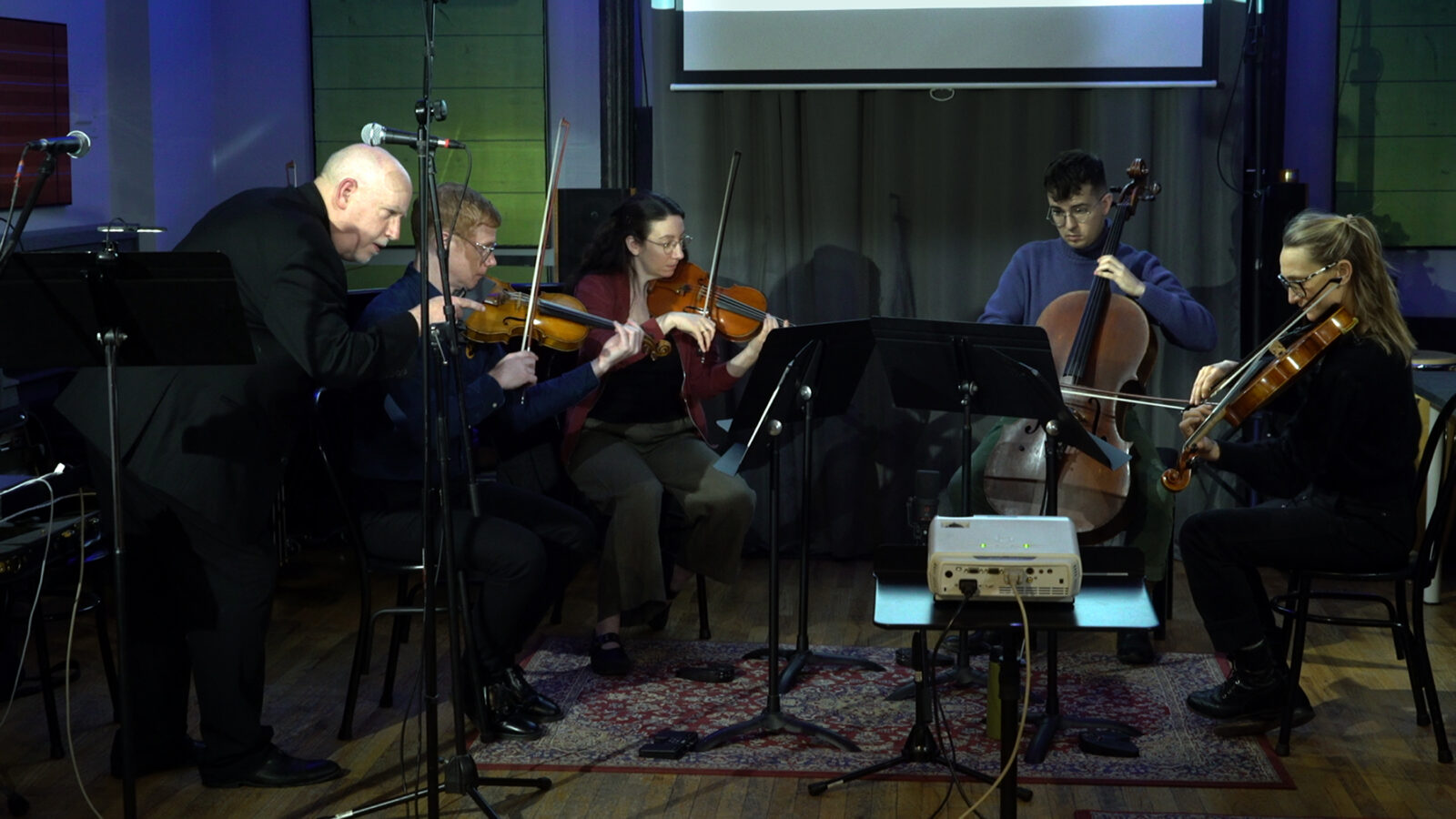
New Video: Turning ink blots into music – a discussion on the meaning and madness of notation
Cal Wiersma and his willing ACMP member partners explored the process of decoding musical notation to begin to answer that eternal question – how do I turn these dots, dashes, squigglies, slurs, round blotches and straight lines into MUSIC? How does one decide what to make of all of this maddeningly imprecise notation? Watch the video of the live-streamed class.Read More ↗
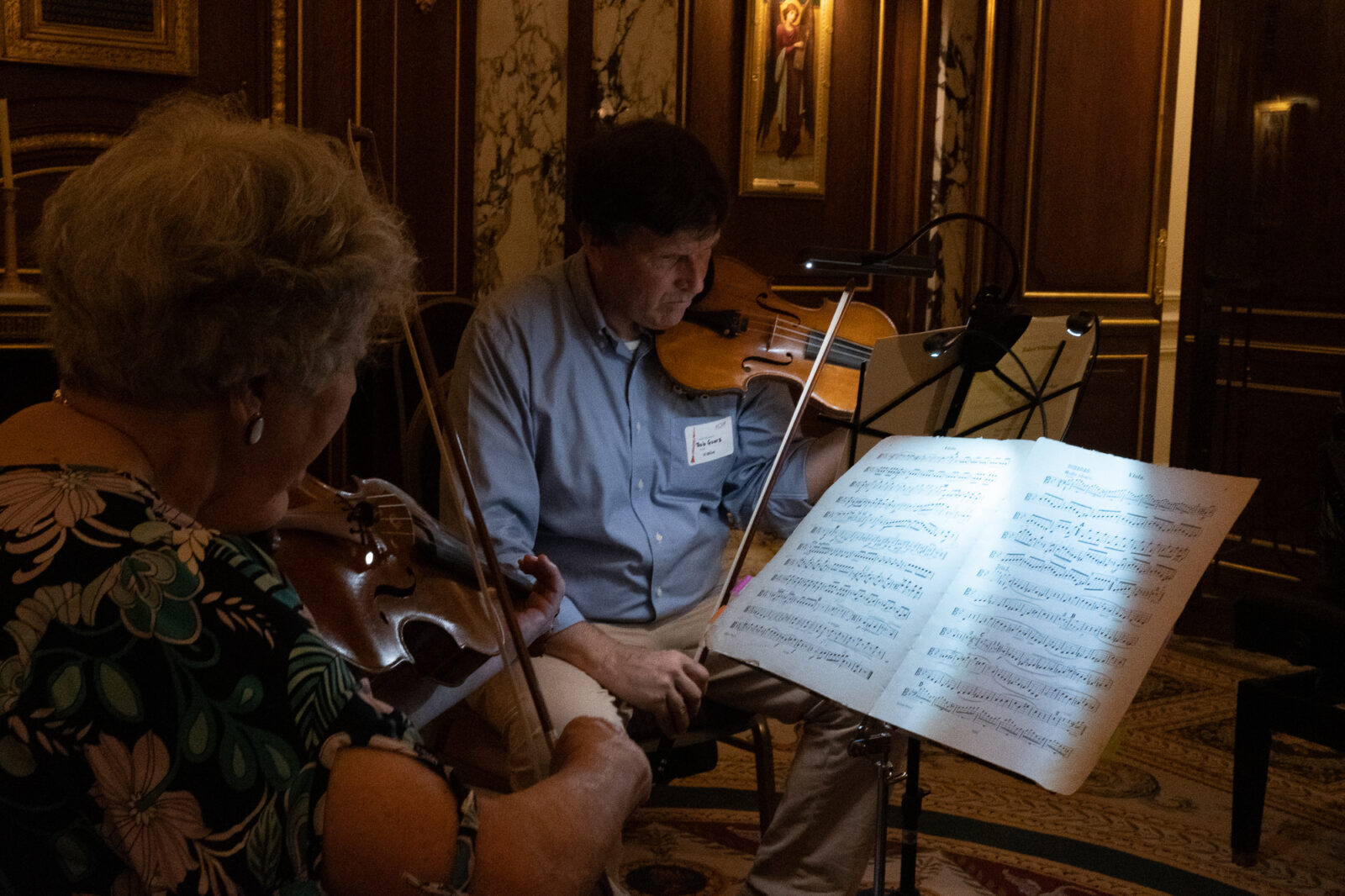
Henry, Gideon, Joan and me
ACMP Board Chair and violinist Bob Goetz reminisces about a deeply moving early experience with ACMP.Read More ↗
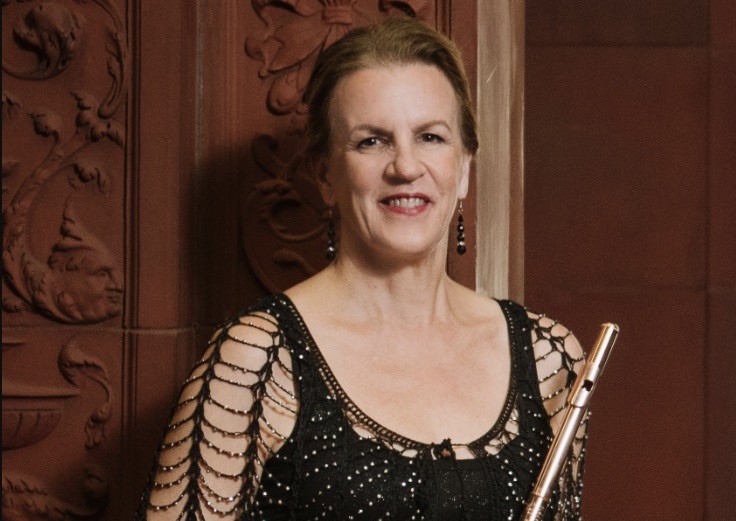
Meet the Musician: Flutist Svjetlana Kabalin (Video)
Watch Stephanie Griffin's interview and Q&A with Svjetlana Kabalin, Artistic Director of the Sylvan Winds, a wind quintet she has led for over 46 years.Read More ↗
Load More
All Articles By