ACMP supports the Afghan National Institute of Music
In addition to his busy life as an entrepreneur, investor, and active amateur cellist, ACMP member Seth Maerowitz (Brooklyn, NY), volunteers for the U.S.-based nonprofit Friends of ANIM (Afghan National Institute of Music.) Seth became involved with Friends of ANIM after meeting one of its board members, Lesley Rosenthal, through ACMP members David and Rebecca Sayles. In a recent phone conversation, he shared ANIM’s extraordinary story of resilience when the entire school was evacuated to Portugal after the fall of Kabul in 2021.
Watch Symphony of Courage, a half-hour documentary about the airlift to Portugal.
I was inspired to give an ACMP grant to ANIM in support of its chamber music programs. ACMP and ANIM share a common mission to provide access to chamber music to people of all backgrounds in all corners of the world. From ANIM’s website:
Ensemble playing is at the very heart of ANIM. Very simply, music brings people together. Through playing music together and listening to one another, the youth of Afghanistan can begin to heal their wounds and build strong bonds within Afghan society. Playing together in harmony teaches children to live in peace as a nation, no matter the ethnicity or background.
When children play in a musical ensemble they collaborate, listen, share, and contribute. ANIM’s ensembles are a microcosm of the future we hope to build in Afghanistan: a peaceful, thriving, vibrant, and dynamic society which embraces diversity and provides opportunities for all.
Seth introduced me to ANIM’s Founder and Director, Dr. Ahmad Sarmast, and I had the honor of meeting him on Zoom to talk about ANIM’s history and chamber music activities. Read an excerpt from my interview with Dr. Sarmast, below.
Stephanie Griffin (SG): Dr. Sarmast, thank you so much for joining me today. I’d love to start by asking you about the chamber music component of your program at the Afghan National Institute of Music.
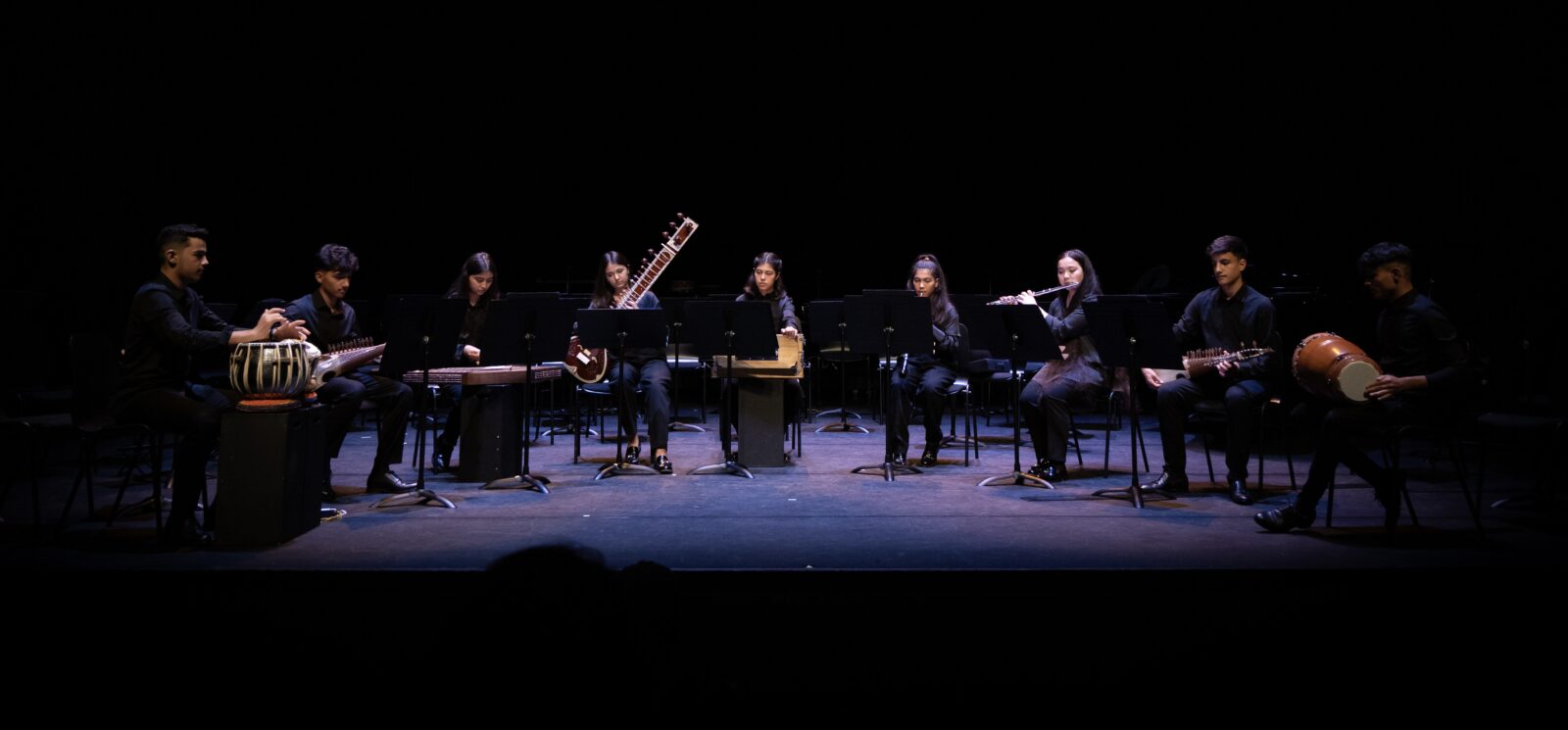
Dr. Ahmad Sarmast (AS): We always give a significant importance to chamber music and chamber activity of our students. Back in Afghanistan, we had many small ensembles, and we also had a chamber orchestra. But since we arrived here in Portugal, we reestablished a number of chamber groups, as well as the Zohra Orchestra and the Afghan Youth Orchestra, which are the largest orchestras of our school. Currently our chamber activities mainly take the form of traditional music of Afghanistan. We’ve got a group which is called Azada. Azada is a nine-member ensemble of traditional Afghan instruments performing instrumental music of different ethnic groups of the people of Afghanistan, specially arranged for this ensemble. Also, the repertoire of the group consists of some solo pieces that normally they play as a prepared solo, or sometimes in arrangements for two or three players. The second chamber group receives a lot of invitations to travel and to perform in many European cities. Is called Taranum. It’s a seven-member group made up of our advanced students, and led by a faculty member who plays gijhak himself and performs with the group. This is an instrumental and vocal group specializing in semi-classical popular music, as well as in music of the different ethnic groups of Afghanistan.
SG: Thank you – that’s fascinating. I noticed on your website that in addition to instruction in Afghan traditional instruments, you also have a Western orchestra, and offer lessons in Western classical music at ANIM.
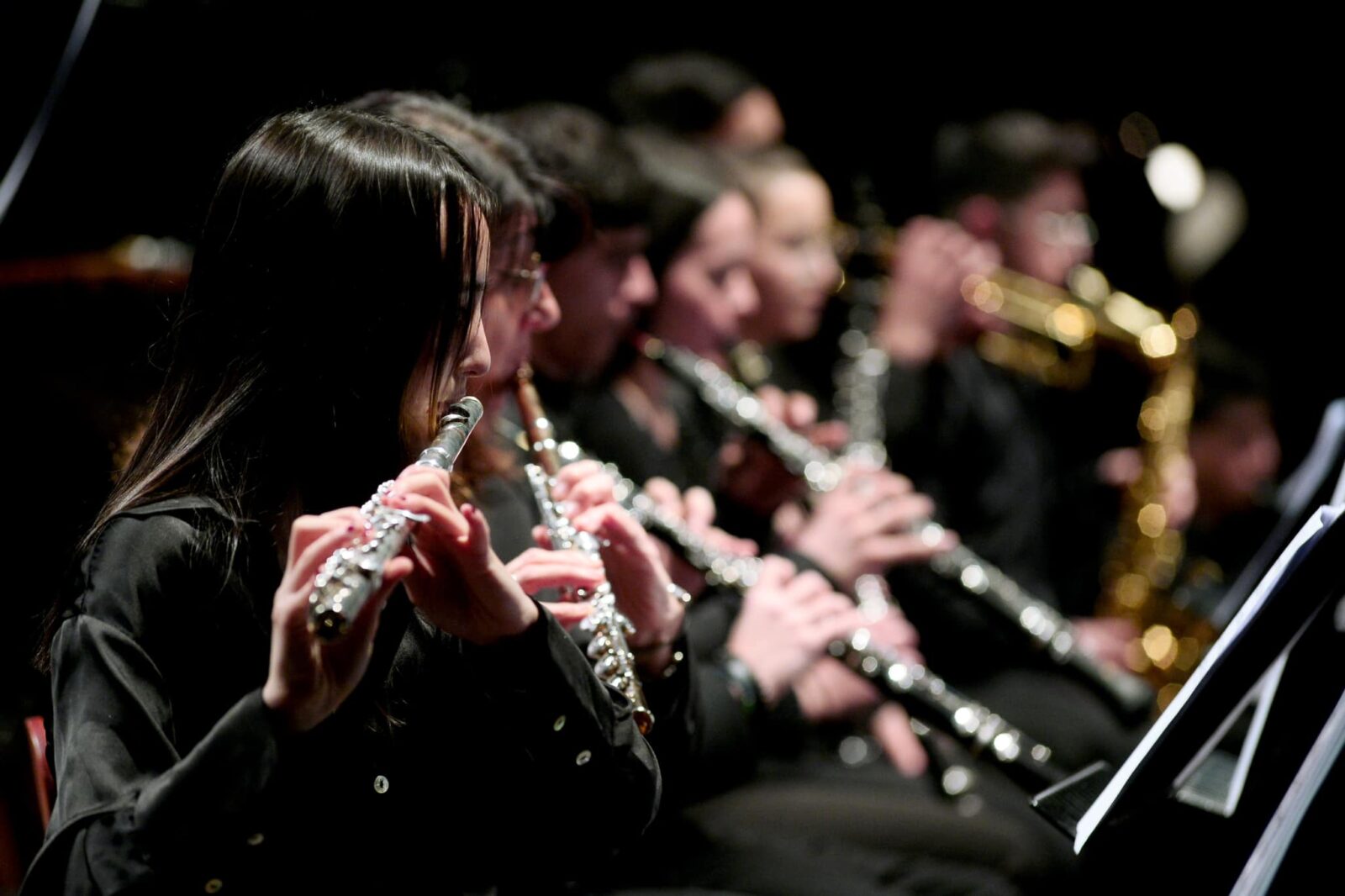
AS: Western classical music was the core program of the Afghanistan National Institute of Music, and we have been extremely committed to musical diversity. And also, I strongly believe that Western classical music is a heritage that belongs to all humanity and the Afghan people – Afghan children, Afghan youths and generally, every Afghan citizen should have access to the beauty of this music as well. So, the program of the school was made of two elements. One of these is Western classical music, where our students are learning a classical instrument alongside several music academic subjects such as ear training, music history, orchestration, composition. It begins with that program, and the curriculum changes as the students develop. But also, we have two large orchestras, the Zohra orchestra and the Afghan Youth Orchestra, which are completed by Western classical instruments. The repertoire of these orchestras is made of Western classical pieces, as well as Afghan music specially arranged for these orchestras. The specifics of these two orchestras is that in the makeup of the Western classical orchestra, we also incorporate Afghan traditional instruments. And each time we play a Western classical piece, it’s always a new arrangement that incorporates Afghan traditional along alongside Western classical instruments.
SG: You mentioned arrangements that have been made for both the chamber groups and your orchestras. Do you have composers on site that have been writing down some of these arrangements that combine Western musical instruments with Afghan classical instruments?
AS: Yes. All the arrangements are made by our own faculty. In different periods of time, different members of the faculty were involved, or they will be getting involved as needed. The music is arranged most of the time by the conductors. So currently, our conductor is arranging music for the Afghan Youth Orchestra and for the Zohra Orchestra. Everything is in notation – we’ve got the scores, and we’ve got parts for every instrument. It’s in a proper orchestration method, which is prevalent in the West.
SG: Will you ever be publishing some of these arrangements and making them available to people in other countries who might want to explore playing arrangements of Afghan classical music themselves?
AS: We would love to have those scores published, together with the parts, if there’s an opportunity and resources available for us to do so. And we would be happy to share with you the scores that we developed of Afghan as well as non-Afghan music. You would be most welcome to use them for your chamber activities on your side.
SG: Wonderful – thank you! In terms of chamber music, do you also have a program for teaching Western classical chamber music, such as traditional string quartets, piano trios and other standard ensemble types? If not, do you plan on developing that?
AS: Back in Afghanistan it was part of our educational activities and right now, that our students are studying in Portugal, this chamber music is an important element of their practical activities in the Braga Conservatory, where they continue their music education.
SG: Also, when I saw your website, I was very inspired by the number of women students that you have, and especially given Afghan history and the situation with the Taliban. Can you tell me a little bit more about your mission to include women and help Afghan women have access to music?
AS: A major commitment of our school and the mission of our school was also to make a contribution to gender equality, not only in Afghan society, but generally in music, and also to use the soft power of music and education for empowerment of girls and women. In order to achieve this goal, annually, we reserve 50% of the school’s new enrollment for the girls. And the girls’ enrollment was always a priority. We began in 2010 with one girl. But by the return of the Taliban, more than one-third of the student community was made up of girls. And the girls were beautifully presented in every large and small ensemble of our school, while at the same time we managed even to establish a 35-member all-women orchestra of Afghanistan called Zohra. And if you google Zohra Orchestra, you can see that was in high demand. In the last 14 to 16 years, it became a symbol of women’s emancipation and freedom of Afghan women and a symbol of Afghan women’s empowerment.
SG: Wow, that’s very inspiring! Could you tell us about the process of moving your school to Portugal and the local collaborations that you have with the Braga Conservatory there?
AS: Relocating the students and faculty of the Afghanistan National Institute of music was a huge, huge task in which many people were involved. This activity was led by the Friends of ANIM – our non-governmental organization from the United States. Thanks to Friends of ANIM, we managed to bring and form a huge coalition of people of good will which included human rights activists, women’s rights activists, music advocates, lawyers, legal firms, politicians, and big-name musicians such as Yo-Yo Ma. Thanks to this huge collaboration and this beautiful team, we managed eventually, after four months of working day and night, to pave the way for the evacuation of the entire school community out of Afghanistan. And in this process, we are very, very grateful to the government of Portugal, who was the only country who responded positively to our appeal and offered asylum to our group. But of course, the Government of Qatar played a significant role in facilitating and acting as a mediator between ANIM and the Taliban and paved the way for the evacuation of our group back in Afghanistan. It was the Government of Qatar and the diplomats of Qatar in Kabul who were troubleshooting, negotiating, and overcoming the challenges leading up to the evacuation.
SG: That was a very courageous move on your part. How about the students? When they moved to Portugal with you and the faculty, I presume they all had to leave their families behind in Afghanistan?
AS: Yes, we had at that time, in late August, received 282 asylum spaces for our group. Therefore, we were working very cautiously to make sure that no student was left behind in Kabul, but also to include all the faculty with their families and all the staff with their families. In this manner, we managed to get 273 people, but students were mainly traveling alone, without their families. And that was one of the major problems when we arrived to Portugal, because within our group, we had 73 unaccompanied minors. That was a big legal case that had to be solved with the intervention of the Family and Children Court of Portugal. Eventually, after almost eight months of negotiation between our lawyers, Portuguese social security and the court, a solution was found that allowed us to keep the group together united, not in one building, not in residential care, but close to each other. Everyone wanted to do what was in the best interest of the kids, and we made sure that they were able to study together, play together, and continue activities together. And that’s why we received a proposal from the government of Portugal to move to the north, to the city of Braga. We are very grateful to the conservatory of Braga, who very generously offered to receive all our students and to enroll all our students in the Braga Conservatory, as well as in the schools affiliated with Conservatory. The conservatory music program is activated in two major schools, primary and secondary schools, where our students would be studying until grade nine. And in grade 10, they will be moving to the conservatory. Right now, our students are between these two institutions. Such was the generosity of the Conservatory and the affiliated schools that they probably turned down many Portuguese students, but made sure that our students would be able to chase their dreams and continue their music education.
More Articles
Meet Joy Hsieh: ACMP intern and event planner par excellence!
ACMP is happy to announce its newest team member, violist Joy Hsieh, who is working with us on event planning for the fall semester through the Eastman School of Music's Institute for Music Leadership Catherine Filene Shouse Arts Leadership Certificate of Achievement (ALP) program. Joy is a doctoral candidate in viola performance at Eastman, studying with Phillip Ying from the Ying Quartet. Get to know Joy - and come meet her in-person in Rochester on October 25 and Boston on December 6!Read More ↗
Filipino folk music, by way of Ecuador
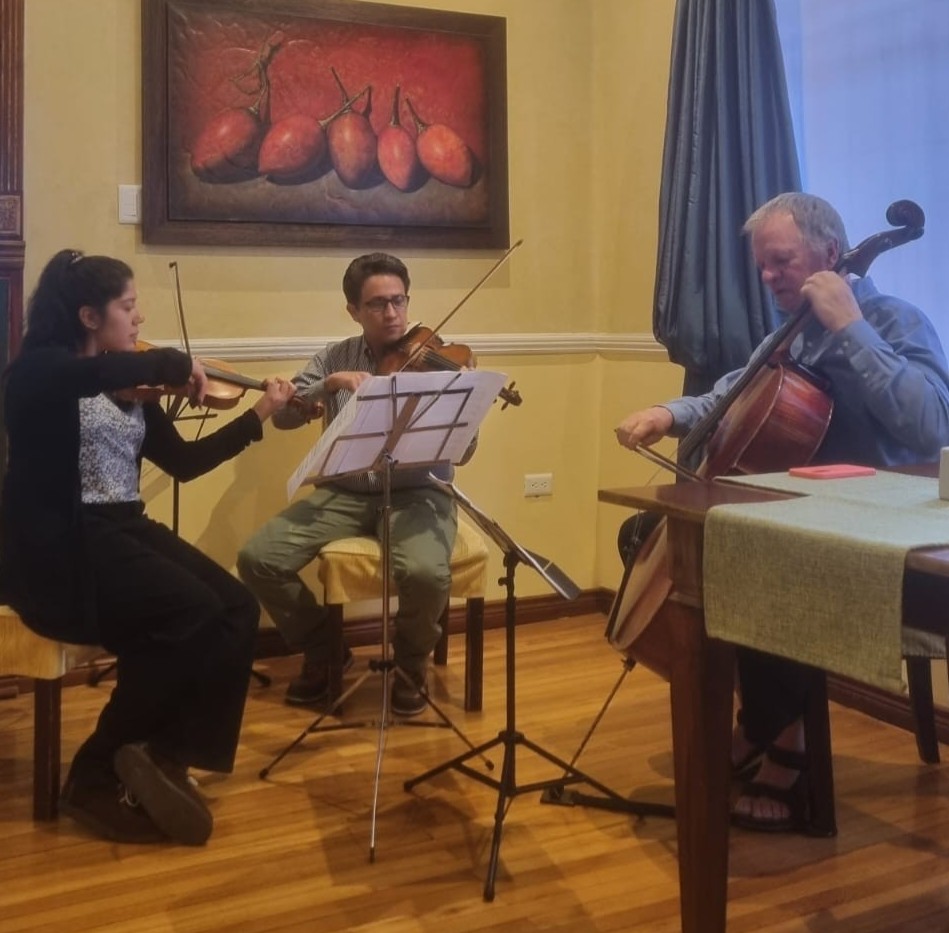
What do classical music and fine dining have in common? They are both about sensory delight; they come in many flavors and textures; and they are natural complements for an ACMP event. Tom Cappaert has organized a series of such programs, at a pizza joint in Riobamba, coffee houses in Spain and Ecuador, and most recently with a string trio performance on the theme of Let’s eat Filipino!Read More ↗
ACMP x ECMS Play-In Rochester, NY
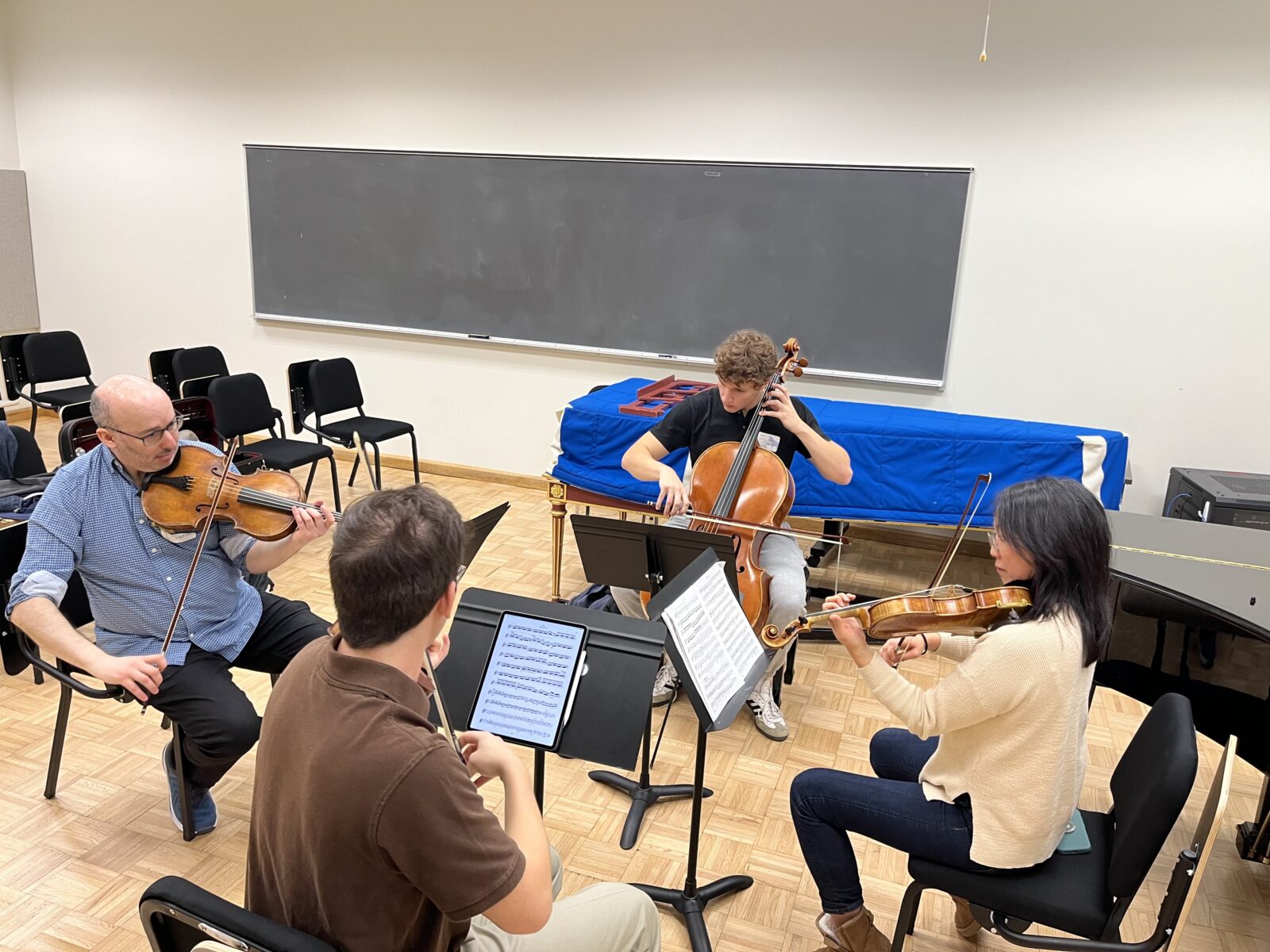
ACMP is partnering with the Eastman Community Music School (ECMS) on a fun and festive chamber music Play-In on Sunday, October 25 in Rochester, New York. All instruments and playing levels are welcome!Read More ↗
Member of the Month, October 2026: Loryn Gorsett
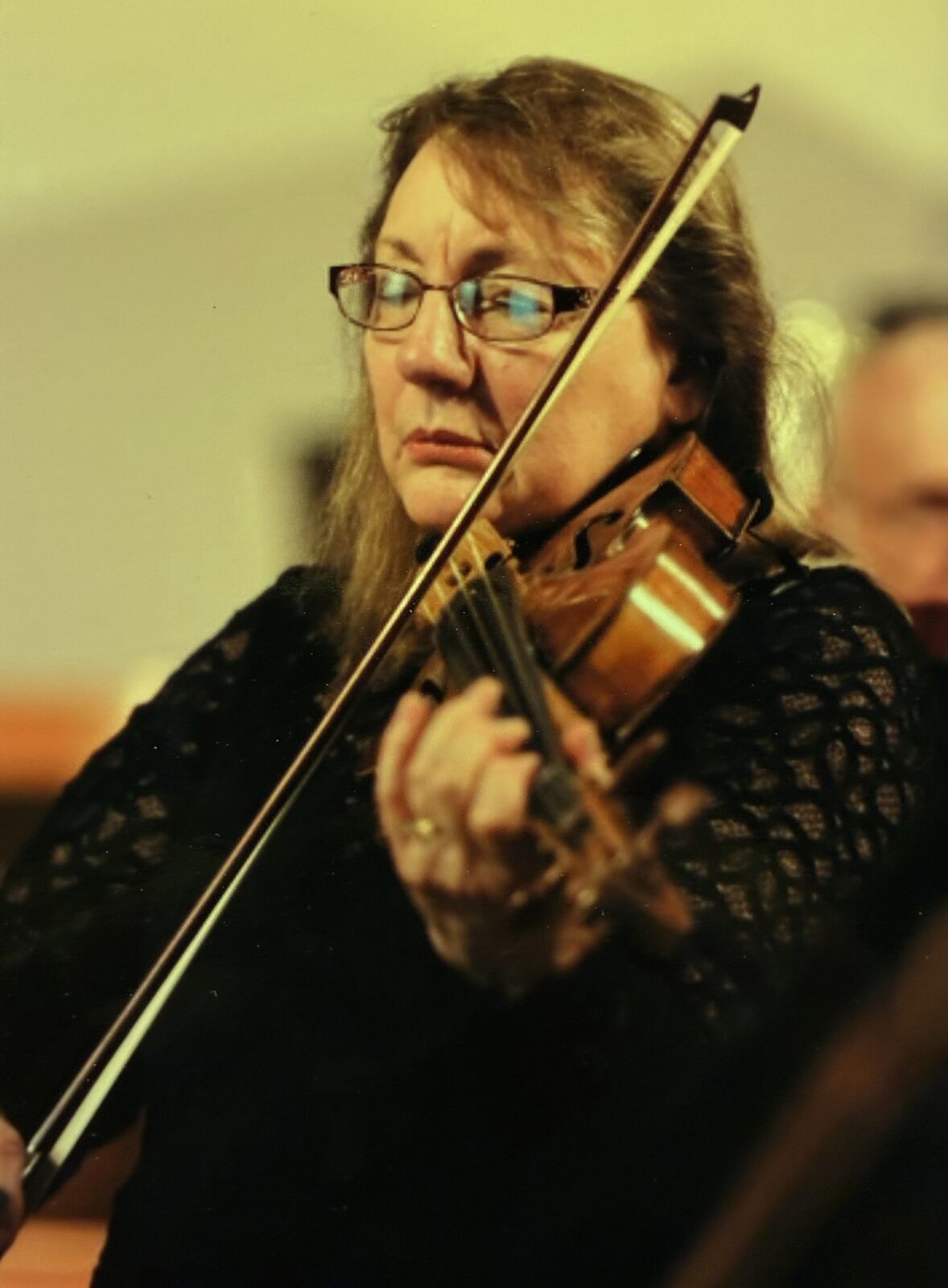
There is little that Loryn Gorsett hasn’t done as a violist and violinist in the Denver area. She has played in orchestras, both professional and amateur. She built a studio of students. She has played more weddings than she can count. She has been a strolling violinist in an Italian restaurant. But through it all, chamber music has been her true musical passion.Read More ↗
Chamber Music Lifestyles: Vancouver
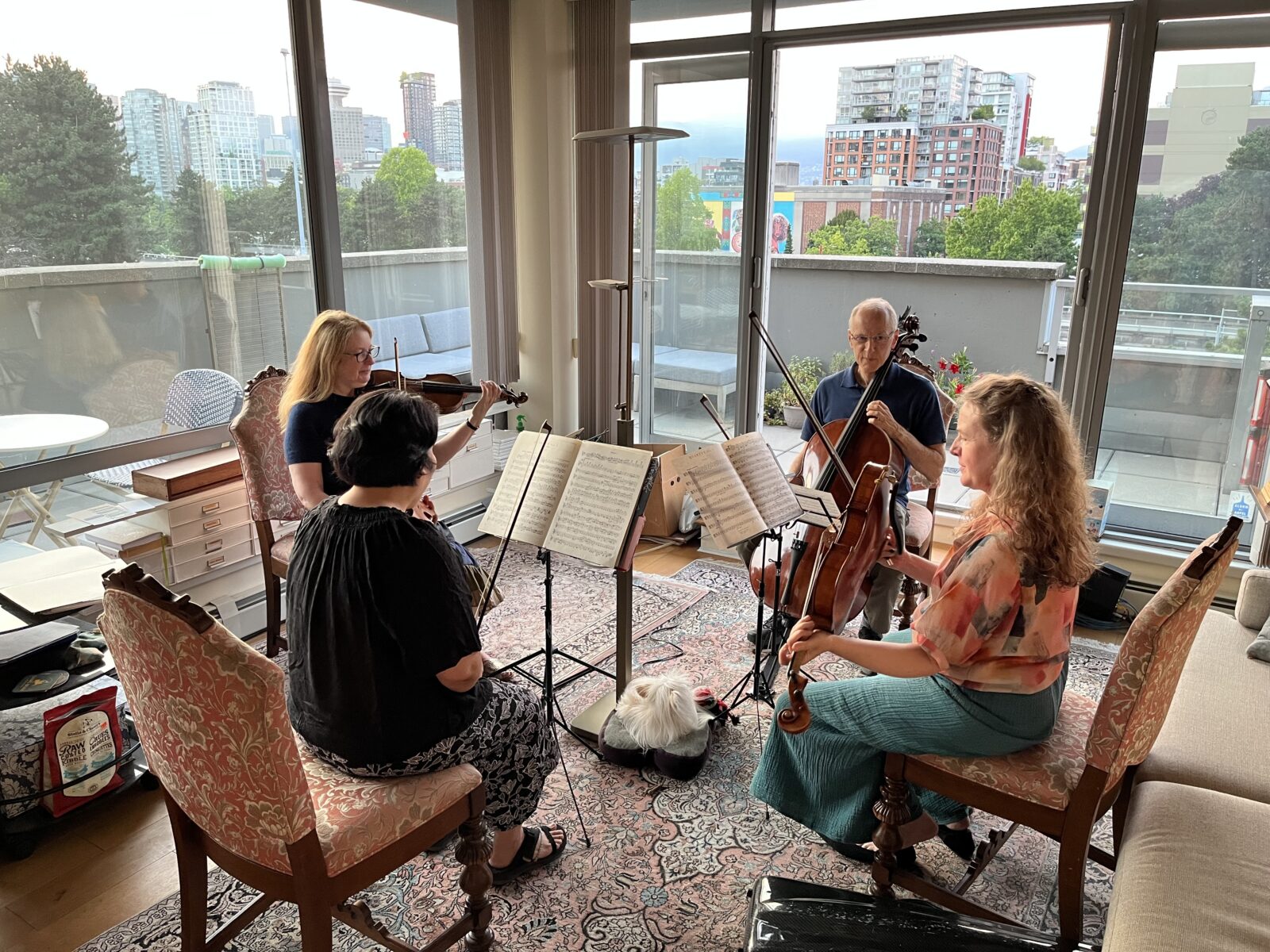
Vancouver, Canada has a vibrant adult amateur chamber music scene, thanks to ACMP's local NAOC councilor Christina Wolf. If you've never traveled to Vancouver, add it to your list. Where else could you play chamber music with so many great players (and fun people) while looking at the mountains, and eating and drinking a wide variety of local delights?Read More ↗
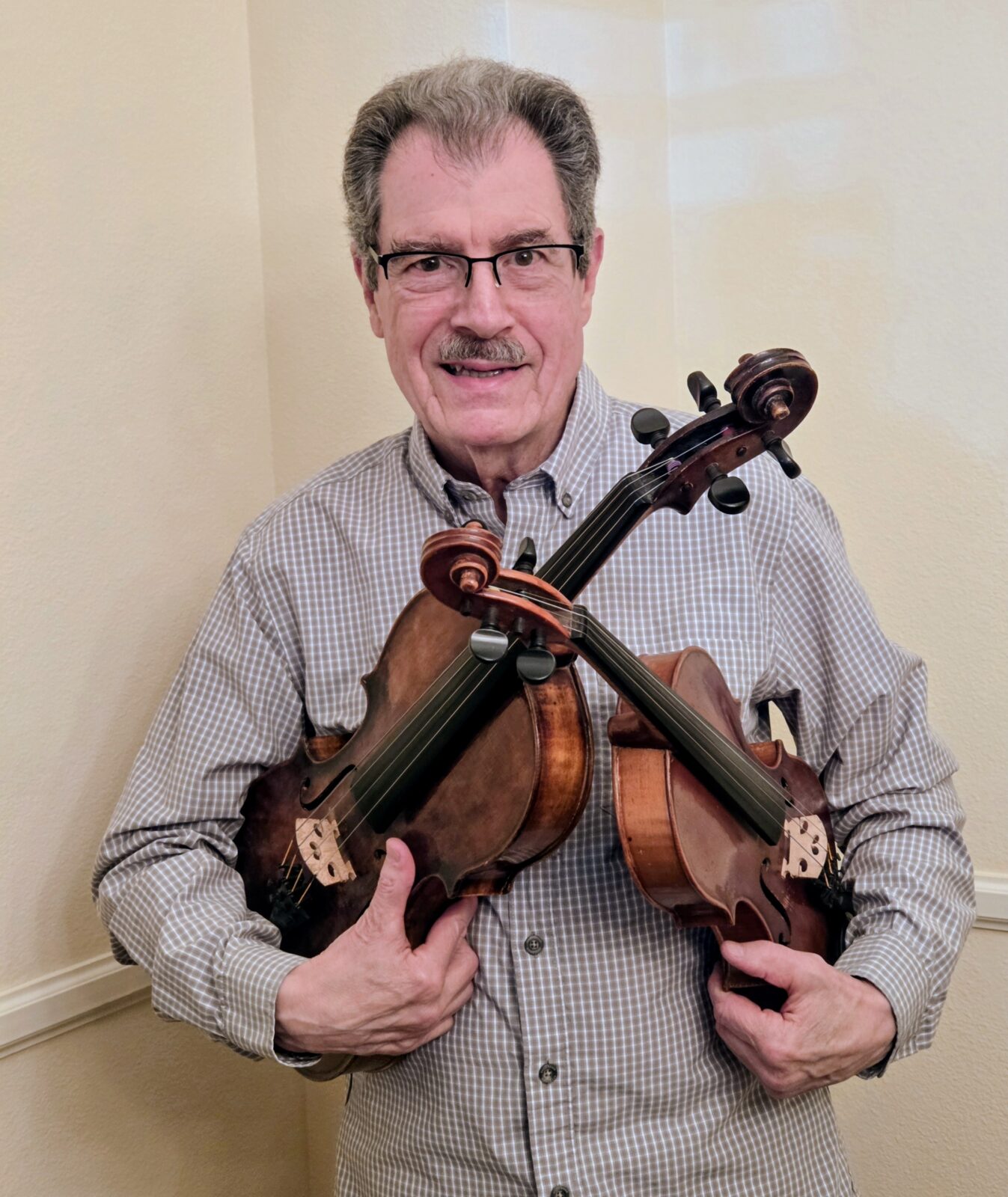
Member of the Month, September 2026: Marshall Costantino
Marshall Costantino learned to play the violin from his Italian grandfather as a young child. After a 42-year hiatus from playing, he is enjoying a new life in chamber music with his neighbor and new friends he met through the ACMP directory.Read More ↗
Celebrate Beethoven: MSQ’s Vienna Workshop, January 2027
Travel to Vienna and immerse yourself in Beethoven's world and in his String Quartet Op. 127, under the expert guidance of the Manhattan String Quartet. Register by Monday, September 14 for this unique cultural expedition!Read More ↗
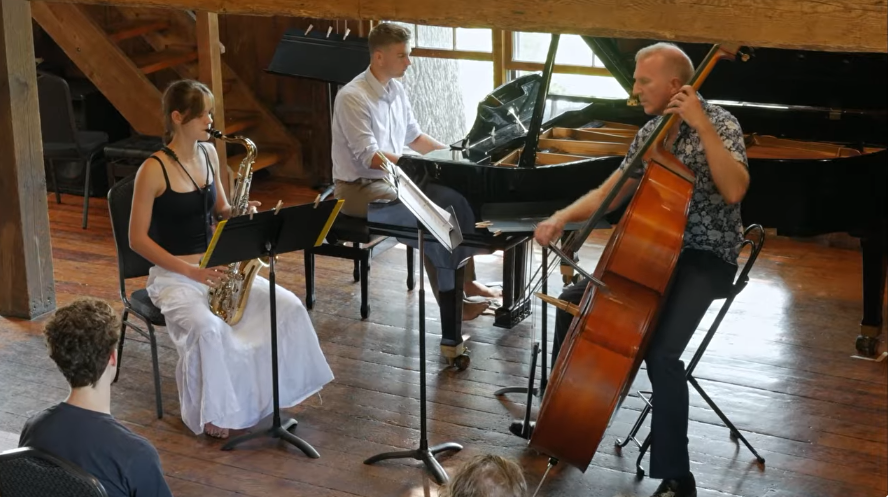
Music and Life at Apple Hill
Vermont-based bassist Art DeQuasie was one of the inaugural recipients of an ACMP Scholarship this summer. Read about his experience at the Apple Hill Center for Chamber Music in August 2026.Read More ↗
Explore New Worlds of Chamber Repertoire
Music educators have been working to find music by underrepresented composers that is accessible to students and amateur players of all levels. This includes music by composers of color, women composers, and LGBTQ groups, among others. Considering the changing demographics of our country, amateur chamber music players can reap the rewards of discovering new repertoire through this research.Read More ↗
Meet ACMP’s Development Consultant, Amie Roosevelt
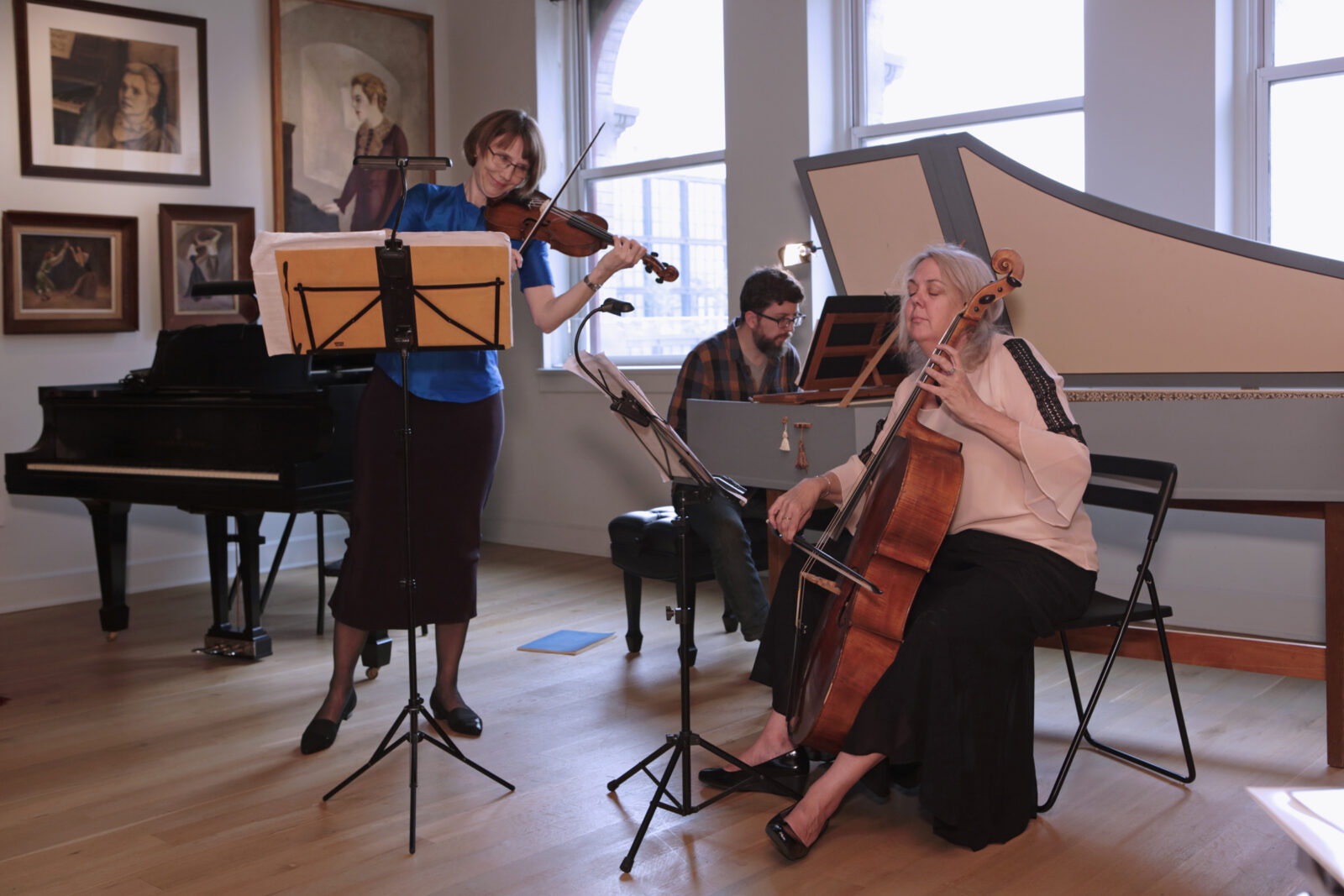
Amie Roosevelt joined ACMP's staff as our first-ever Development Consultant in January 2026. She has enjoyed a long and varied career as a violinist, with a primary focus on historically informed performance. I hope you all will meet and even get to play with Amie. But until you do, you can get to know her and her fascinating story by reading this interview from August 12, 2026.Read More ↗
Make Chamber Music Part of Your Fall at 92NY
For many musicians, chamber music is as much about connection as it is about repertoire—the shared experience of listening, collaborating, and discovering new musical perspectives together. At the 92NY School of Music, two chamber music programs offer welcoming entry points into that experience this fall: Chamber Music Reading and Chamber Music Coaching & Performance. Whether you’re picking up your instrument again, looking to meet fellow players, or hoping to deepen your ensemble work, both programs are designed to bring musicians together in a supportive and engaging environment.Read More ↗
Member of the Month, August 2026: Alison Edwards
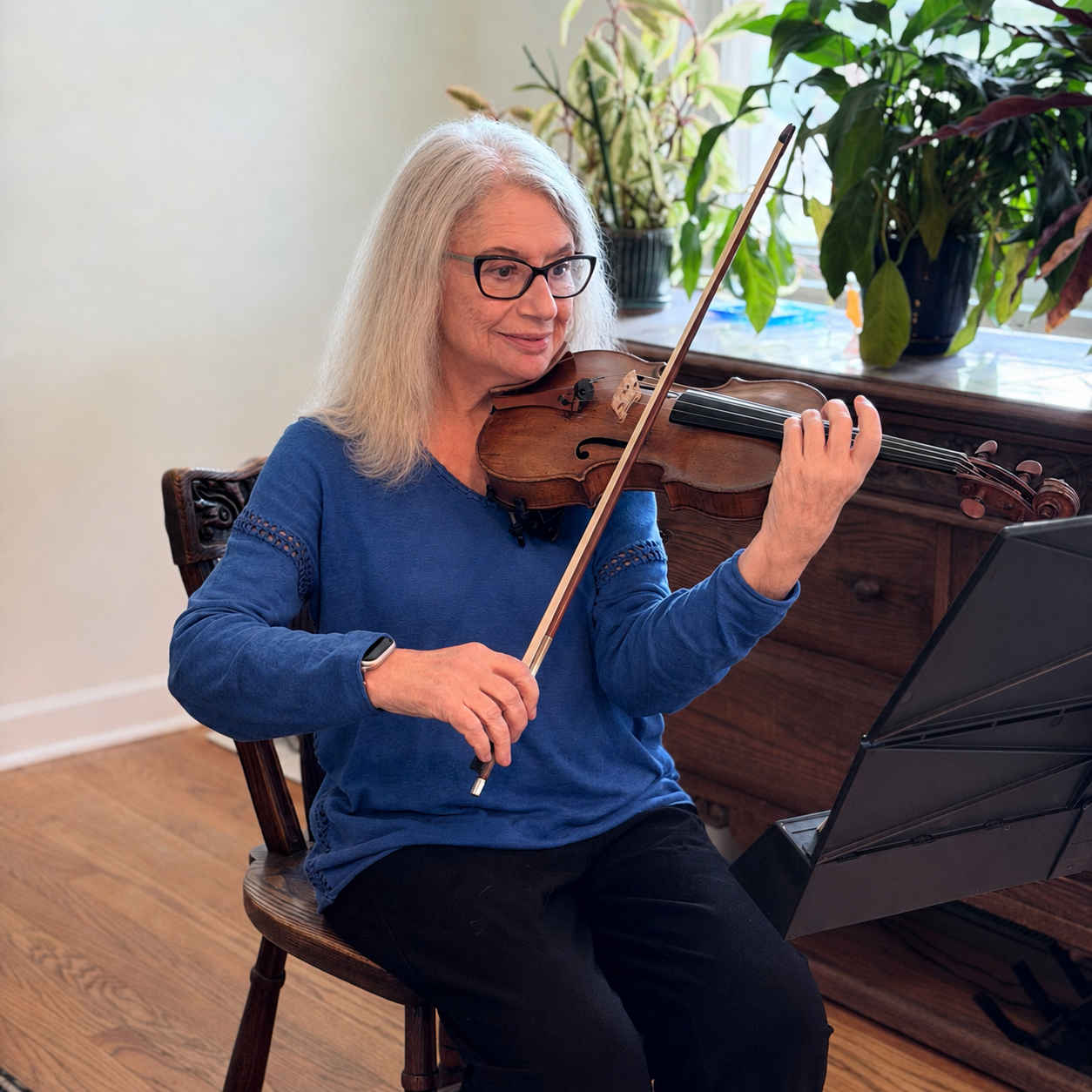
There aren’t too many people who come to a professional crossroads before they turn 13. But Alison Edwards faced such a moment. She had taken up the violin at age seven with none other than Dorothy DeLay as her teacher. But indeed, Alison had another calling. Inspired by social justice movements of the 1960s, she became a civil rights lawyer, eventually serving in the appellate division of the Cook County Public Defender’s office. After 25 years working and raising a family, she picked up her violin again and launched on a lifelong chamber music adventure.Read More ↗
After 56 Years, the Bond of Chamber Music Endures
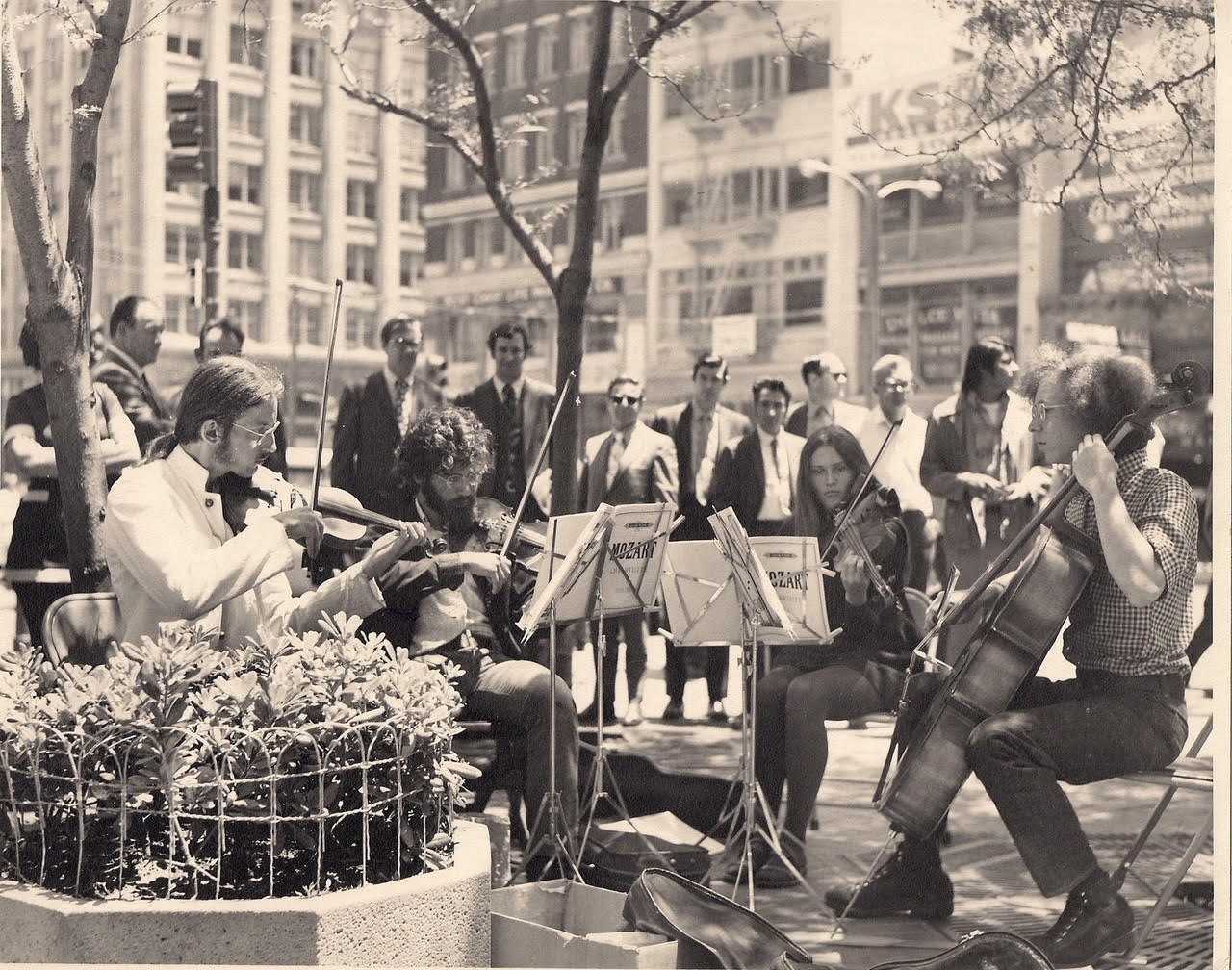
Cellist David Pearl and violinist/violist Gary Chanan played quartets together in the streets of San Francisco in the early 1970s. 56 years later they are playing together again in New York City...they reconnected through ACMP!Read More ↗
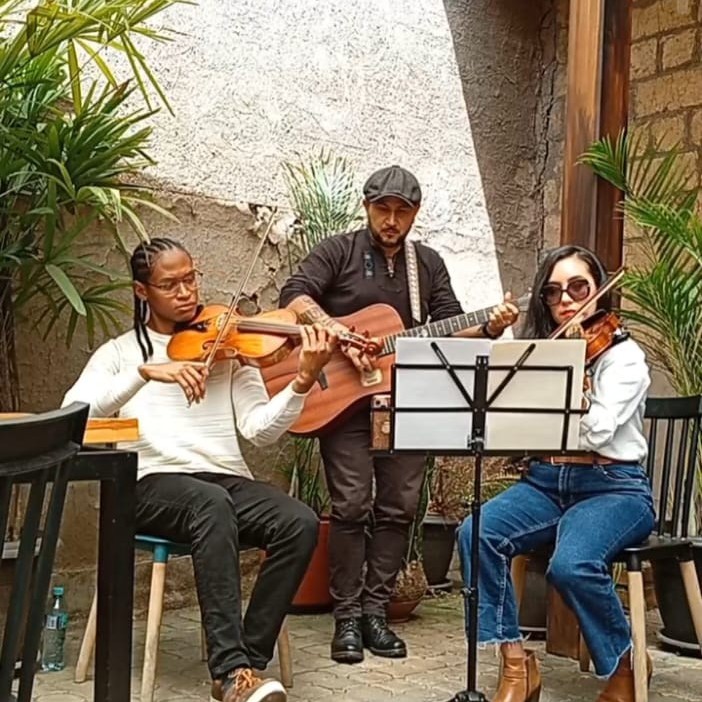
Coffee Shop Performances, Coffee-infused Repertoire
ACMP's intrepid cellist Tom Cappaert is at it again - this time with a story about ACMP members in Ecuador and Spain who organized chamber music in coffee shops, inspired by Tom's endeavors.Read More ↗
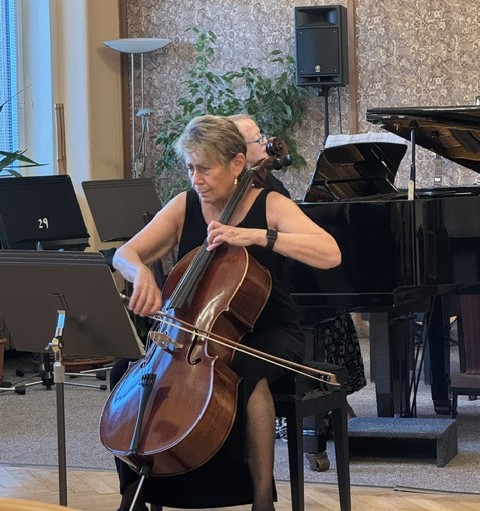
Member of the Month, July 2026: Sara Langbert
A self-proclaimed “total New Yorker”, cellist Sara Langbert graduated from Music and Art and continued her musical education at Queens College in her native New York borough. But like many ACMP members, she would put her cello aside as she managed the demands of raising a family and pursuing a career in computers and technology. Now she's playing again and is an enthusiastic member of ACMP.Read More ↗
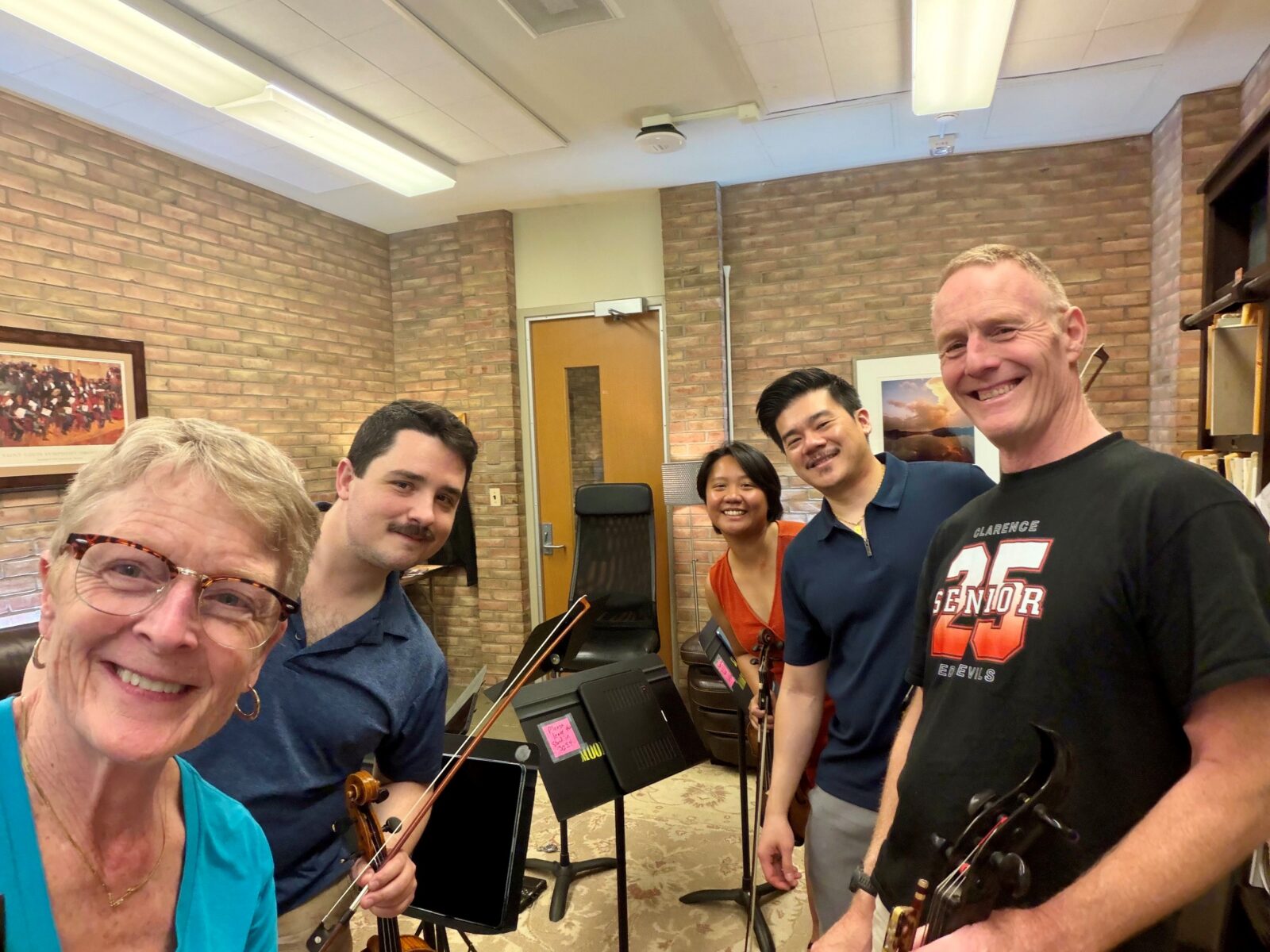
Around the World with ACMP’s Grants (Home Coaching and Play-in)
Over the last few weeks we have been asking members, participants, and organizers to tell us how our rolling grants have been useful to them and their communities. So let’s take a trip around the world and see what folks have to say about our Home Coaching and Play in grants.Read More ↗
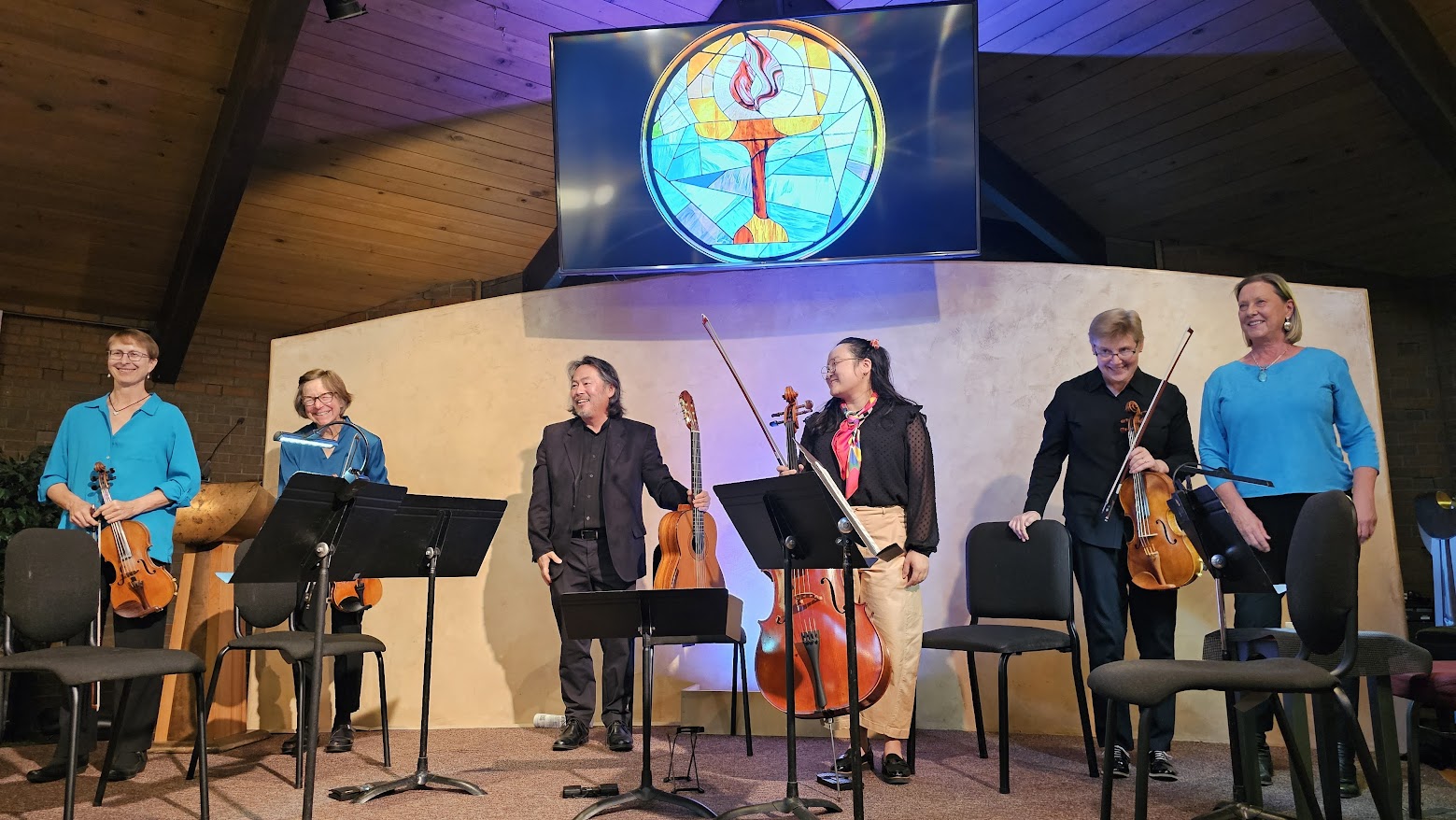
Around the World with ACMP’s Grants (Just Play and Impresario)
This summer, we’re hearing from ACMP members, participants, and organizers about how Just Play and Impresario grants have supported chamber music in New York, Italy, Canada, Colorado, and beyond.Read More ↗
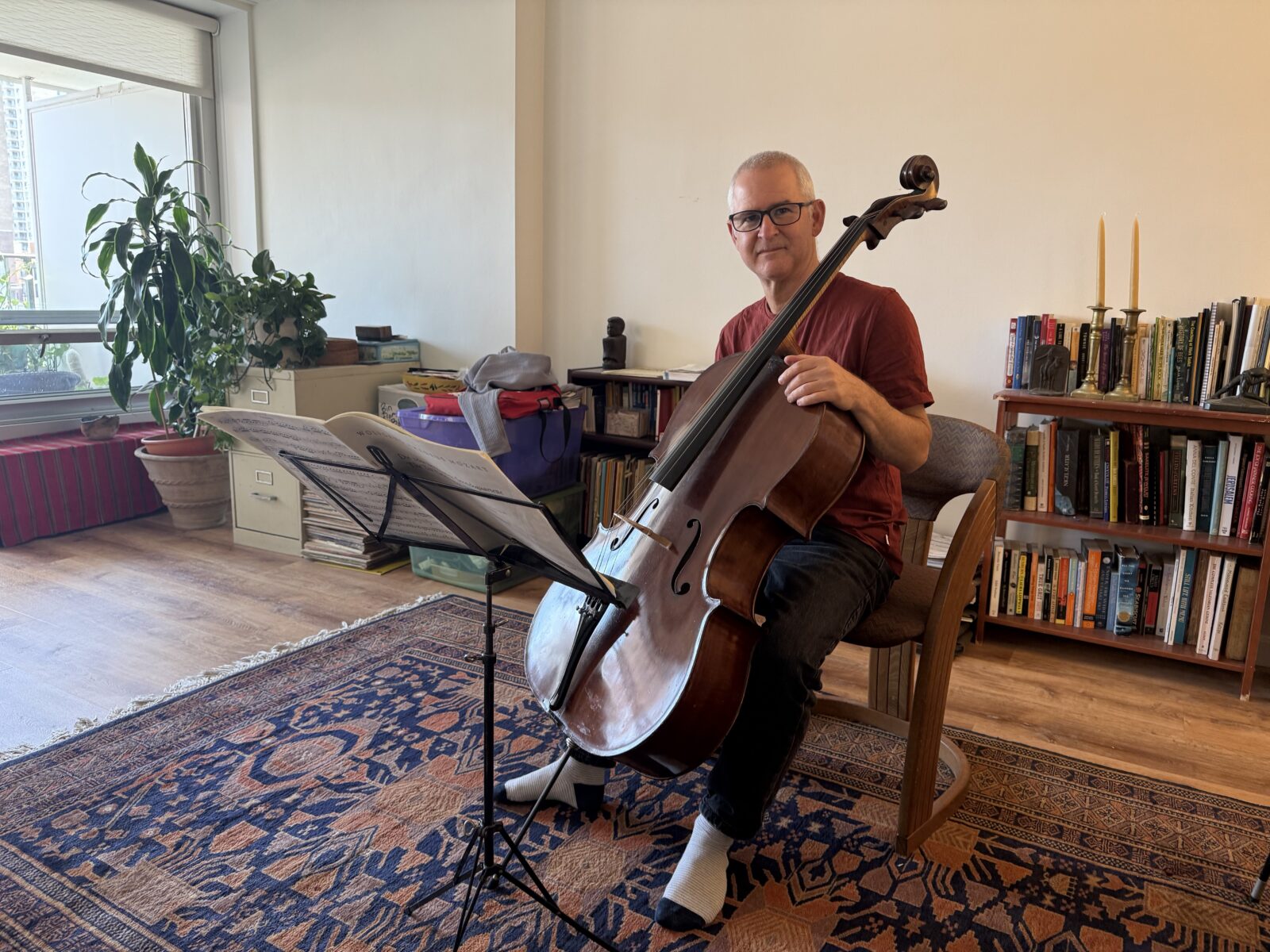
ACMP Member of the Month, June 2026: Yoav Segev, the flying cellist returns
It’s probably easy to spot Yoav Segev at the airport. He’s the guy in the pilot’s uniform with the cello on his back. Yoav, you see, is the Flying Cellist, a globe-trotting pilot for El Al Israel Airlines who plays chamber music during his layovers in far-off destinations. Read Bob Goetz's interview with Yoav.Read More ↗
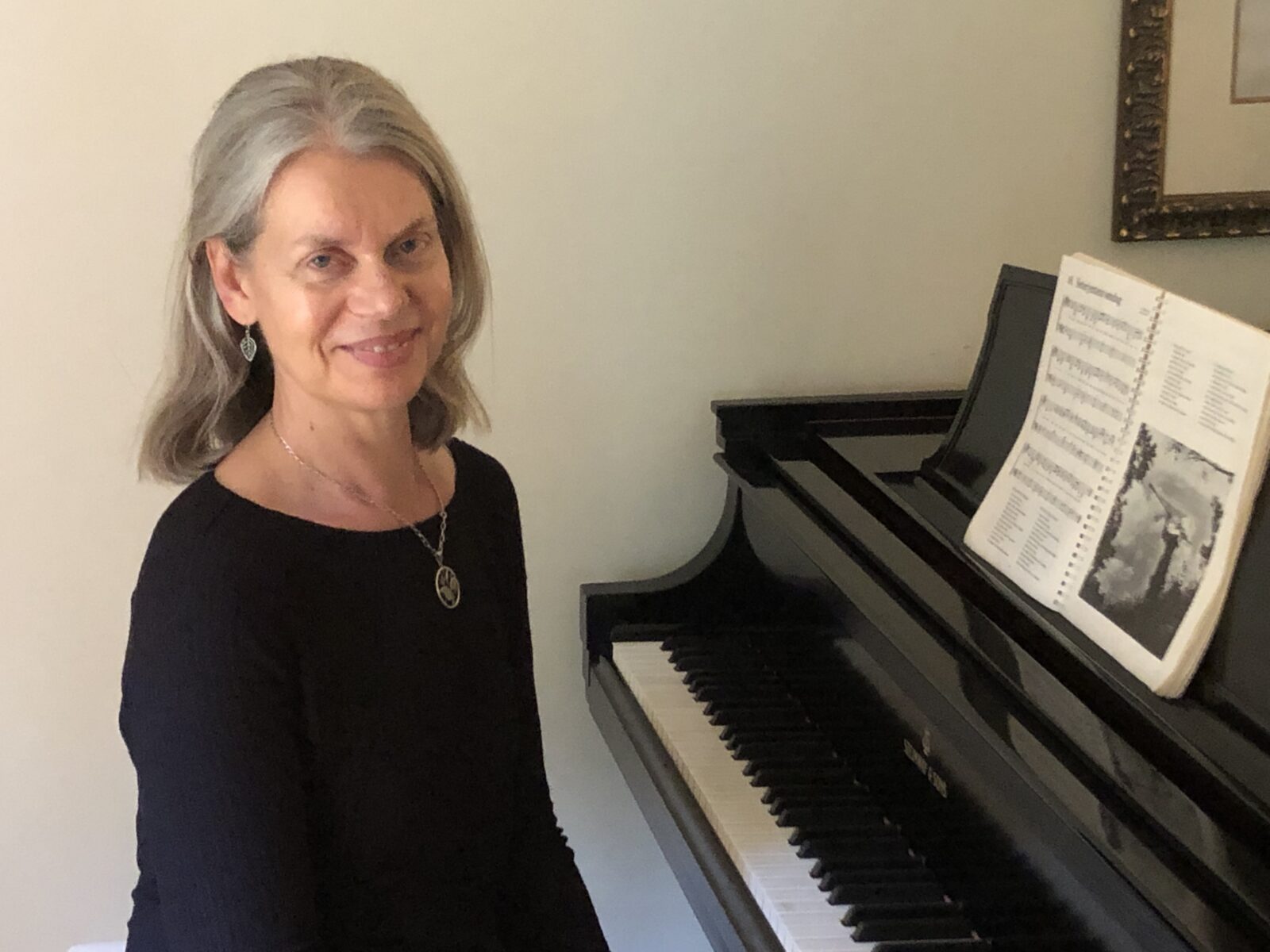
International Spotlight: Kristin Saltonstall in Panama
Kristin Saltonstall comes from a longstanding ACMP family and has been a member of ACMP for as long as she can remember. As a molecular ecologist, she works for the Smithsonian Tropical Research Institute in Panama, where she has forged a new musical life for herself and enjoys the natural beauty that Panama has to offer.Read More ↗
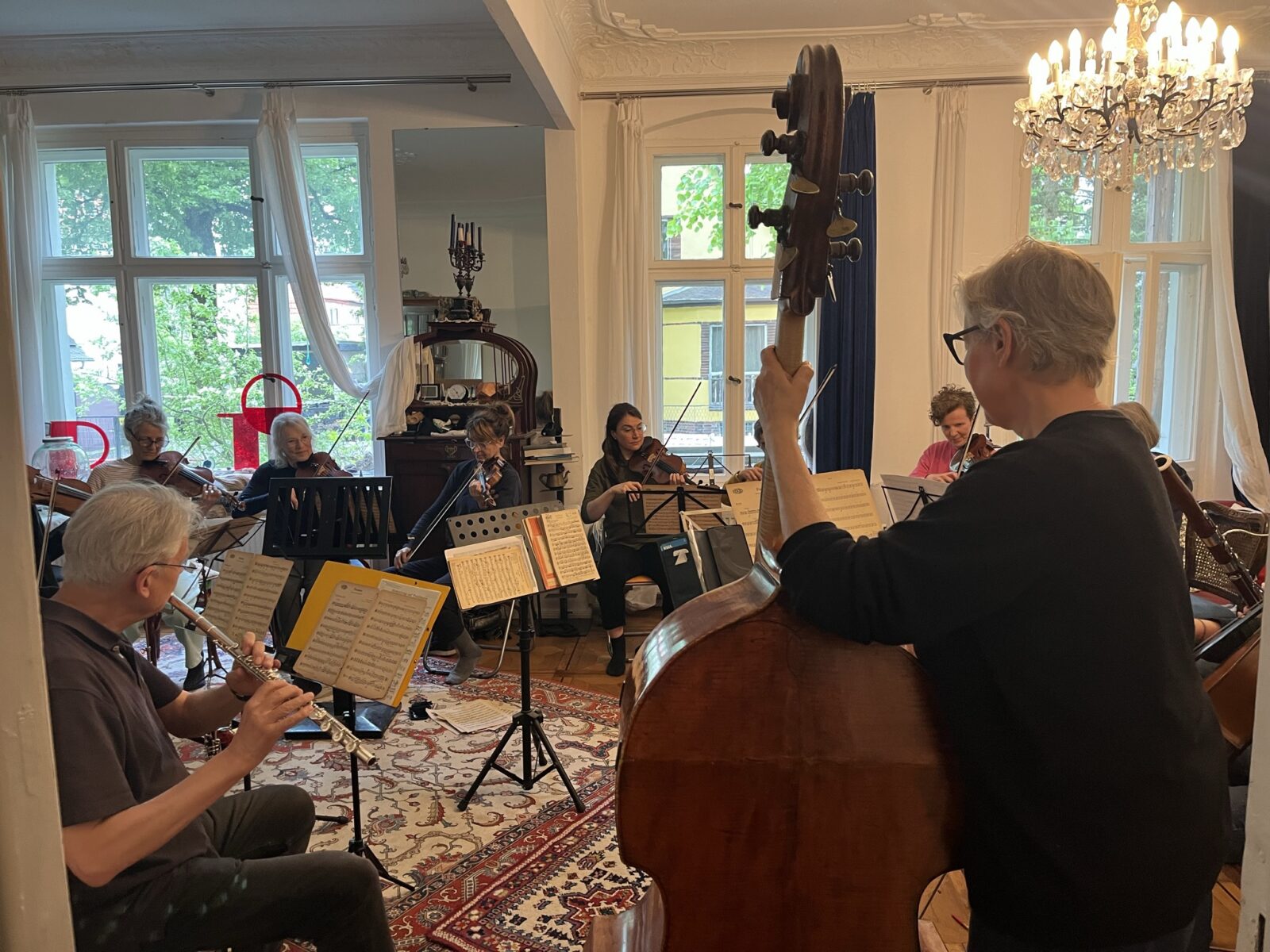
Springtime Extravaganza Light Music Orchestra on May 9, 2026, in Berlin-Karlshorst
Fifteen musicians followed Gudrun Schnellbacher's invitation to a very special kind of play-in – to play in the Springtime Extravaganza Light Music Orchestra. Read the article in English or in German.Read More ↗
Load More
All Articles By